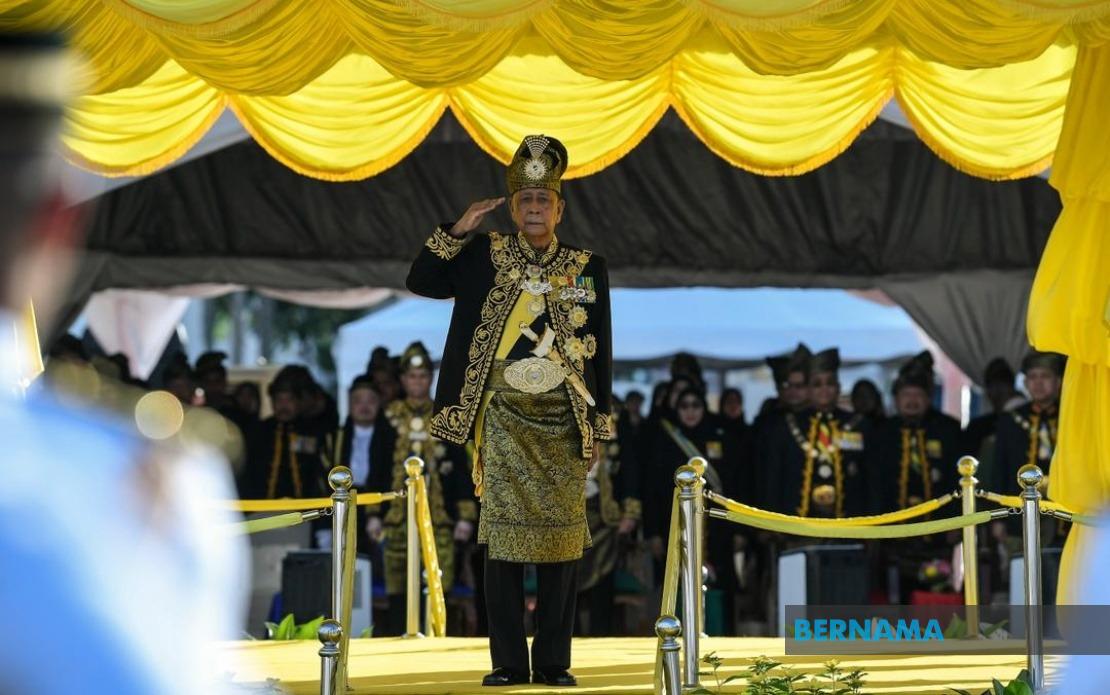
The Sultan of Kedah, Al Aminul Karim Sultan Sallehuddin Sultan Badlishah, marked his 84th birthday on July 5 with a ceremonial guard of honour parade at Dataran Medan Bandar in Alor Setar, underscoring the formal traditions that characterise celebrations honouring Malaysia's royal institution. The event brought together the state's senior leadership and military personnel to recognise the milestone occasion of the northern state's paramount ruler.
The gathering reflected the protocols and hierarchies central to Malaysia's constitutional monarchy, with the Raja Muda of Kedah, Tengku Sarafudin Badlishah Sultan Sallehuddin, present alongside the Sultan. The attendance of Menteri Besar Datuk Seri Muhammad Sanusi Md Nor and State Secretary Datuk Seri Norizan Khazali, together with members of the State Executive Council, demonstrated the coordinated nature of state-level recognition for the royal occasion. Such formal ceremonies are integral to Malaysia's governance structure, reinforcing the constitutional role that state sultans occupy as symbols of continuity and legitimacy.
The military dimension of the celebration showcased the integration of armed forces into the royal ceremonial calendar. The 6th Battalion of the Royal Malay Regiment (RAMD) fielded 103 personnel and three officers under the command of Major Muhammad Nasrullah Abdullah, executing a parade formation designed to honour the sovereign. The colour bearer, Lieutenant Mohamad Aiman Hanif Samsudin, and regiment standard bearer, Warrant Officer 1 Mohd Fairuz Ramli, were instrumental in conducting the ceremonial protocols that have evolved over centuries in Malaysian royal tradition.
The parade's musical accompaniment came from the RAMD Central Band, led by Captain Muhamad Fauzee Japar with Sergeant Mohd Shahrilaizad Bakhtiar providing support, adding ceremonial gravitas to the proceedings. In Malaysia's military culture, such musical formations are not merely decorative but serve to reinforce the solemnity and importance of state occasions, particularly those honouring the monarchy. The presence of a military band reflects the formal nature of the celebration and the respect accorded to the Sultan's position within the constitutional framework.
Aeronautical elements enhanced the spectacle, with the Flying Training Institute (INSPEN) contributing two EC120B aircraft from INSPEN 2 and three PC-7 MK II aircraft from INSPEN 1 to execute a ceremonial flypast. This aerial component represents a modern dimension of traditional royal celebration, combining contemporary military capability with historical ceremonial practice. The deployment of training aircraft for such occasions demonstrates how Malaysia's defence establishment incorporates its operational resources into the broader cultural and political recognition of the monarchy.
The celebratory dimension intensified with the firing of a 21-gun salute by the 41st Battery of the Royal Artillery Regiment (Ceremonial), under the command of Major Hafizan Md Ghani. This unit, based at Sungai Buloh Camp in Selangor, performed the traditional martial salute that has historically marked occasions of state importance across the Commonwealth. The 21-gun salute remains a potent symbol in Malaysian ceremonial practice, signifying the highest level of state recognition and underlining the Sultan's constitutional standing.
Kedah, as one of Malaysia's oldest sultanates, holds particular significance within the broader framework of the Malaysian monarchy. The state's rulers have maintained continuous reigns since before the nation's independence, and public celebrations of their milestones serve to reinforce the deep historical roots of Malaysia's constitutional system. The Sultan of Kedah's 84th birthday celebration thus carries implications beyond the individual honour, reflecting the stability and continuity that the institution represents for the state and the nation.
The formal nature of the parade structure, with its emphasis on military precision and ceremonial protocol, reflects the traditions that have defined Malaysian royal celebrations since independence. These occasions provide important opportunities for the public display of state unity and for reinforcing the constitutional role of sultans as integral figures in Malaysia's political and cultural identity. For Kedah specifically, such ceremonies affirm the historical importance of the sultanate and its continued relevance within contemporary Malaysia.
The attendance of senior state officials at the Sultan's birthday celebration demonstrates the formal linkages between the monarchy and state administration. In Malaysia's constitutional arrangement, while sultans are not executive figures in the day-to-day governance, their symbolic importance and ceremonial prominence are undisputed. The presence of the Menteri Besar and State Secretary alongside military commanders underscores the multi-layered nature of state authority and the respect accorded to royal occasions across governmental institutions.
For observers of Malaysian politics and governance, the Sultan of Kedah's birthday celebration exemplifies how traditional institutions maintain their visibility and social significance within a modern nation-state. The elaborate coordination required to stage such ceremonies—involving military personnel, musicians, aviators, and artillery units—reveals the substantial institutional infrastructure that supports Malaysia's monarchy. These occasions function as important anchors of national identity, particularly in states like Kedah where historical continuity and royal tradition remain deeply embedded in local consciousness.
The military's participation in celebrating the Sultan's birthday reflects constitutional requirements that bind the armed forces to the monarchy. Malaysia's defence establishment views royal occasions as opportunities to demonstrate institutional loyalty and to reinforce the historical compact between the monarchy and the military. The presence of multiple military units and the deployment of sophisticated equipment underscores the significance assigned to royal celebrations within defence planning and resource allocation.

