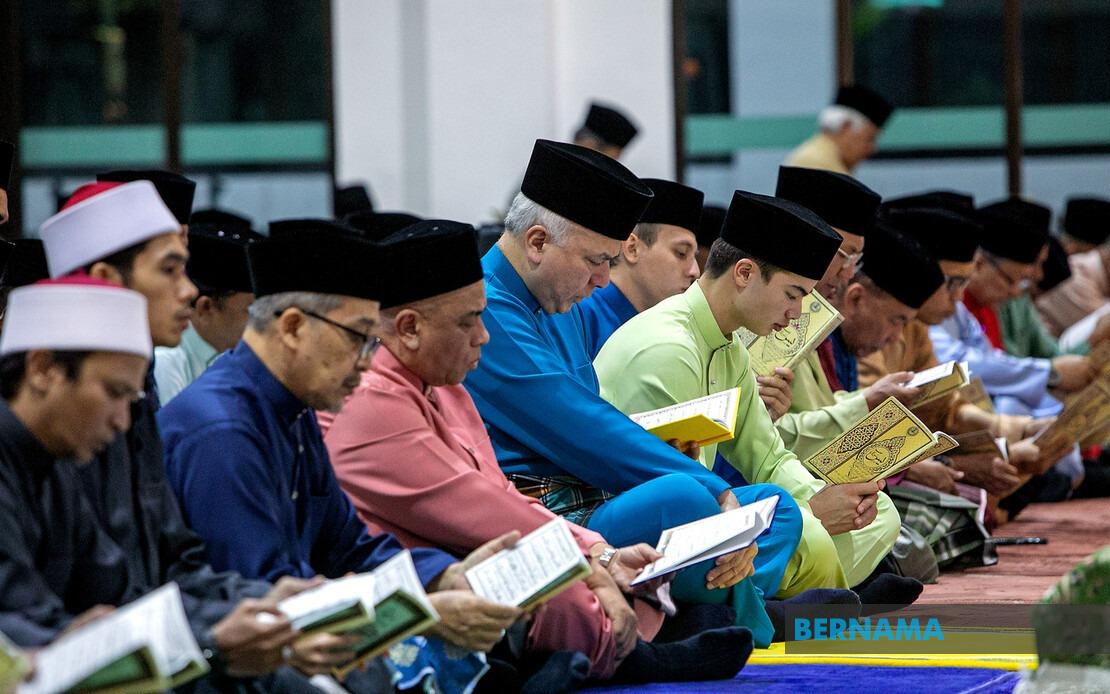
Sultan Nazrin Shah, the reigning monarch of Perak, graced the state-level National Day celebration in Ipoh by officially commissioning Masjid Imam As Syafie on August 30, marking a significant milestone for the state's religious infrastructure. The evening ceremony brought together religious leaders, government officials, and approximately 1,000 worshippers who gathered to witness the formal opening of the newly completed place of worship and participate in traditional Islamic observances including Yasin recitation, tahlil, and doa selamat.
The mosque represents a substantial investment in Perak's religious facilities, having been constructed at a total cost of RM8.7 million. Upon completion, the facility demonstrates the state's commitment to accommodating its growing Muslim population, with a capacity to host approximately 1,600 congregants simultaneously. The scale of the facility underscores the ongoing demand for modern, well-equipped places of worship across Peninsular Malaysia's major urban centres, particularly in established towns like Ipoh where demographic expansion continues to strain existing religious infrastructure.
Sultan Nazrin's personal attendance at the ceremonial opening carries considerable symbolic weight within Perak's governance framework. As the constitutional head of state, his presence legitimises the mosque's role within the broader community and signals the royal household's endorsement of contemporary Islamic facility development. The monarch's active participation in religious observances reinforces the constitutional connection between the sultans and Islam in Malaysia's federal system, a relationship that remains foundational to Malaysia's social contract and federalism model.
Tangible involvement from state leadership extended beyond the Sultan's presence. Menteri Besar Datuk Seri Saarani Mohamad participated in the inaugural ceremony, demonstrating executive branch commitment to religious infrastructure advancement. Additionally, Tan Sri Mohd Annuar Zaini, serving as president of the state Islamic Religious and Malay Customs Council (MAIPk), attended the event. This convergence of royal, executive, and religious administrative presence illustrates how Malaysia's constitutional monarchy and Islamic governance structures intersect at the state level, particularly when marking significant community facilities.
The ceremonial proceedings followed traditional protocols, with Sultan Nazrin drawing a curtain covering a commemorative plaque—a symbolic gesture that formally marked the mosque's official opening. This ritualistic element, common in Malaysian institutional inaugurations, transforms the formal dedication into a memorable public act. Following the unveiling, His Royal Highness participated in the doa selamat, a supplication for collective welfare and prosperity, demonstrating his integration within the worshipping community rather than maintaining distant ceremonial distance.
The Sultan subsequently engaged in the Yasin recitation, a revered Islamic practice involving the reading of chapter 36 of the Qur'an, and participated in tahlil—the collective affirmation of God's oneness. These devotional practices, led by Masjid As Syafie Imam II Muhammad Luqmaan Mohd Helmi, positioned the Sultan as a participant in mainstream congregational worship rather than as an external dignitary. The evening's spiritual programme concluded with the Isyak prayer, the night prayer in Islam, during which Sultan Nazrin maintained his active involvement alongside the assembled congregation.
The construction timeline and financial investment reflect wider trends in Malaysian religious infrastructure development. Completed in the preceding year before the August 2024 inauguration, the mosque's RM8.7 million construction cost positions it within the moderate-to-substantial range for contemporary Islamic facilities in urban Peninsular Malaysia. Such investments demonstrate how state governments and religious authorities respond to demographic pressures and community needs through capital projects that serve spiritual, social, and administrative functions simultaneously.
For Perak specifically, the mosque's opening carries particular significance within the state's trajectory toward modernising its public infrastructure. As a state with substantial rural populations and established urban centres, Perak's religious facility development must balance traditional community needs with contemporary worship expectations. The Masjid Imam As Syafie's capacity and modern design suggest a facility engineered to accommodate both routine congregational prayers and large-scale Islamic commemorations, positioning it as a potential anchor for Muslim community activities beyond strictly devotional purposes.
The event's timing during National Day celebrations adds patriotic dimension to the religious observance. In Malaysia's civic calendar, August 31 commemorates the nation's independence declaration, and state-level celebrations typically emphasise unity and national identity. By conducting the mosque's inauguration as part of Perak's National Day programme, authorities integrated religious development with patriotic commemoration, implicitly suggesting that Islamic infrastructure advancement constitutes part of national progress and development.
From a broader Southeast Asian perspective, Malaysia's integration of royal participation in religious facility openings reflects the region's distinctive approach to constitutional monarchy and Islamic governance. Unlike secular governance models that maintain institutional separation between religious and political domains, Malaysia's system embeds Islamic religious leadership within state structures, with sultans serving as heads of Islam within their respective states. This architectural arrangement, rooted in colonial-era agreements and post-independence constitutional design, continues shaping how contemporary infrastructure projects proceed and gain legitimacy through multi-layered institutional participation.
The attendance of approximately 1,000 worshippers suggests genuine community engagement with the facility, indicating successful integration into local religious life following its completion. Such turnout during a ceremonial opening often correlates with sustained utilisation patterns, suggesting the mosque is likely to function as an active congregation hub rather than underutilised ceremonial space. This distinction matters for infrastructure policy evaluation, as religious facilities representing substantial government investment merit demonstrable community benefit to justify public expenditure.

