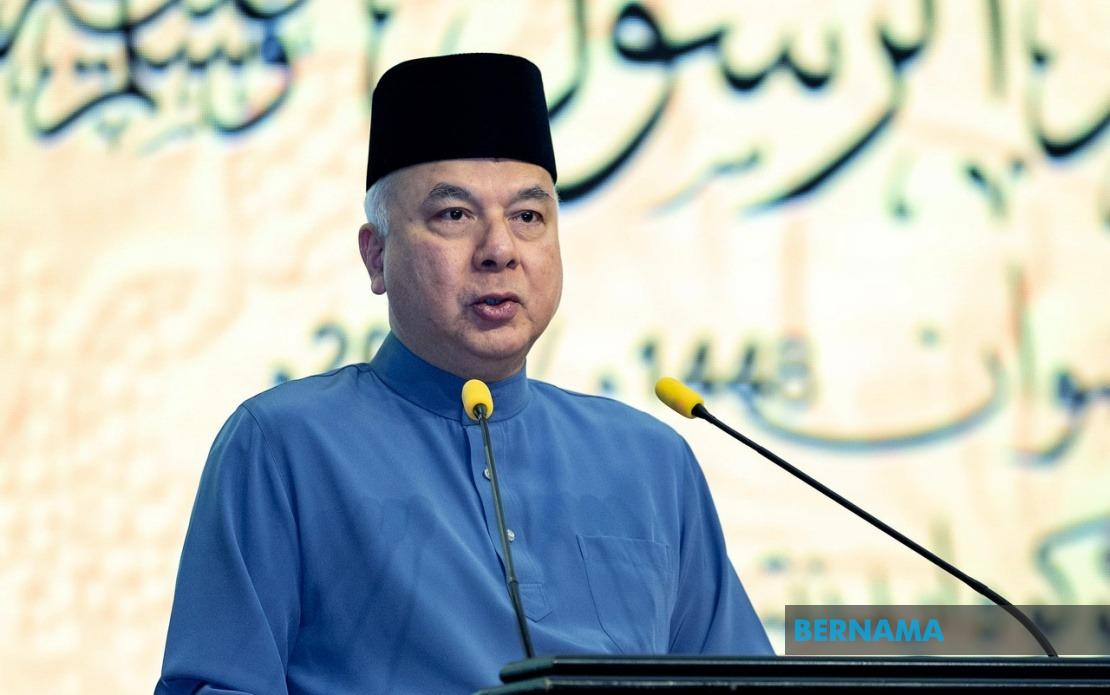
The Sultan of Perak, Sultan Nazrin Shah, has sounded an alarm over the fracturing of Muslim unity in Malaysia, attributing the deterioration to a complex web of political competition, theological differences, ethnic divisions, and individual self-interest. Speaking at the Perak-level Maulidur Rasul celebration in Ipoh on August 25, the Sultan identified these fragmenting forces as increasingly corrosive to the bonds of brotherhood that should unite the Islamic community, a concern that carries particular resonance across Southeast Asia's Muslim-majority nations grappling with similar cohesion challenges.
The monarch's intervention reflects a deeper anxiety within Malaysia's institutional leadership about the state of Muslim identity and communal solidarity. Beyond the immediate political landscape, Sultan Nazrin pointed to the pursuit of influence, status, material wealth, and creature comforts as accelerating factors that distance Muslims from foundational spiritual values. This diagnosis suggests a systemic challenge: as societies modernise and opportunities for individual advancement multiply, the traditional mechanisms binding communities together face unprecedented strain. The observation is particularly apt in Malaysia, where rapid urbanisation and digital connectivity have reshaped how Muslims—especially younger generations—navigate faith, identity, and social belonging.
Central to the Sultan's message was a pointed appeal to Muslim leaders, Islamic organisations, and religious movements to fundamentally reorient their priorities. Rather than perpetuating divisive disputes and jockeying for political advantage, these institutions should redirect their energies toward initiatives that demonstrably strengthen Islamic identity and advance the collective welfare of the ummah. The Sultan's framing rejects the zero-sum competition that has characterised much Malaysian Islamic institutional politics, where rival groups often spend more energy contesting legitimacy than collaborating on shared objectives.
However, the Sultan also acknowledged a countervailing current of genuine constructive work occurring within the Muslim community. He drew particular attention to individuals and organisations advancing Islamic education through innovative avenues—including Islamic economics and finance, the halal industry, waqf development, digital Islamic education, and institutional strengthening of family structures. These initiatives represent a parallel ecosystem operating outside traditional bureaucratic religious hierarchies, often driven by entrepreneurial energy and pragmatic problem-solving rather than theological gatekeeping. The Sultan's explicit endorsement of these efforts signals recognition that meaningful progress on Islamic identity need not flow through official channels.
The expansion and reinforcement of these positive initiatives emerged as the Sultan's primary policy recommendation. By amplifying successful models in Islamic economics, halal industry development, and digital dawah, Malaysia could channel communal energies toward tangible outcomes that simultaneously advance both Islamic values and material prosperity. Such an approach sidesteps the sterile debates about authenticity that often paralyse more traditionalist institutions, instead focusing on demonstrable results that benefit Muslim communities across the region.
A particularly significant dimension of the Sultan's address concerned the tension between modernisation and Islamic identity preservation. The monarch identified growing exposure to global influences—transmitted through social media, popular culture, entertainment, and contemporary lifestyles—as posing a distinct challenge to traditional Islamic markers and values. Rather than adopting a defensive posture that stigmatises modernity itself, the Sultan advocated for sophisticated strategic approaches capable of navigating this terrain. The framing is crucial: he did not counsel rejection of progress or technological advance, but rather insisted that Muslims develop the intellectual frameworks and institutional capacity to integrate modernisation while maintaining doctrinal and cultural coherence.
This challenge resonates acutely across Southeast Asia, where Muslim societies simultaneously pursue development objectives and seek to preserve distinctive religious identities. The Sultan's emphasis on achieving equilibrium—where modernisation enhances rather than erodes Islamic principles—suggests that Muslims need not experience progress and faith preservation as mutually exclusive. Instead, the Sultan implied, conscious effort and deliberate strategy can produce outcomes where economic development, technological adoption, and social change reinforce rather than undermine Islamic foundations.
The Sultan's royal address carried particular institutional weight given Perak's standing within Malaysia's constitutional monarchy and his personal stature as a respected voice on Islamic affairs. The presence of the Raja Permaisuri, Raja Muda, and other senior state dignitaries underscored the event's importance within the sultanate's religious and ceremonial calendar. Equally significant was the attendance of Perak Menteri Besar Datuk Seri Saarani Mohamad, indicating alignment between the Sultan's concerns and the state government's policy direction.
The underlying tension animating the Sultan's remarks—between ideals of Islamic community and the fragmented reality of Muslim institutional and political life—extends beyond Perak or even Malaysia itself. Across Southeast Asia, Muslim-majority nations confront similar pressures: the challenge of maintaining religious identity and communal solidarity amid rapid social change, competing political movements exploiting religious symbols for advantage, and generational shifts in how faith intersects with daily life. The Sultan's diagnosis offers a framework that acknowledges these tensions while resisting both nostalgic retreat and secular accommodation.
Moving forward, the Sultan's call for prioritising substantive Islamic development initiatives over sectarian competition may gain traction if institutional structures can be reformed to reward collaboration over rivalry. The examples he cited—Islamic finance, halal industry development, waqf expansion, digital religious education—share a common characteristic: they promise material benefits alongside spiritual fulfilment, potentially transcending the zero-sum logic that perpetuates religious institutional conflict. Whether Malaysian Islamic institutions possess sufficient flexibility and long-term vision to pivot toward this model remains an open question, but the Sultan's intervention suggests that pressure from respected traditional authorities may eventually shift incentive structures toward more productive engagement.
Ultimately, the Sultan's message articulated a vision of Islamic modernity rooted in community welfare and institutional effectiveness rather than doctrinal purity or political dominance. This approach offers considerable appeal to younger, educated Muslims seeking authenticity without sectarianism, and to institutions needing legitimacy beyond claims of theological correctness. As Malaysia and Southeast Asia continue navigating the intersection of religious identity and modernisation, the Sultan's framework—emphasising substantive achievement over symbolic competition—may prove increasingly influential in shaping how Muslim communities construct their institutional futures.

