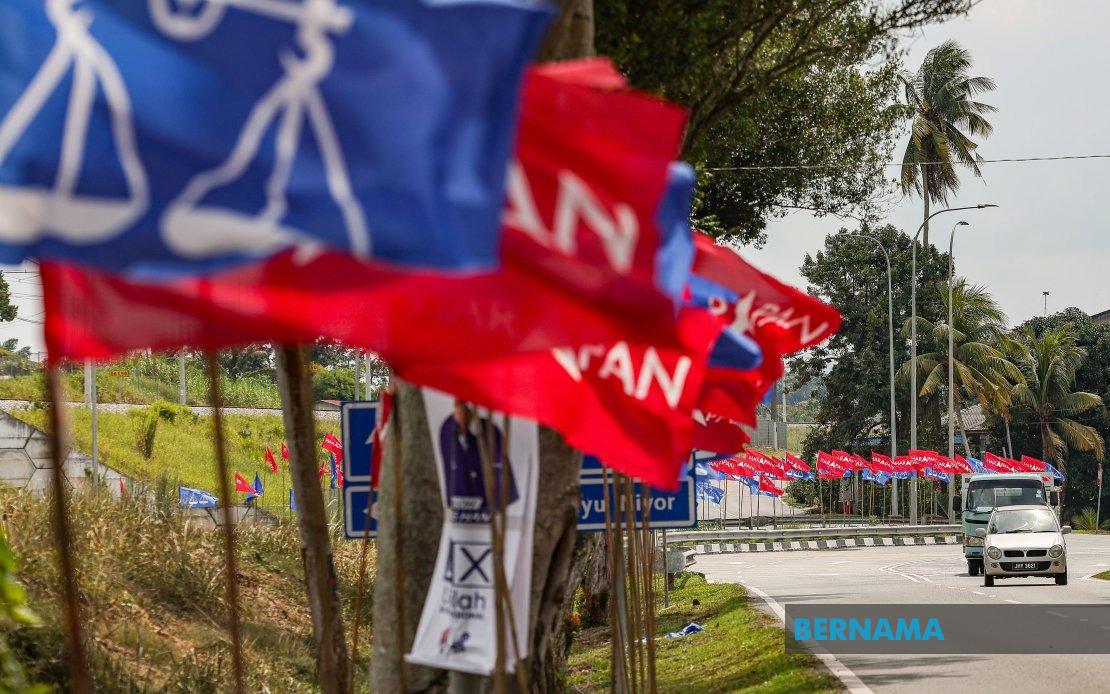
Pakatan Harapan's campaign in the Larkin constituency has taken a decidedly optimistic tone as polling day approaches, with candidate Suhaizan Kaiat declaring that reclaiming the seat from Barisan Nasional remains entirely achievable in the 16th Johor state election scheduled for July 11. The Pulai Member of Parliament grounded his confidence in historical electoral data, pointing to the constituency's voting behaviour during the 14th General Election as evidence that BN's control of Larkin is far from unshakeable.
Suhaizan's strategy rests heavily on a single demographic variable: voter turnout. He contends that the 2022 Johor state election result, which saw BN's Mohd Hairi Mad Shah secure the seat, should not be viewed as an accurate reflection of constituent preferences or political reality. The turnout that year reached only 51 per cent—a figure Suhaizan attributes directly to pandemic-related constraints that dampened electoral participation across the state. This reasoning allows PH to frame its loss as a temporary aberration rather than evidence of declining support in a constituency where the party has previously demonstrated considerable strength.
The GE14 victory by Datuk Mohd Izhar Ahmad, who contested under the PH-Bersatu banner, provides the numerical foundation for PH's narrative. That general election victory demonstrated that Larkin voters could be mobilised to reject BN, and Suhaizan is banking on the notion that a higher turnout environment would recreate those conditions. The logic is straightforward: if COVID-related hesitation suppressed turnout in 2022, then a more normal election environment in 2022 should favour the opposition.
Beyond the turnout argument, Suhaizan is exploring a more complex political opportunity emerging from turbulence within Malaysia's fragmented opposition landscape. Recent tensions between Bersatu and PAS have strained their political relationship, creating an opening that PH believes it can exploit. Significantly, Bersatu is not fielding a candidate in Larkin this time around, a decision that Suhaizan interprets as potentially beneficial. He suggested that voters who previously backed Bersatu might be receptive to supporting PH, particularly given the parties' previous alliance arrangements and shared history of cooperation against BN.
This calculation reflects a broader strategy by PH to consolidate anti-BN votes across Johor's 56 state seats. The party appears to be wagering that organisational clarity—essentially running unopposed on the reformist side of politics—could translate into vote transfers from smaller opposition parties or swing voters seeking to maximise anti-establishment impact. In a three-cornered contest alongside Bersama's Norsinah Abu and the incumbent Mohd Hairi, even modest vote-shifting could prove decisive.
The 2022 result itself provides a concrete baseline for assessing PH's prospects. Mohd Hairi's majority of 6,178 votes represents a manageable gap for the opposition to close, particularly if turnout increases and the strategic reasoning about Bersatu supporters proves valid. However, that majority also reflects genuine groundwork by BN in the constituency and an incumbent advantage that cannot be dismissed. Over the past two years, Mohd Hairi has held the seat and presumably used its resources to entrench BN's position.
The broader Johor campaign involves 172 candidates competing for 56 state seats, making individual seat dynamics critical to overall outcomes. PH's performance in Larkin will likely mirror its performance statewide—if the party achieves substantial gains, Larkin may well fall; if BN successfully defends its position, Larkin will remain contested but challenging for opposition forces. The state election thus functions as a referendum on whether Johor voters view BN's governance as satisfactory or whether appetite for political change has grown since 2022.
For Malaysian observers tracking opposition politics, Suhaizan's framing is notable because it emphasises structural factors—turnout and voter composition—rather than claiming a fundamental shift in constituent opinion. This approach is both honest about the difficulty of unseating an incumbent and realistic about the constraints PH faced in 2022. It also positions PH to claim vindication regardless of outcome: victory would prove the turnout thesis correct, while defeat could be attributed to insufficient voter mobilisation rather than lost voter affinity.
The July 11 polling date will ultimately determine whether Suhaizan's analysis holds in practice. Until then, his confidence rests on a conditional forecast dependent on variables partly beyond his control. PH's campaign must therefore focus not merely on persuading voters to support Suhaizan but on mobilising his base to actually show up and vote—a challenge more easily articulated than executed, particularly in state-level contests that typically attract lower participation than general elections.

