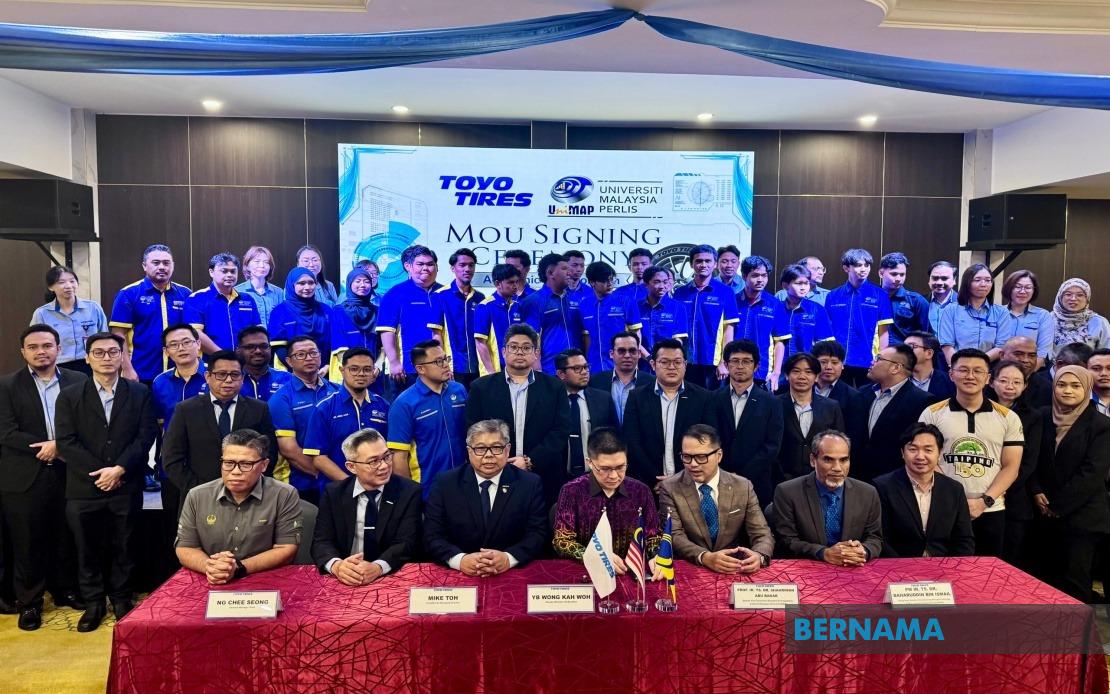
The Ministry of Education's vocational college system is witnessing unprecedented demand, with more than 67,000 Malaysians seeking admission to just 19,567 available positions as of mid-August. Deputy Education Minister Wong Kah Woh projected that total applications would surpass 68,000 by the midnight deadline, underscoring what officials characterise as a pivotal shift in how young Malaysians view career pathways. Speaking during a ceremony in Taiping to formalise a partnership agreement between tyre manufacturer Toyo Tyre Malaysia Sdn Bhd and Universiti Malaysia Perlis, Wong attributed this surge to sustained government initiatives aimed at elevating the technical and vocational education and training (TVET) sector.
The application numbers reveal a critical insight into Malaysia's labour market dynamics. The ratio of applicants to places—roughly 3.4 candidates competing for each spot—demonstrates that vocational training no longer carries the stigma it once did in a nation where university degrees traditionally dominated educational aspirations. This attitudinal change mirrors broader regional trends across Southeast Asia, where manufacturing, construction, and service sectors face persistent skills shortages. Malaysia's push to position itself as a high-skilled manufacturing hub has created genuine opportunities for vocational graduates, making such qualifications increasingly valuable in the job market.
What distinguishes Malaysia's vocational college system is its exceptional employment outcomes. Wong highlighted that graduates achieved a 99.95 per cent employability rate in 2023, with consistent placement rates between 98 and 99 per cent maintained over several preceding years. These figures are extraordinary by international standards and suggest that the colleges are producing graduates whose capabilities directly align with employer needs. For context, many university graduates in Malaysia struggle to secure employment immediately upon graduation, making the vocational pathway increasingly attractive to career-conscious students and their families.
The strength of these employment outcomes stems from a deliberate institutional strategy: close partnership between educational providers and industry. The MOE has systematised collaboration with employers to ensure that curriculum content, practical skills training, and soft skills development reflect real workplace demands. This liaison prevents the common problem of educational programmes becoming disconnected from labour market requirements—a challenge that has plagued some traditional academic pathways. When vocational colleges and employers work in tandem, graduates emerge equipped not merely with theoretical knowledge but with directly applicable competencies that employers can deploy immediately.
The MoU signed between Toyo Tyre Malaysia and UniMAP exemplifies this collaborative model. Such partnerships typically involve industry input into curriculum design, provision of equipment and real-world case studies, guest lectures from practitioners, and often direct recruitment pathways for graduating students. For a multinational manufacturing company like Toyo Tyre Malaysia, engaging with an educational institution ensures a pipeline of trained technicians and engineers aligned with the company's operational standards. For the university, such arrangements validate that its programmes remain economically relevant.
This vocational education surge carries significant implications for Malaysia's economic competitiveness. As the nation navigates the transition from middle-income to high-income status, manufacturing and advanced services require a sophisticated workforce. The traditional model of producing graduates with general degrees no longer suffices; employers increasingly demand technicians capable of operating complex machinery, managing supply chains, and troubleshooting technical problems. Vocational colleges, particularly when adequately resourced and industry-connected, fill this crucial gap.
Regionally, Malaysia's experience offers a template for other Southeast Asian nations grappling with skills mismatches. Vietnam, Thailand, and Indonesia similarly face shortages of skilled tradespeople even as youth unemployment persists. The Malaysian model—combining government investment with active industry participation—demonstrates how to shift educational outcomes from credentials to competencies. Countries across the region have begun studying Malaysian vocational education initiatives to identify best practices applicable to their own contexts.
The surge in applications also reflects demographic and economic factors. Malaysia's working-age population continues expanding, and many families recognise that not all young people are suited to or interested in academic university curricula. Vocational pathways offer legitimate alternatives that lead to stable, well-compensated employment. Furthermore, the cost of vocational college training typically runs substantially lower than university fees, expanding access to youth from lower-income households who might otherwise face educational barriers.
However, the data also reveals a capacity constraint. With only 19,567 places available against 68,000 applicants, the system can accommodate just 28.8 per cent of those seeking admission. This underscore a critical challenge facing the MOE: whether infrastructure, staffing, and funding can expand to meet demonstrated demand. Turning away qualified applicants represents lost economic potential for individuals and society. Strategic expansion of vocational college capacity, particularly in high-demand fields such as renewable energy, digital technology, and healthcare, merits urgent consideration within education sector planning.
Looking ahead, the government's MADANI agenda explicitly prioritises strengthening TVET as a pathway to inclusive economic growth. The overwhelming application numbers validate this strategic focus and provide concrete evidence that policy reorientation toward skills-based education resonates with Malaysian youth and families. However, moving from strong demand to sustained employment outcomes requires continuous refinement of curricula, investment in instructor training, and deepening of industry partnerships. The current trajectory is encouraging, but realising the full potential of vocational education as a driver of economic mobility and national competitiveness demands sustained commitment beyond the current budget cycle.

