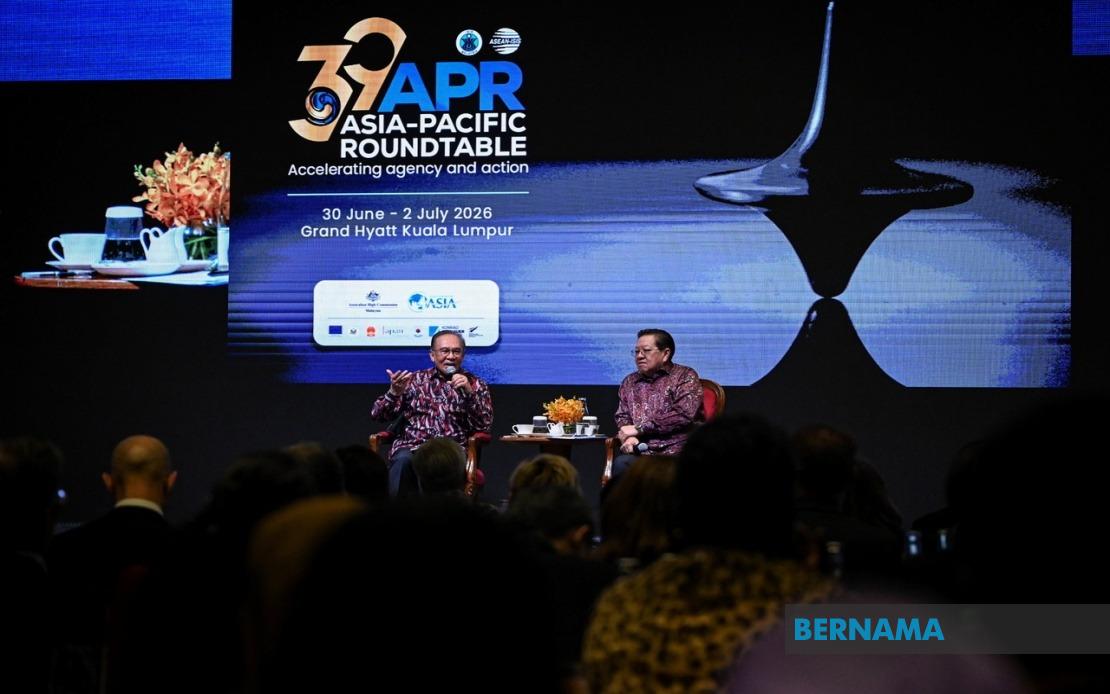
Prime Minister Datuk Seri Anwar Ibrahim has placed the consolidation of Malaysia's governance systems at the centre of his administration's strategic outlook, arguing that any nation seeking to influence international discourse must first establish a robust domestic foundation. Speaking at the 39th Asia-Pacific Roundtable in Kuala Lumpur on July 2, Anwar outlined how his government views domestic strengthening as the prerequisite for credible engagement with the wider world. This positioning reflects a deliberate shift towards addressing the structural weaknesses that have accumulated within Malaysia's institutions over previous administrations, with the Prime Minister treating governance reform not as a secondary consideration but as the cornerstone of his political agenda.
The government's reform agenda encompasses multiple interconnected priorities designed to rebuild public trust and institutional integrity. Corruption eradication remains a central pillar of this strategy, addressing concerns that have long plagued Malaysia's bureaucracy and private sector interactions. Alongside this, the administration aims to narrow wealth disparities that have widened significantly in recent decades, creating social tensions that undermine cohesion. Educational access and healthcare quality represent additional fronts in this comprehensive domestic overhaul, reflecting recognition that citizen welfare directly impacts both economic productivity and social stability. By framing these initiatives as foundational rather than aspirational, Anwar signals an intention to move beyond rhetorical commitments towards measurable institutional transformation.
While Malaysia maintains its tradition of articulating principled stances on international matters, the Prime Minister's remarks at the roundtable clarified that such positions emerge from a position of domestic strength rather than serving as substitutes for internal reform. This represents a pragmatic reordering of priorities that acknowledges resource limitations and the reality that countries cannot effectively project soft power while grappling with internal institutional deficits. The implicit message to Malaysia's international partners is that engagement with Kuala Lumpur will yield greater substance when accompanied by successful domestic consolidation. This approach also carries domestic political significance, suggesting that the government intends to judge its legitimacy by tangible improvements in citizens' daily lives rather than by diplomatic achievements alone.
A central theme of Anwar's intervention concerns Malaysia's potential to demonstrate that Muslim-majority nations can simultaneously uphold robust democratic institutions, promote inclusive governance, and maintain moderate voices in an increasingly polarised world. This positioning carries strategic importance beyond Malaysia's borders, as it addresses narratives in Western capitals that Islam and democracy exist in inherent tension. By advancing this model domestically, Malaysia could reshape international perceptions and offer an alternative developmental pathway for Muslim-majority countries navigating their own institutional and social challenges. The Prime Minister's framing also responds to concerns within Malaysia's diverse society about whether Islamic principles and secular democratic governance can coexist harmoniously, a question that resonates across Southeast Asia's Muslim and multi-religious nations.
Anwar's invocation of the late Palestinian-American scholar Edward Said's concept of a "clash of ignorance" rather than a "clash of civilisations" demonstrates intellectual sophistication in addressing global divisions. This distinction carries profound implications for how Malaysia positions itself within broader geopolitical contests. Rather than accepting frameworks that organise international relations around incompatible worldviews, the Prime Minister suggests that many conflicts arise from incomplete understanding and ingrained prejudices rather than genuine incompatibility. This perspective aligns Malaysia's diplomatic approach with bridge-building and dialogue promotion, roles that smaller regional powers can occupy effectively. For Malaysian society itself, this framing serves to challenge domestic assumptions about other communities, encouraging citizens to move beyond stereotypes towards genuine comprehension of differences.
The MADANI framework represents the Prime Minister's concrete institutional embodiment of these principles, deliberately integrating technological modernisation with humanistic values. This dual emphasis reflects understanding that pure technological advancement without corresponding ethical and social development produces hollow progress. The framework explicitly encourages cross-communal appreciation among people of different religious and ethnic backgrounds, positioning diversity management as central to national advancement rather than as an obstacle to overcome. For policymakers in Malaysia and elsewhere in Southeast Asia, this model offers a template for development strategies that do not require suppressing cultural identity or religious expression to achieve economic growth.
Anwar's reference to the Quranic concept of "li ta'arafu" (that you may know one another) deepens the theological grounding of his governance philosophy. This concept transcends mere tolerance—a passive acceptance of difference—and calls for active understanding and appreciation. The Prime Minister's deployment of Islamic teaching to support pluralistic governance reflects a deliberate strategy to neutralise arguments that multiculturalism represents a Western imposition incompatible with Malaysian Islamic values. By rooting inclusive governance in Islamic sources, Anwar positions his administration as authentically aligned with both Islamic tradition and modern democratic norms. This theological framing carries particular weight in a society where religious authority continues to influence political legitimacy.
For Malaysia's diverse population, Anwar's emphasis on appreciation across religious and ethnic lines carries practical significance beyond symbolic gestures. The statement implicitly acknowledges that Malaysia's multiracial, multireligious composition creates governance challenges requiring active management rather than passive coexistence. Communities must genuinely understand each other's perspectives, concerns, and aspirations if they are to function effectively within shared institutions. This recognition addresses the anxiety that some Malaysian communities experience regarding the direction of governance and their place within the national framework. By elevating intercommunal understanding from a nice-to-have aspiration to a governance imperative, the Prime Minister signals serious commitment to addressing underlying fragmentation.
The emphasis on strengthening domestic governance before pursuing international prominence reflects broader regional trends in Southeast Asia. Multiple countries across the region have recognised that international influence flows from domestic stability and demonstrated capability. Malaysia's positioning thus aligns with neighbouring nations' experiences that external engagement proves most effective when underpinned by internal coherence. The Prime Minister's framing also addresses legitimate criticism that previous Malaysian governments occasionally pursued international agendas at the expense of pressing domestic concerns. By reversing this priority ordering, Anwar attempts to rebuild political legitimacy through demonstrable improvements in governance quality and service delivery.
The Asia-Pacific Roundtable itself provided an appropriate venue for these remarks, given the forum's focus on regional security and governance challenges. Malaysian officials' participation in such discussions carries greater credibility when domestic institutions function effectively and exhibit capacity for implementation. The roundtable dialogue also permits Malaysia to learn from peer countries' governance experiences while contributing perspectives shaped by its unique demographic composition and democratic trajectory. For regional observers, Anwar's remarks clarify that Malaysia intends to engage international discussions from a position of domestic strength rather than attempting to establish international standing to deflect from internal deficiencies.
Implementation will ultimately determine whether these governance ambitions translate into institutional reality. The Prime Minister's prioritisation of anti-corruption efforts, inequality reduction, and expanded educational and healthcare access identifies measurable targets against which the administration's performance can be evaluated. Success in these domains would substantially enhance Malaysia's soft power and regional influence by demonstrating that Muslim-majority democracies can deliver quality governance. Conversely, failure to deliver tangible improvements would undermine the credibility of the government's international positioning. This high-stakes framing reflects the stakes involved in Malaysia's governance trajectory and its implications for how the nation navigates the complex geopolitical landscape of Southeast Asia and the broader Indo-Pacific region.

