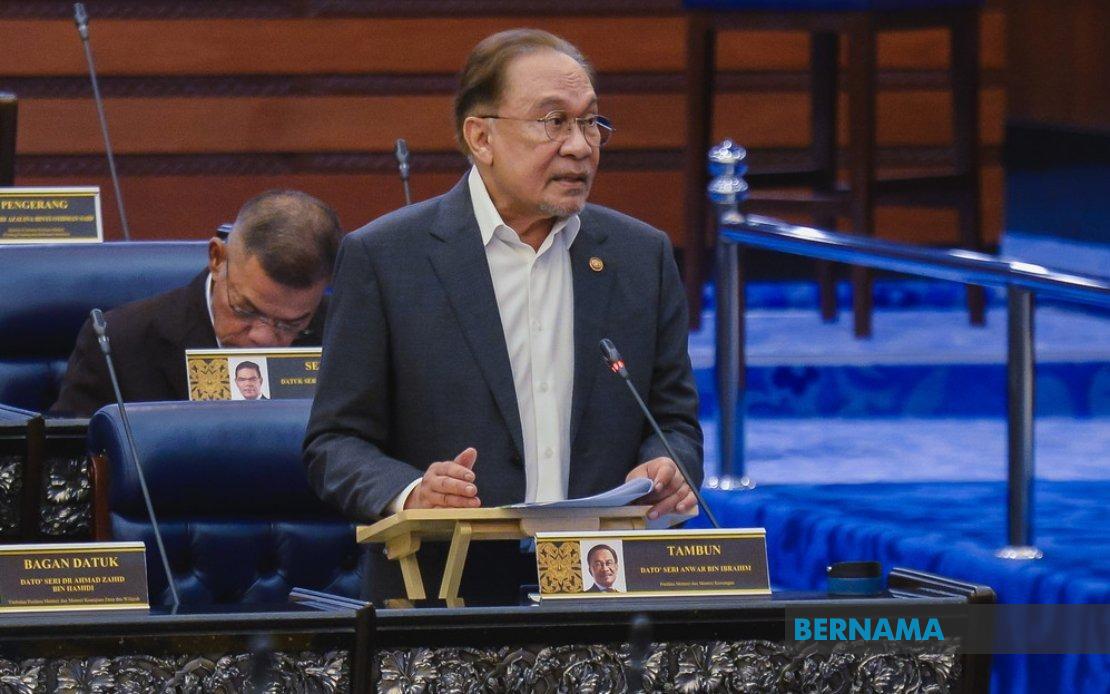
Prime Minister Datuk Seri Anwar Ibrahim has firmly established new parameters for how the Federal Government will handle state requests for supplementary project funding, signalling a more stringent approach to infrastructure cost escalations that have become increasingly common across Malaysia's development landscape. Speaking during parliamentary proceedings, Anwar made clear that whenever a state government issues a Notice of Change triggering additional expenditure, the matter cannot simply proceed under existing arrangements but must be subjected to comprehensive renegotiation involving multiple layers of federal scrutiny.
The Prime Minister's directive addresses a recurring challenge in Malaysia's federal structure where state-level development initiatives have occasionally encountered cost blowouts that state authorities then expect the Federal Government to absorb without detailed examination. Anwar's intervention suggests growing concern within the federal administration about how such escalations are justified and whether they reflect genuine project necessity or inadequate initial planning. By insisting on renegotiation rather than automatic approval, the government is attempting to establish greater fiscal discipline across the federation while ensuring that taxpayer resources are deployed responsibly.
Anwar identified several critical factors that must be assessed during any renegotiation process, beginning with determining whether the contractor bears responsibility for cost increases. This distinction matters significantly because it establishes accountability and potentially allows the Federal Government to pursue cost recovery or contract remedies rather than simply absorbing losses through additional allocations. Understanding the root cause of any project cost escalation forms the foundation for determining whether additional federal funding represents a legitimate response to genuine circumstances or whether alternative solutions should be pursued.
The Prime Minister emphasised that once a Notice of Change introduces additional funding requirements, the matter transforms into a federal concern that cannot remain solely within the purview of state decision-making. This reflects a crucial principle of fiscal federalism where the Federal Government, as the entity ultimately responsible for national financial health and budgetary integrity, cannot be automatically bound by state-level determinations. Anwar's statement essentially establishes that while states may initiate projects and make initial budgetary decisions, any significant deviations from approved expenditure frameworks require federal validation and approval.
The immediate catalyst for this clarification was Kedah's request for additional funding for the Pulau Bunting Water Treatment Plant project, which necessitates an NOC approval. This infrastructure initiative illustrates how development projects, particularly those involving complex technical components like water treatment systems, can encounter unforeseen complications affecting costs. The Kedah situation evidently prompted broader reflection within the federal administration about standardising procedures for addressing such requests across all states.
Malaysia's water sector has experienced consistent challenges related to cost management and project delivery timelines, making the government's emphasis on rigorous assessment particularly relevant. Water treatment facilities require specialised engineering expertise and are subject to environmental compliance requirements that may evolve during project implementation, potentially justifying some cost increases. However, without systematic renegotiation frameworks, distinguishing legitimate additional costs from avoidable escalations becomes difficult, potentially creating moral hazard where poorly-managed projects expect federal bailouts.
Anwar's approach reflects international best practice in project management and fiscal governance, where change orders and cost variations require documented justification and stakeholder approval rather than automatic implementation. By establishing this requirement at the Prime Ministerial level, the government signals that infrastructure cost management will be treated as a governance priority, potentially improving planning discipline across state administrations. States anticipating federal scrutiny may become more cautious about approving initial project budgets, investing greater effort in preliminary assessments.
The renegotiation requirement also serves a broader transparency objective, ensuring that decisions about substantial public expenditures receive appropriate visibility and documentation. When cost increases are subjected to formal renegotiation processes, the decisions, rationales, and approvals create an auditable record. This accountability dimension addresses public expectations that government resources be managed according to clear procedures rather than discretionary arrangements that might lack justification.
Deputy Prime Minister and Energy Transition and Water Transformation Minister Datuk Seri Fadillah Yusof is expected to provide detailed implementation guidance on how the renegotiation process will function in practice. Fadillah's portfolio encompassing water transformation positions him to develop frameworks that balance federal fiscal discipline with recognition that infrastructure projects may encounter genuine complications requiring additional resources. The specific guidance will likely clarify procedures, documentation requirements, and assessment criteria.
For state governments, Anwar's directive necessitates more rigorous initial project planning and realistic budgeting. States cannot assume that cost escalations will be automatically accommodated through federal allocation increases, creating incentives to improve estimation accuracy and contractor selection processes. This may require states to invest more substantially in preliminary feasibility studies and technical assessments before project approval, potentially increasing upfront costs but reducing downstream escalation risks.
The implications extend beyond individual projects to broader questions about Malaysia's approach to infrastructure development financing. As the country pursues substantial infrastructure expansion to support economic growth and social development, establishing systematic cost management frameworks becomes increasingly important. The Prime Minister's insistence on renegotiation creates precedent for treating infrastructure cost discipline as a matter of national economic governance rather than merely administrative procedure.
For contractors and project developers, the new approach signals that cost variations will require justification rather than automatic adjustment. This may encourage more competitive and disciplined bidding practices, as contractors recognise that subsequent cost escalations will face federal scrutiny rather than proceeding through sympathetic state approvals. Over time, this could improve infrastructure project outcomes by aligning contractor incentives with cost control objectives.
Anwar's statement ultimately reflects a pragmatic recognition that while the Federal Government must support genuine infrastructure needs across all states, it cannot function as an automatic fund for projects experiencing cost management challenges. By establishing that renegotiation is mandatory, the government creates space for both approving legitimate additional funding and rejecting escalations that lack adequate justification, advancing both fiscal responsibility and equitable resource distribution across Malaysia's federation.

