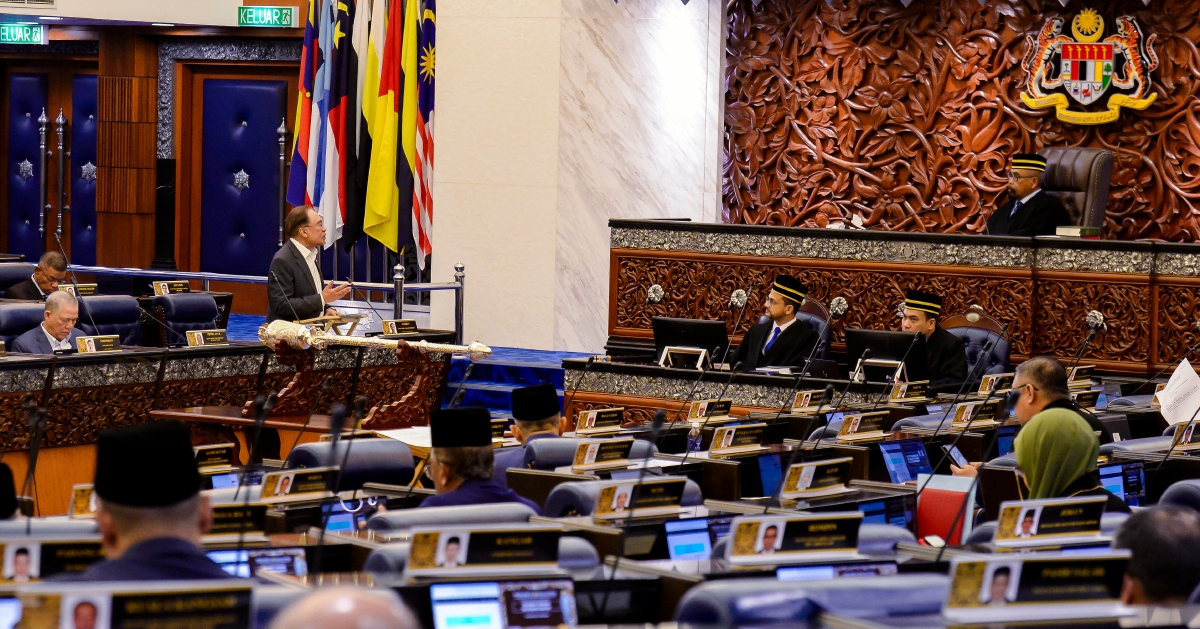
Prime Minister Datuk Seri Anwar Ibrahim has signalled a fundamental shift in how the federal government will approach financing state initiatives, declaring that Putrajaya should not be expected to automatically pick up the bill whenever state governments make costly decisions. The statement comes amid ongoing debates about the financial relationship between Malaysia's federal centre and its 13 states, a relationship increasingly strained by divergent policy priorities and fiscal pressures at both levels of government.
Anwar's position reflects growing frustration within federal circles over unfunded mandates and the cumulative financial burden that state-level decisions can impose on national coffers. This represents a departure from past practices where the federal government often stepped in to cover shortfalls, regardless of whether such expenses resulted from deliberate state policy choices or genuine structural constraints. The prime minister's remarks underscore a broader recalibration of intergovernmental financial relations that has significant implications for how Malaysia manages its federal system.
The timing of Anwar's statement is particularly noteworthy given the current economic environment. Malaysia faces considerable fiscal pressures, including elevated debt levels and competing demands for public spending across infrastructure, healthcare, education, and social welfare. With a federal budget constantly stretched, administrators in Putrajaya have become more attentive to the financial consequences of state government actions that ultimately burden national finances. This disciplined approach aligns with the government's broader agenda of fiscal consolidation and prudent spending management.
States across Malaysia have considerable autonomy under the Federal Constitution to pursue their own policies in designated areas including land, agriculture, local government, and certain aspects of public services. However, these powers exist within a framework where financial interdependencies are substantial and often unavoidable. When states make decisions without full consideration of fiscal implications, or implement programmes without matching revenue sources, the costs frequently cascade upwards to the federal level, which controls the bulk of Malaysia's tax revenues.
This issue has become particularly acute in recent years as states have pursued development initiatives, welfare programmes, and infrastructure projects with varying degrees of financial planning. Some states have managed their finances prudently, building reserves and limiting exposure to federal bailouts. Others have operated closer to the margins, creating situations where state-level fiscal stress becomes a national concern. Anwar's statement essentially signals that the federal government intends to be more selective and strategic about which state costs it will absorb.
The principle Anwar articulates raises important questions about accountability and fiscal responsibility across Malaysia's multi-level governance system. If states cannot automatically rely on federal subsidies, they face stronger incentives to budget realistically, generate adequate own-source revenues, and prioritise spending according to actual financial capacity. This creates a more disciplined framework where state leaders must justify spending to their constituents and make difficult trade-offs, rather than deferring difficult decisions to the federal level.
However, the blanket principle must be tempered by practical reality. Some state costs have genuine spillover effects that justify federal involvement, such as healthcare emergencies, natural disasters, or infrastructure connecting multiple jurisdictions. Additionally, equitable development across all states remains a legitimate federal concern, suggesting that some fiscal equalisation remains necessary to prevent widening regional disparities. The challenge lies in distinguishing between costs that states should shoulder and those that warrant federal assistance on grounds of national interest.
The statement also carries political dimensions, as states governed by different coalitions from those in Putrajaya may view this more stringent approach as partisan. Opposition-ruled states might interpret it as a threat to withhold federal funds unless they align with federal government preferences. Conversely, states aligned with the federal government may expect continued support. Managing these perceptions while maintaining consistent fiscal principles represents a delicate balancing act for Anwar's administration.
Southeast Asian context adds another layer to this issue. Most regional nations struggle with centre-state fiscal relations, balancing central capacity with regional autonomy. Malaysia's federal system is relatively centralised by regional standards, but states still retain meaningful spending authority. How successfully Anwar's government implements a more disciplined approach to state cost-sharing could influence conversations about federalism across the region and demonstrate whether mature fiscal federalism is achievable in a developing democracy.
For Malaysian readers and observers, this shift signals that the era of implicit federal safety nets for state government decisions may be ending. Both state administrators and citizens should expect that state governments will increasingly be held accountable for their financial decisions, without automatic recourse to federal treasuries. This could promote better governance at the state level but might also create friction if states lack adequate resources for essential services. The actual implementation of Anwar's principle will ultimately determine whether it represents genuine fiscal discipline or merely rhetorical positioning.

