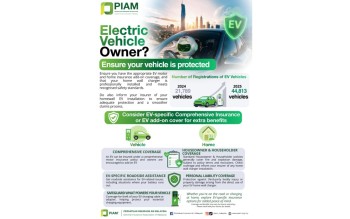
Following a fire incident in Cheras involving an EV home charger that caused substantial damage to a residential property, Malaysia's General Insurance Association (PIAM) has moved to reassure homeowners about their coverage protection. The association's chief executive Chua Kim Soon outlined the position that most standard house owner and fire insurance policies in the country extend coverage for fire damage arising from any source of ignition, provided the policy conditions remain intact and no fraud or deliberate misconduct occurs.
The clarification addresses growing anxiety among Malaysian homeowners as electric vehicle adoption accelerates and more residents install charging infrastructure at their properties. With the government's aggressive push toward EV adoption and increasingly competitive pricing in the local market, more households are opting for home charging solutions rather than relying solely on commercial charging networks. This trend has raised legitimate questions about what happens when such installations go wrong, particularly in densely populated residential areas where a fire could easily spread between adjoining units.
Chua emphasised that coverage extends across the full range of fire-related perils, but coverage ultimately depends on the specific terms, conditions, and exclusions written into each individual policy. Insurers will not honour claims if evidence emerges of fraudulent conduct, deliberate damage, or material breaches of the policy's stated requirements. This distinction matters considerably: a homeowner who knowingly installed a substandard or uncertified charger would struggle to recover losses, while one who followed proper procedures would have their claim processed normally.
The nature of EV charging equipment determines how it falls within policy frameworks. Permanently installed chargers that are hard-wired into a home's electrical system are typically treated as part of the building's fixtures and fittings, falling within the standard buildings section of a home insurance policy. Conversely, portable or removable charging cables and equipment are generally excluded from standard home policies and instead fall under specialised electric vehicle motor insurance packages or optional add-ons that insurers now routinely offer.
Insurers across Malaysia have established clear expectations regarding homeowner responsibilities. They require that occupants take reasonable precautions to maintain proper electrical safety standards throughout the property. When assessing claims arising from charging-related fires, insurers will request official investigation reports from the fire department to eliminate the possibility of arson, insurance fraud, or non-compliance with electrical codes. Particular scrutiny falls on any evidence of illegal, uncertified, or improper electrical modifications that fall below statutory standards.
Chua strongly advised homeowners to notify their insurance providers immediately upon installing any permanent EV charger. This disclosure requirement exists for important reasons: it ensures that the sum insured on the property reflects the current cost of rebuilding after a total loss, accounting for the new electrical infrastructure. Without this declaration, homeowners risk a scenario where their coverage becomes inadequate for the property's actual value, leaving them exposed to uninsured loss. Moreover, clear disclosure eliminates the possibility that an insurer could later claim a material non-disclosure and deny a claim.
Homeowners should conduct a thorough review of their existing policy documentation to confirm that the sum insured accurately reflects the total replacement value of their property in its current state. This calculation must account for home modifications, upgraded fixtures, and the addition of new electrical equipment. Many properties are underinsured relative to their true replacement cost, a problem that becomes more acute when significant upgrades like EV chargers are added without corresponding policy adjustments.
Given the concentrated nature of residential development in Malaysia, particularly in terrace houses and high-rise apartments where properties sit in close proximity to one another, the potential for fire to spread from one unit to adjacent units remains a genuine risk. An electrical fire originating from a faulty charger could easily damage neighbouring homes or commercial spaces, exposing the property owner to significant third-party liability claims. While standard house owner policies typically provide a base public liability limit of RM50,000, this figure may prove inadequate if a fire causes damage across multiple units or displaces residents temporarily. Chua highlighted that homeowners can purchase optional extensions to increase this liability ceiling to more appropriate levels.
EV owners should treat the insurance review process as an opportunity to address coverage gaps comprehensively. This involves examining not only the home policy's provisions for the residential structure and charging equipment, but also the motor insurance policy covering the vehicle itself. Some insurers offer bundled packages that coordinate protection across both domains, while others operate separately. Identifying any overlaps or gaps in coverage prevents the frustrating situation where a loss falls between two policies with neither insurer accepting responsibility.
The rising frequency of EV-related insurance enquiries reflects a broader maturation of Malaysia's automotive insurance market. Underwriters are developing more sophisticated assessment protocols for electrical fire risk, while also recognising the distinction between properly installed, certified chargers and makeshift or unregulated alternatives. Homeowners who engage proactively with their insurers, maintain compliance with electrical codes, and keep their policies current will find themselves well protected. Those who view insurance as a one-time transaction and ignore policy updates risk discovering, at the worst possible moment, that they lack adequate coverage for their actual circumstances.

