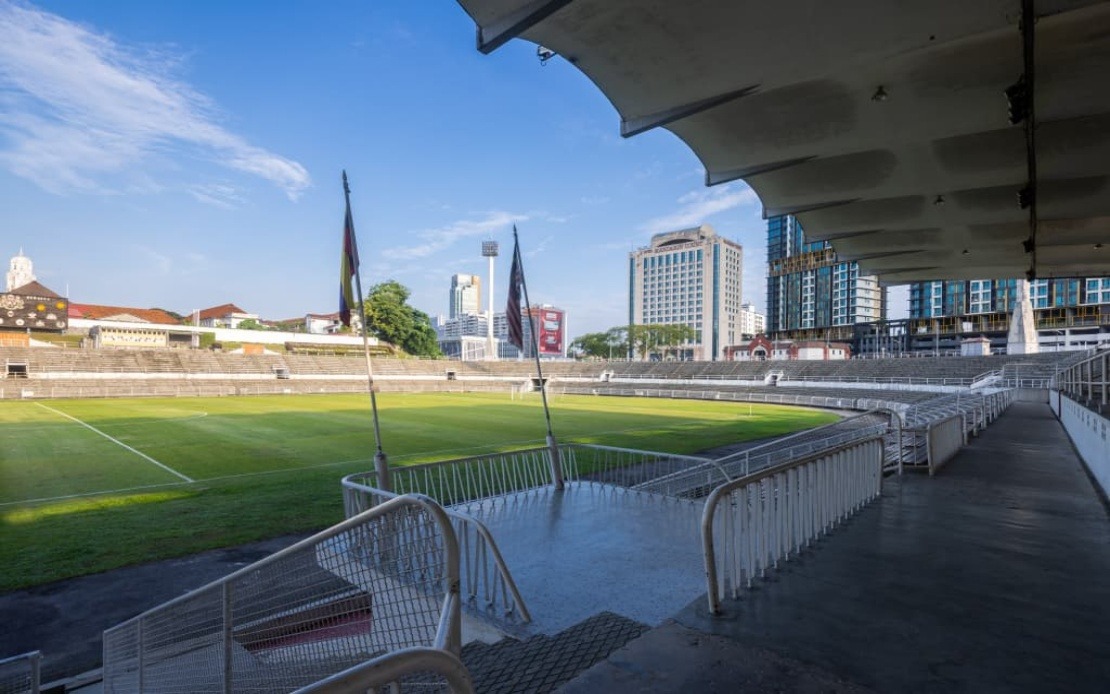
Stadium Merdeka has endured nearly 70 years as Malaysia's most powerful architectural testament to national sovereignty, standing firm as a tangible link between the moment independence was proclaimed and the modern nation Malaysia has become. Built on a visionary timeline of just one year and completed at a cost of RM2.3 million, the venue earned its place in history on August 31, 1957, when Tunku Abdul Rahman Putra Al-Haj, the nation's first Prime Minister, proclaimed Malaya's freedom with his seven resounding cries of "Merdeka". Today, the stadium continues its custodianship of that defining memory, even as gleaming towers like Merdeka 118 rise around it, reshaping the Kuala Lumpur skyline.
The significance of Stadium Merdeka transcends its function as a sports facility, according to social anthropology experts. Prof Dr Sarjit Singh Gill from Universiti Putra Malaysia, who chairs the National Council of Professors' National Unity Cluster, emphasises that the venue embodies far more than concrete and steel. The stadium marks the threshold between colonial subjugation and self-determination, representing the precise geographical location where Malaysians collectively stepped into nationhood. This dual nature—as both physical space and symbolic anchor—elevates Stadium Merdeka beyond a mere heritage object into a repository of national identity, dignity and cultural continuity.
The stadium's historical significance deepened six years later when it hosted another watershed moment in the region's political evolution. In 1963, Stadium Merdeka became the stage for proclaiming the formation of the Malaysian Federation, effectively extending the independence framework to Sabah and Sarawak whilst simultaneously concluding British colonial administration across the broader territories. This second historical proclamation reinforced the venue's status as Malaysia's preeminent stage for constitutional transformation, though the subsequent separation of Singapore would alter regional geopolitics in ways the founders could not have fully anticipated.
The journey to preserve Stadium Merdeka, however, proved neither inevitable nor straightforward. During the late 1990s, when redevelopment pressures threatened the aging structure, public sentiment and government resolve coalesced to prevent demolition. This grassroots and institutional commitment reflected an emerging recognition that certain spaces hold irreplaceable cultural value that transcends commercial calculation. When Permodalan Nasional Berhad (PNB) assumed management responsibility in 2000, the decision represented not merely a change of custodian but a deliberate commitment to heritage conservation, establishing protocols and frameworks that would guide restoration efforts for decades.
Restoration works proved methodical and historically grounded rather than superficial cosmetic upgrades. Conservation teams referenced original Public Works Department construction drawings to guide their interventions, ensuring architectural authenticity remained paramount throughout the process. Subsequent modifications—particularly the upper seating tiers added after initial construction—were removed to restore the stadium's original 20,000-seat capacity. Simultaneously, intricate details including the distinctive scoreboard, sanitary facilities, decorative mosaic tilework and the architecturally significant cantilevered roof underwent meticulous restoration, each element contributing to the venue's historical integrity. This granular approach to conservation demonstrated that preserving heritage requires technical expertise combined with philosophical commitment to authenticity.
Datuk Dr Izwan Ibrahim, Chief Executive Officer of PNB Merdeka Ventures Sdn Bhd, articulates the conservation philosophy guiding current stewardship. Rather than viewing Stadium Merdeka as a museum piece frozen in time, PNB approaches the venue as a living historical space where narratives remain dynamic and accessible. The stadium now functions as a public gathering space, with refurbished athletic facilities serving community members and cultural programming drawing substantial audiences. The Bazram Merdeka bazaar, a Ramadan market event held annually at the venue, attracted over 250,000 visitors earlier this year, demonstrating that heritage preservation and contemporary community engagement need not represent competing objectives.
Extending Stadium Merdeka's significance to younger Malaysians constitutes a central priority for current stewardship. For many people born after independence, the events of 1957 occupy the realm of textbook history rather than living memory, accessible primarily through formal education and familial storytelling. PNB and associated institutions recognise that direct experiential engagement with historical sites creates qualitative differences in how younger generations understand and internalise national narratives. By encouraging school visits, facilitating youth participation in stadium-based activities and creating opportunities for young people to inhabit the physical space where Malaysia's independence was proclaimed, stewards aim to cultivate personal connections that classroom instruction alone cannot generate. Early evidence suggests this strategy resonates, with neighbouring schools increasingly utilising the venue for educational programming.
International recognition has reinforced the stadium's status as a heritage asset worthy of preservation and celebration. In 2008, Stadium Merdeka received a UNESCO Asia-Pacific Heritage Award, validating its architectural and historical significance within regional and global frameworks. The subsequent national gazetting of Stadium Merdeka as a Heritage Site in 2009 formalised legal protections whilst acknowledging institutional responsibility to preserve the venue for future generations. These designations reflect consensus that certain places transcend parochial or temporal interests, commanding preservation efforts that extend beyond market logic or individual preference.
The human dimension of Stadium Merdeka's preservation emerges powerfully through the experiences of those who have devoted careers to maintaining the venue. Alias Daud, a long-serving staff member who spent 35 years with PNB including his final decade focused specifically on Stadium Merdeka's care, embodies the combination of professional stewardship and emotional investment that heritage preservation demands. Walking through the stadium's gates generates in him a complex emotional response—pride in the nation's founding moment, gratitude for the opportunity to participate in preservation efforts, and nostalgia for the visitors whose varied experiences have unfolded within those boundaries. This convergence of personal meaning and public duty illustrates how heritage stewardship operates not as abstract institutional practice but as lived experience.
Stadium Merdeka witnesses seasonal intensification of its cultural significance during Malaysia's national month, when government agencies, educational institutions and universities organise visits to engage citizens with the venue's history and capture commemorative content. These organised gatherings demonstrate how heritage sites function as pedagogical tools, offering opportunities for structured engagement with foundational historical moments. Visitors frequently express astonishment upon learning that this physical location hosted the proclamation of independence, a reaction that underscores how geographical specificity enriches historical understanding. For younger visitors particularly, the experience of standing in the actual space where national destiny pivoted creates visceral connections to abstract historical concepts.
As Stadium Merdeka approaches its eighth decade, it occupies an increasingly liminal position—simultaneously anchored to a foundational historical moment whilst continuing to serve evolving contemporary functions. The encroaching urban landscape, marked by towers and commercial developments, creates architectural and symbolic tension, with the venue's modest mid-century design standing in stark counterpoint to surrounding modernity. This juxtaposition embodies broader questions about how nations balance historical preservation with contemporary development, how communities maintain connections to founding moments whilst navigating present-day challenges. Stadium Merdeka's persistence as a functioning public space rather than a cordoned museum exhibit suggests one answer to these tensions: heritage preservation thrives when historical sites remain integrated into community life rather than sequestered as untouchable relics.
The continuing relevance of Stadium Merdeka extends beyond ceremonial commemoration into substantive contemporary meaning. For successive generations of Malaysians, the stadium's existence and maintained condition communicate a societal commitment to remembering how sovereignty was attained and what aspirations motivated the independence struggle. The venue's preservation across political transitions, economic fluctuations and shifting urban priorities reflects a broad consensus that certain historical moments deserve permanent architectural and institutional guardianship. As Malaysia navigates contemporary challenges and future possibilities, Stadium Merdeka remains a tangible anchor to the ideals and determination that animated the independence movement, offering younger Malaysians opportunities to experience directly the physical space where their nation's journey as a free and sovereign people commenced.

