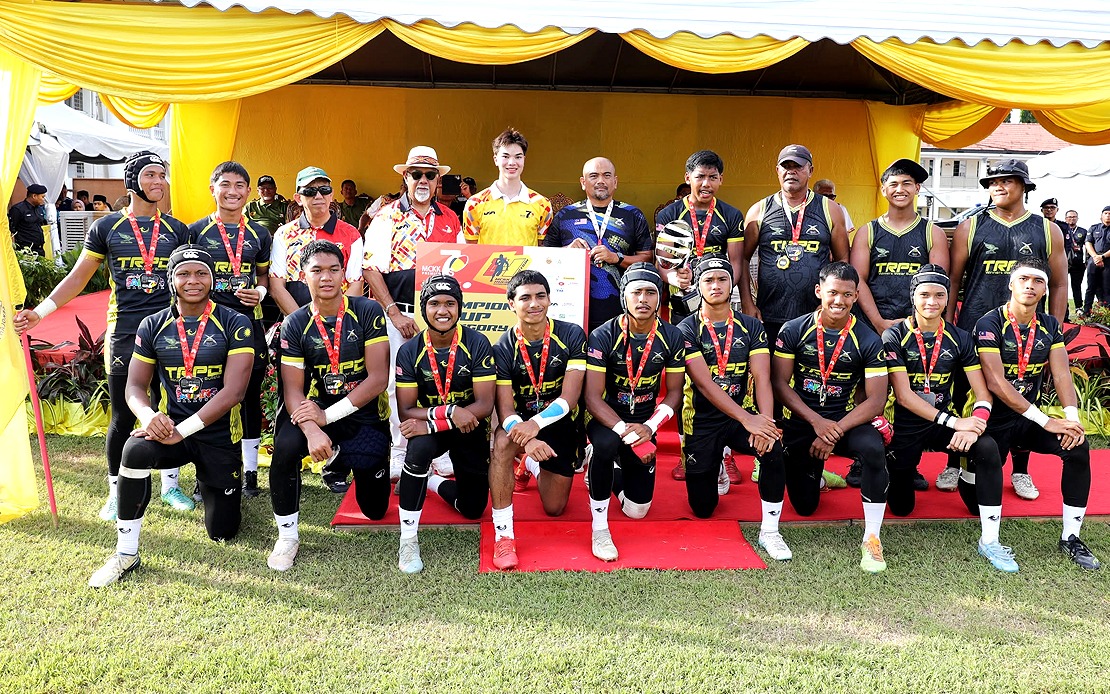
Sekolah Sukan Malaysia Pahang (SSMP) has successfully defended its title at Malaysia's most prestigious school rugby sevens tournament, securing the NJ Ryan Trophy for the second consecutive year following a tight 19-14 victory over Sekolah Sukan Tunku Mahkota Ismail (SSTMI) at the Malay College Kuala Kangsar (MCKK) field in Perak on July 5. The result means the two dominant forces in Malaysian school rugby have now met in the championship decider for two years running, with SSMP proving the more clinical side in both encounters.
The Cup final proved a compelling showcase of high-intensity rugby sevens, with both teams demonstrating the attacking flair and defensive resilience that has elevated Malaysian school rugby to regional prominence. SSMP's ability to maintain their composure under pressure in the closing stages underscored why they have emerged as the programme's most consistent performers. The narrow margin of victory reflected SSTMI's competitive quality, but ultimately SSMP's execution in critical moments proved decisive in determining the outcome.
Malaysia's school rugby sevens format has long served as a crucial development pathway for identifying and nurturing talent destined for senior national representation. The MCKK Premier 7s, now in its 14th edition, has established itself as the tournament through which the nation's emerging rugby prospects gain exposure and invaluable competitive experience. The dominance of SSMP and SSTMI in recent seasons highlights how specialised sports schools have become increasingly central to Malaysia's talent development infrastructure in rugby union.
Beyond the championship bracket, the tournament featured competitive divisions that provided opportunities for a broader cross-section of Malaysian schools. SMK Tun Hussein Onn (THOR) captured the Plate competition with a 24-19 triumph over Sekolah Sultan Alam Shah (SAS), indicating that competitive rugby quality extends well beyond the elite tier. This tiered structure ensures that schools at varying levels of development can participate meaningfully and continue building their programmes year on year.
In the Bowl division, SMK Hosba (HOSBA) claimed victory with a 17-12 win against SMK Syed Sirajuddin (SEMSIRA), while the Shield title went to MRSM Balik Pulau (MRSMBP), who delivered an emphatic 22-0 shutout victory over Royal Military College (RMC). These results across multiple divisions underscore the depth of rugby participation across Malaysian secondary education institutions, from the most specialised sports academies to traditional military and civilian boarding schools.
The ceremonial conclusion of the tournament featured significant institutional representation, with Raja Datuk Seri Azlan Muzaffar Shah, son of the Sultan of Perak, presiding over the closing ceremony and trophy presentation. Such high-level patronage reflects the cultural and sporting significance that rugby holds within Malaysia's educational landscape, particularly in peninsular states with strong institutional rugby traditions. The presence of royal representation at the closing ceremony also underscores the tournament's standing as a fixture of national importance within youth sports development.
For SSMP, the back-to-back championships represent validation of their integrated sports education model, which prioritises athletic development alongside academic rigour. The school's emergence as a consistent championship contender suggests that specialised sports schools, when properly resourced and strategically positioned within the education system, can produce athletes capable of performing at the highest competitive levels. This success carries implications for how Malaysia's broader sports development strategy allocates investment across different school categories.
The competitive closeness of the final, where SSTMI pushed the champions to the wire despite ultimately falling short, indicates that the pipeline of quality rugby talent continues to expand. Rather than representing a settled hierarchy, the tournament increasingly demonstrates that several institutions possess the coaching infrastructure and player development systems necessary to compete at elite levels. This diffusion of capability suggests positive trajectory for Malaysian school rugby's long-term competitive sustainability.
Regionally, Malaysia's school rugby sevens competitions have gained recognition as producing athletes who contribute significantly to Southeast Asian rugby development. The tournament's format and competitive standard provide developmental benefits that extend beyond domestic interest, with successful performers increasingly appearing in regional age-group representative teams. The presence of military institutions like RMC alongside specialist sports schools also reflects how rugby talent development in Malaysia operates across multiple institutional pathways.
Looking forward, SSMP's consecutive championships place them in position to potentially establish a longer dynasty at the MCKK Premier 7s, assuming they can maintain squad continuity and coaching stability. However, the demonstrated competitiveness of SSTMI and improving performance from institutions like THOR suggests that future tournaments will likely remain intensely contested. The tournament's evolution reflects broader trends in how Malaysian secondary education institutions are investing in rugby development as both a sporting pursuit and character-building discipline.
The 14th edition of the MCKK Premier 7s has once again delivered the competitive spectacle that has made the tournament essential viewing for Malaysian rugby administrators, coaches, and scouts tracking emerging talent. SSMP's retention of their title, achieved through sustained excellence rather than dominant margin, reinforces the tournament's credibility as a genuine testing ground for the nation's next generation of rugby union players.

