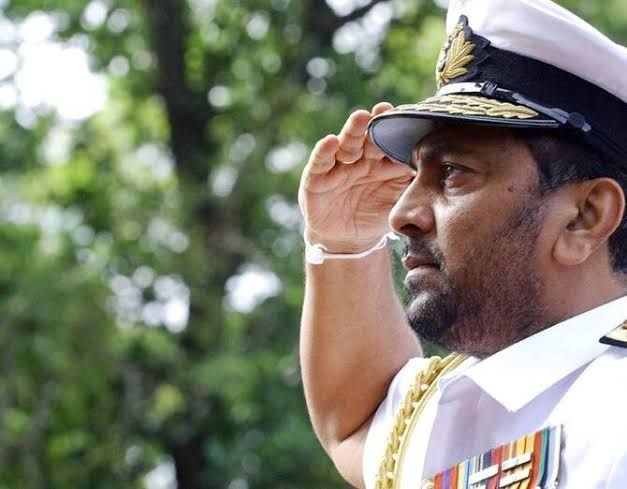
Sri Lanka has arrested a retired senior naval officer amid a widening corruption probe targeting the Rajapaksa political dynasty and those accused of enabling their rise to power. Admiral of the Fleet Wasantha Karannagoda, 73, was taken into custody by the country's Bribery Commission on Friday (July 3) after investigators determined he played a key role in circumventing military recruitment standards to facilitate the enlistment of Yoshitha Rajapaksa, the former president's son, in 2006 without meeting the necessary qualifications. The case represents one of several high-profile charges being revived against the Rajapaksa family and their associates under President Anura Kumara Dissanayake's administration, which has prioritised tackling entrenched corruption and previously shelved investigations.
Karannagoda's arrest marks a significant moment in Sri Lanka's faltering efforts to address accountability within its military and political establishment. As the commander of the navy during the conclusion of the country's decades-long civil conflict with Tamil separatists in 2009, Karannagoda occupied one of the most influential security positions during a critical period. He was subsequently elevated to the ceremonial rank of admiral of the fleet in 2019 and currently maintains no active operational duties within the naval service. The charges against him focus specifically on his role in bending recruitment rules for Yoshitha Rajapaksa, an action that the Bribery Commission contends constitutes corruption under Sri Lankan law.
The Rajapaksa family member at the centre of the recruitment case is facing his own legal troubles that extend well beyond questions of military nepotism. Yoshitha Rajapaksa, 38, was arrested last month on charges stemming from allegations that he misappropriated public funds to finance training at Dartmouth Royal Naval College in Britain, a prestigious institution that typically serves officers from allied nations. He has since secured bail while awaiting trial. The younger Rajapaksa is simultaneously embroiled in an unexplained wealth investigation, having failed to satisfactorily account for the sources of income he claimed to have used when purchasing property during his father's presidency from 2005 to 2015. When questioned by investigators, he attributed the funds to the sale of gemstones allegedly gifted to him by a relative, though the relative could not herself explain how those valuable stones had been originally obtained.
Karannagoda's detention also resurrects serious charges that had previously been shelved through political intervention. He faces allegations of conspiracy to murder in connection with the deaths of eleven young men between 2008 and 2009, charges that were initially withdrawn in October 2021 when Gotabaya Rajapaksa, the former president's brother, held the presidency. The reversal of that decision under Dissanayake's administration underscores the new government's determination to pursue dormant cases and signals a potential shift in the balance of power away from the Rajapaksa family's former political dominance. Beyond these murder-related charges, Karannagoda has also attracted international scrutiny; Britain imposed sanctions against him in March 2025 following findings that he committed serious human rights violations and extrajudicial killings during his tenure as naval commander.
The broader trajectory of legal action against the Rajapaksa circle demonstrates how the change of government has created opportunities for prosecutors to reactivate investigations that stalled during periods of Rajapaksa-allied leadership. Several family members and their close associates face multiple pending charges covering a spectrum of alleged misconduct, though judicial resolution of these cases has remained painfully slow. Gotabaya Rajapaksa himself, Yoshitha's uncle and the former president's brother, was recently handed a foreign travel ban after authorities determined he possessed alleged links to the 2019 Easter Sunday bombing campaign that claimed 279 lives. That restriction signals investigators' intention to maintain pressure on senior family figures while evidence is compiled.
The implications of these developments extend beyond individual criminal accountability to touch upon fundamental questions about institutional reform in Sri Lanka. The military, like many post-conflict institutions, has traditionally operated with considerable autonomy from civilian oversight, and breaches of recruitment standards by a service chief carry symbolic weight that transcends the particular circumstances of one officer's favouritism. Karannagoda's arrest, therefore, potentially signals the new administration's willingness to challenge patterns of institutional impunity that accumulated during the civil war and its immediate aftermath, when security concerns often superseded legal requirements.
For regional observers, particularly those in Southeast Asia who monitor Sri Lanka's governance trajectory, the anti-corruption campaign reflects a broader democratic reassessment in the island nation. President Dissanayake came to power in September 2024 with a mandate explicitly centred on eradicating corruption and resolving long-standing high-profile crimes, appealing to a public fatigued by the apparent untouchability of the Rajapaksa establishment. The revived prosecutions represent a test of whether that electoral mandate can translate into tangible institutional change or whether entrenched power structures will ultimately limit the scope of accountability.
The cases unfolding in Sri Lankan courts will likely influence regional perceptions of the country's commitment to rule of law and institutional integrity. Neighbouring nations, particularly those grappling with their own questions about military accountability and governance standards, are watching how thoroughly these investigations proceed and whether legal outcomes result in substantive consequences. The contrast between the shelving of charges during the previous political dispensation and their resurrection under new leadership underscores vulnerabilities in Sri Lankan institutions that rely heavily upon the political composition of government rather than independent safeguards.
As investigations deepen and trials progress, the case of Karannagoda and his connection to the Rajapaksa recruitment irregularities will serve as a barometer for whether Sri Lanka can establish sustainable mechanisms for political and military accountability. The outcomes will help determine whether the current anti-corruption campaign represents a genuine institutional reset or merely a temporary realignment of factional interests, with significant implications for Sri Lanka's stability and regional standing.

