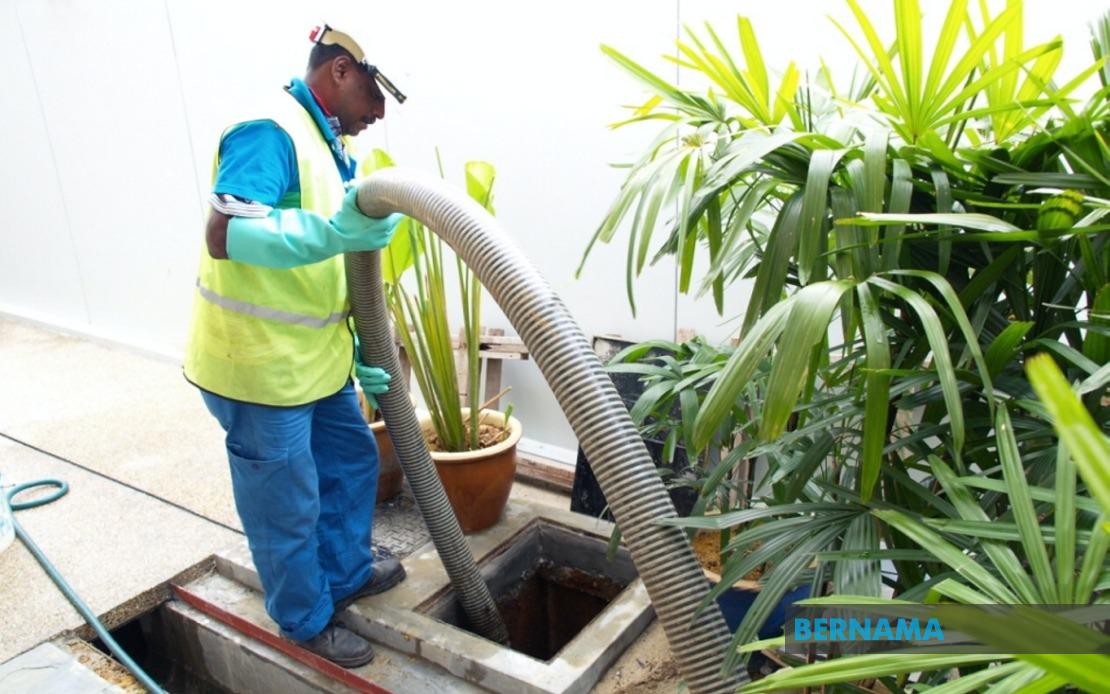
The National Water Services Commission (SPAN) has escalated enforcement action in Sungai Petani, issuing 270 compliance notices to premises owners who have neglected their septic tank maintenance obligations. The notices were distributed during a three-day operation conducted from August 4 to 6, following inspections that revealed widespread non-compliance with mandatory emptying schedules across the commercial district.
Operations conducted under the code name Ops Padi 2 examined a total of 341 premises in the area, of which 242 were commercial establishments and 99 were residential units. According to Ainal Yusman Mohamad Yusop, the director of SPAN's Operations Division Enforcement Section, every single property inspected had failed to comply with previous notices issued by Indah Water Konsortium Sdn Bhd (IWK), the designated service provider responsible for septic tank management. The scale of non-compliance underscores a significant gap between regulatory requirements and actual practice among property owners in the locality.
A particularly alarming finding emerged from SPAN's investigation: many of the affected premises were constructed during the 1970s and 1980s, with septic systems that had received virtually no maintenance over extended periods. Ainal Yusman revealed cases where septic tanks had gone unmaintained for between 10 and 15 years, with documentary evidence showing some systems had last been serviced in the late 1990s. This extended neglect raises serious concerns about the structural integrity of these systems and their potential environmental impact on groundwater and surrounding areas.
The aging infrastructure in Sungai Petani reflects a broader challenge facing Malaysian municipalities: property owners, particularly those operating established businesses, often defer maintenance costs or remain unaware of their legal obligations under the Water Services Industry Act 2006. The failure to maintain septic systems compounds over time, eventually creating expensive remediation scenarios that might have been prevented through regular, scheduled servicing. The concentration of violations in older commercial zones suggests that business owners may prioritize operational expenses over compliance with environmental regulations.
Under Section 65(1)(c) of the Water Services Industry Act 2006 (Act 655), property owners are legally obligated to maintain their septic systems by engaging licensed service providers or permit holders to conduct periodic desludging operations. This regulatory framework exists to protect public health and environmental quality, yet the Sungai Petani operation demonstrates that awareness and enforcement of these requirements remain inconsistent. SPAN's enforcement action represents an attempt to bridge this compliance gap through direct intervention and corrective notices.
Property owners who received compliance notices have been granted a 14-day window to respond and arrange for their septic tanks to be emptied by qualified providers. This grace period allows owners to rectify violations without immediate penalty, positioning the notices as administrative corrective measures rather than punitive actions. However, SPAN has indicated that failure to comply within this timeframe will trigger escalatory enforcement responses, including formal offence notices and potential criminal investigation under the act.
The penalties for non-compliance are substantial enough to motivate action. Violators convicted under Section 65(1)(c) face fines not exceeding RM50,000, a significant financial burden that should incentivize prompt compliance. Beyond individual financial penalties, sustained non-compliance could lead to broader regulatory scrutiny and potential business disruptions if local authorities decide to escalate their enforcement posture. The RM50,000 threshold represents a meaningful deterrent for most small and medium-sized enterprises operating in the commercial zones.
Sungai Petani's septic tank crisis reflects inadequate maintenance culture across Malaysia's smaller commercial centers. Unlike major metropolitan areas where centralized sewerage systems predominate, towns like Sungai Petani still rely heavily on individual septic installations for wastewater management. This decentralized approach depends entirely on property owner compliance and diligence, creating vulnerability to neglect and environmental degradation. The concentration of violations suggests systematic underinvestment in maintenance infrastructure across the town's business district.
The operation and its results carry implications for similar towns throughout Peninsular Malaysia and beyond. Regional authorities managing aging commercial zones may face comparable compliance challenges, as property owners face competing financial priorities and regulatory fatigue. SPAN's visible enforcement campaign in Sungai Petani sends a clear message about the authority's commitment to environmental protection and water quality standards, potentially prompting preemptive compliance in other localities where similar issues exist.
Environmental health considerations underscore the urgency of SPAN's enforcement drive. Improperly maintained septic systems contaminate groundwater and soil, creating public health hazards for surrounding communities and businesses. Extended periods without desludging allow solids to accumulate and potentially compromise system integrity, leading to surface seepage and environmental damage that becomes increasingly difficult and expensive to remediate. The 10 to 15-year maintenance gaps identified in Sungai Petani represent serious environmental risks that warrant immediate corrective action.
Moving forward, SPAN's enforcement pattern in Sungai Petani may establish precedent for similar operations in other towns. The systematic approach—combining inspections, compliance notices, and escalating penalties—provides a template for addressing widespread regulatory non-compliance. Property owners nationwide should recognize that environmental enforcement is intensifying, and voluntary compliance with septic tank maintenance requirements represents prudent risk management. The regulatory environment is shifting toward stricter accountability, making deferred maintenance an increasingly costly liability.

