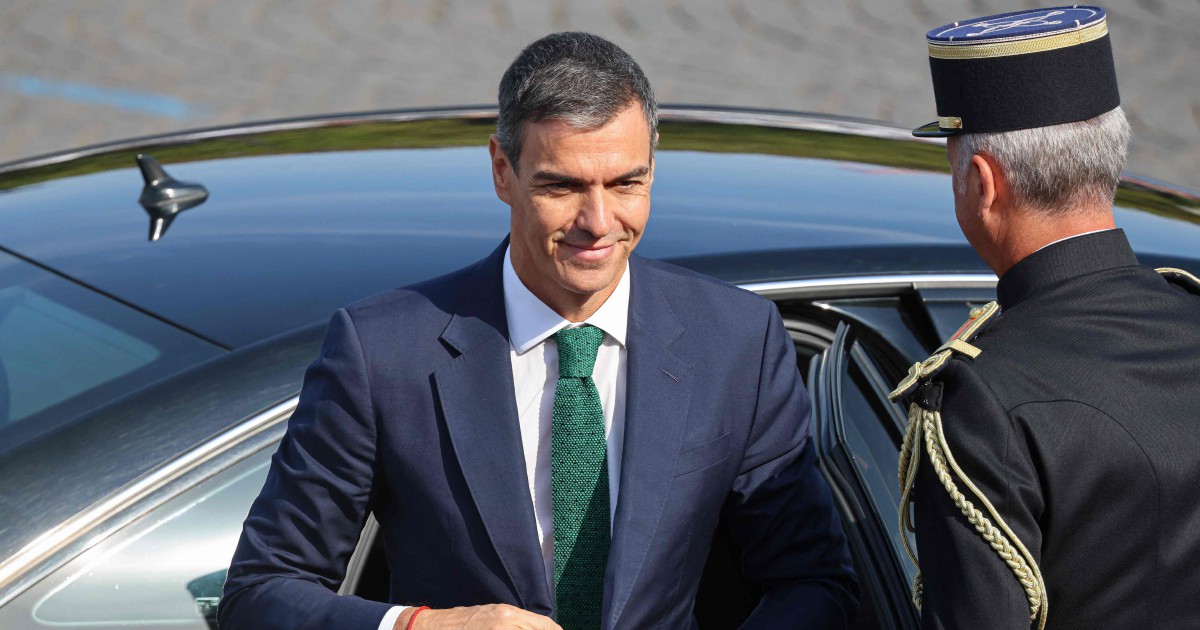
Spain's Prime Minister Pedro Sánchez has praised the national football team as a beacon of unity and national pride, even as he navigates serious corruption allegations engulfing his government at home. The endorsement comes just days before the nation's squad faces Argentina in the World Cup final on Sunday, a match that has captured the imagination of Spanish supporters and provided a welcome distraction from political turmoil in Madrid.
Sánchez's decision to publicly celebrate the football team underscores a pattern common across many nations where sporting success offers political relief. The Prime Minister characterized the squad as embodying a unique quality of collective purpose and solidarity, attributes notably absent from Spanish parliamentary politics in recent months. His remarks reflect recognition that major sporting events can temporarily unite a fractious electorate around a common cause, transcending the partisan divisions that have defined Spanish politics in recent years.
The timing of Sánchez's statement is particularly significant given the mounting pressure on his administration. Corruption scandals have dominated Spanish headlines and parliamentary debates, eroding public confidence in government institutions. By aligning himself with the football team's transparent values of teamwork and dedication, the Prime Minister appeared intent on positioning his government alongside symbols of national integrity. Whether such symbolic association can meaningfully affect public perception remains uncertain, but the strategic intent is evident.
Spain's route to the World Cup final has been marked by consistent tactical discipline and remarkable cohesion among players drawn from competing club teams across Europe. The squad has managed to subordinate individual ambitions and club rivalries to collective national objectives—a quality that Sánchez implicitly contrasted with the fractious nature of Spanish politics, where coalition dynamics have created constant friction between governing partners and opposition forces.
The matchup against Argentina presents Spain with the opportunity to reclaim world football supremacy. The Spanish team's possession-based football philosophy and technical proficiency have established them as one of the tournament's most attractive sides. An Argentina squad led by veteran talent represents formidable opposition, yet Spanish confidence appears grounded in genuine collective strength rather than individual star power.
For Malaysian and Southeast Asian observers, Spain's journey to the final illuminates broader trends in international football where European technical traditions clash with other continental styles. Argentina's physicality and direct approach contrasts sharply with Spain's methodical build-play, offering a fascinating tactical contest that transcends regional football cultures.
Sánchez's public endorsement also serves a diplomatic function, demonstrating government engagement with national interests beyond parliamentary affairs. Such gestures carry particular weight in Spain, where football occupies an almost sacred status in popular culture. The Prime Minister's participation in pre-match celebration signals respect for this cultural significance and attempts to position his administration as stakeholder in national success rather than obstacle to it.
The political context surrounding Spanish sports at this level cannot be ignored. Regional divisions within Spain—particularly tensions between Madrid and Catalonia—have occasionally threatened to intrude upon national sporting endeavours. A successful World Cup campaign offers opportunity for national reconciliation and reinforcement of overarching Spanish identity. Sánchez's emphasis on team unity implicitly addresses these fractures, suggesting that national football success demands setting aside internal disputes.
Argentina represents a formidable final opponent with its own compelling narrative. The South American side brings continent-level expectations and recent Copa América success, creating genuine uncertainty about Sunday's outcome. Yet Spain enters the match as tactical favourites in many analytical assessments, possessing the possession-control advantages that have defined their recent tournament performances.
For Spanish citizens, the World Cup final provides temporary respite from governance difficulties and economic challenges. Football matches offer spaces where political divisions become temporarily irrelevant, and national identity supersedes factional loyalties. Sánchez's explicit recognition of this phenomenon through his public support demonstrates sophisticated understanding of how sports culture functions within broader national psychology.
The squad's demonstrated unity will face its ultimate test against an Argentina team hungry for World Cup vindication. Victory would provide Sánchez's government with associational benefits and genuine popular uplift, while defeat would return focus immediately to domestic political challenges. Either outcome, however, the national team has already delivered value through its cohesive performance and the temporary social solidarity its progress has generated across Spain.

