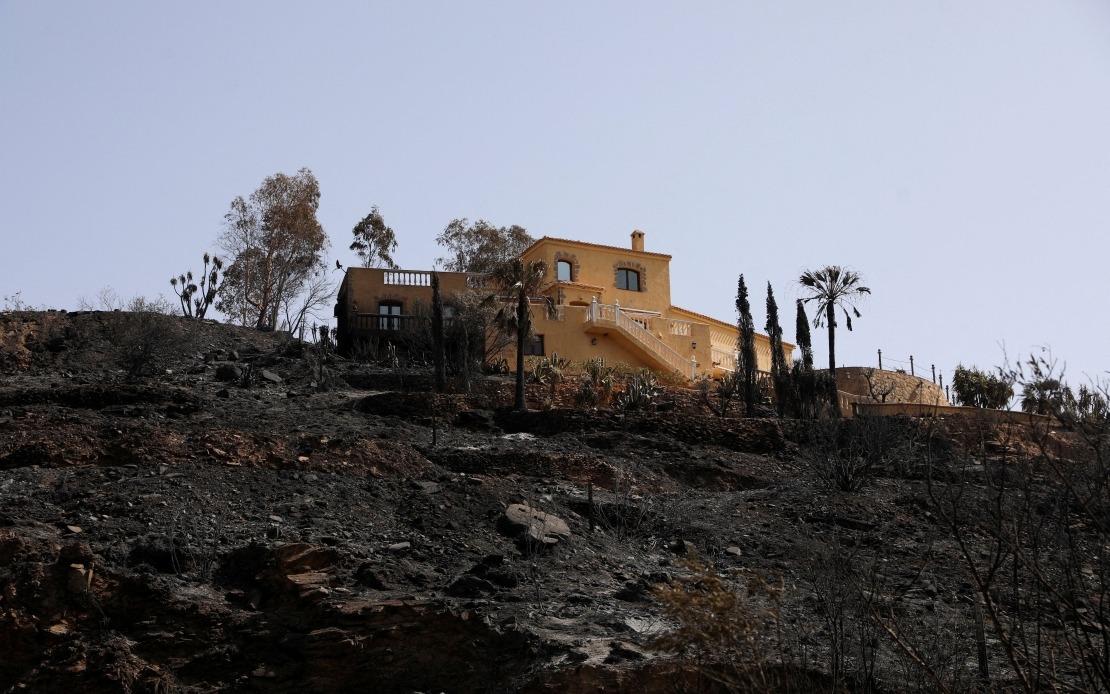
A catastrophic wildfire ravaging Spain's southeastern province of Almeria has claimed 13 lives as regional authorities announced Sunday that the uncontrolled blaze has finally been stabilised after burning through vast swathes of countryside since erupting on Thursday. The fire, which broke out near the Los Gallardos municipality in the Andalusian region, represents one of the most severe natural disasters to strike southern Spain in recent memory, with authorities still grappling with the full scale of destruction across approximately 7,000 hectares of land.
Emergency services continue intensive search and rescue operations as ten people remain officially registered as missing, compounding concerns about the final human toll. The situation remains critical for those injured in the disaster, with seven hospitalised victims receiving treatment, including three in serious condition who require ongoing intensive care. Regional authorities have indicated that the stabilisation of the fire's advance marks a crucial turning point, allowing them to transition from emergency containment operations toward recovery and investigation phases.
The demographic impact of this disaster extends beyond Spain's borders, with Spanish public broadcaster RTVE reporting that many of those affected by the conflagration are foreign nationals. This detail underscores the international dimension of the tragedy and raises questions about the provision of support services to non-Spanish residents and migrant communities in the affected zone. The diverse composition of victims and evacuees adds complexity to recovery efforts, requiring coordinated communication across language barriers and potentially involving consular assistance from multiple nations.
An important development came as regional authorities determined that conditions had sufficiently improved to permit evacuees to begin returning home. Following initial authorisation allowing approximately 600 residents back to their residences on Saturday, officials announced Sunday that the remaining roughly 1,000 evacuees could now safely return. This staged approach reflects careful assessment of ongoing fire containment measures and air quality conditions, though uncertainty persists regarding the permanence of stabilisation efforts.
Investigators are actively pursuing the cause of the devastating blaze, with the primary working hypothesis suggesting that collapse of an electricity pole or associated cables may have ignited the initial outbreak. Should this theory prove correct, it would raise significant questions about maintenance standards for electrical infrastructure in rural areas of Andalusia and potentially trigger wider examination of fire prevention protocols across Spain's electrical grid. The investigation into causation carries implications not only for Spain but also for Mediterranean nations facing similar climatic challenges and aging infrastructure concerns.
Juanma Moreno, leading the regional government of Andalusia, provided a measured update on the situation while carefully avoiding declaring complete victory. He acknowledged that while the wildfire has ceased advancing and remains contained within established perimeters, substantial work remains before authorities can confidently declare the blaze fully controlled and extinguished. His cautious terminology reflects the reality that large wildfires can experience sudden flare-ups even after stabilisation, particularly in extremely hot and dry conditions.
Moreno's comments revealed a broader concern animating official responses to the disaster: the pressing reality of climate change reshaping fire patterns across Europe. The regional leader characterised this particular wildfire as the most serious in Andalusia's recent history, using the crisis as a platform to urge both public citizens and government authorities to confront climate change with greater urgency and seriousness. His remarks underscore growing acknowledgment among Spanish policymakers that existing fire suppression protocols may prove inadequate for increasingly severe weather patterns.
The Andalusian president articulated an emerging consensus among European officials that climate change is fundamentally altering wildfire behaviour and severity. According to Moreno's assessment, changing climatic conditions are generating increasingly complex circumstances that amplify the difficulty of managing fires. More troublingly, the region faces the prospect of wildfires growing to unprecedented scales, outstripping the capabilities of traditional firefighting approaches and overwhelming emergency response infrastructure designed for historical fire patterns rather than contemporary realities.
For Malaysian and Southeast Asian observers, the Almeria wildfire carries instructive lessons about climate vulnerability and disaster preparedness. Like parts of Southeast Asia, Mediterranean Europe experiences extreme seasonal weather variations, and Andalusia's current crisis foreshadows challenges that equatorial and tropical regions may face as global temperatures continue rising. The incident demonstrates how even wealthy developed nations with substantial emergency resources can find themselves overwhelmed by catastrophic natural disasters, suggesting that regional preparedness planning and international cooperation frameworks deserve elevated priority.
The geographic distance between Spain and Southeast Asia masks important shared vulnerabilities. Both regions face wildfire risks exacerbated by warming temperatures, and both depend on agricultural sectors potentially threatened by drought and environmental degradation. Spanish authorities' experience confronting this disaster may offer valuable insights into evacuation procedures, public communication strategies, and inter-agency coordination mechanisms that Southeast Asian nations could adapt to their own emergency preparedness frameworks. The Almeria fire serves as a sobering reminder that climate-related disasters increasingly transcend national boundaries in their implications, affecting travel, trade, and international relations across regions.
As recovery operations continue and investigators pursue evidence regarding ignition sources, the Almeria wildfire stands as a stark illustration of nature's devastating power even in developed, well-resourced societies. The stabilisation of the blaze represents merely the conclusion of immediate emergency response; the longer process of rebuilding affected communities, determining liability, and implementing systemic changes to prevent recurrence remains ahead. International attention to this disaster, particularly from Mediterranean and Southern European nations sharing similar climatic and geographical characteristics, will likely intensify as stakeholders seek to understand what occurred and how comparable catastrophes might be prevented or mitigated in future.

