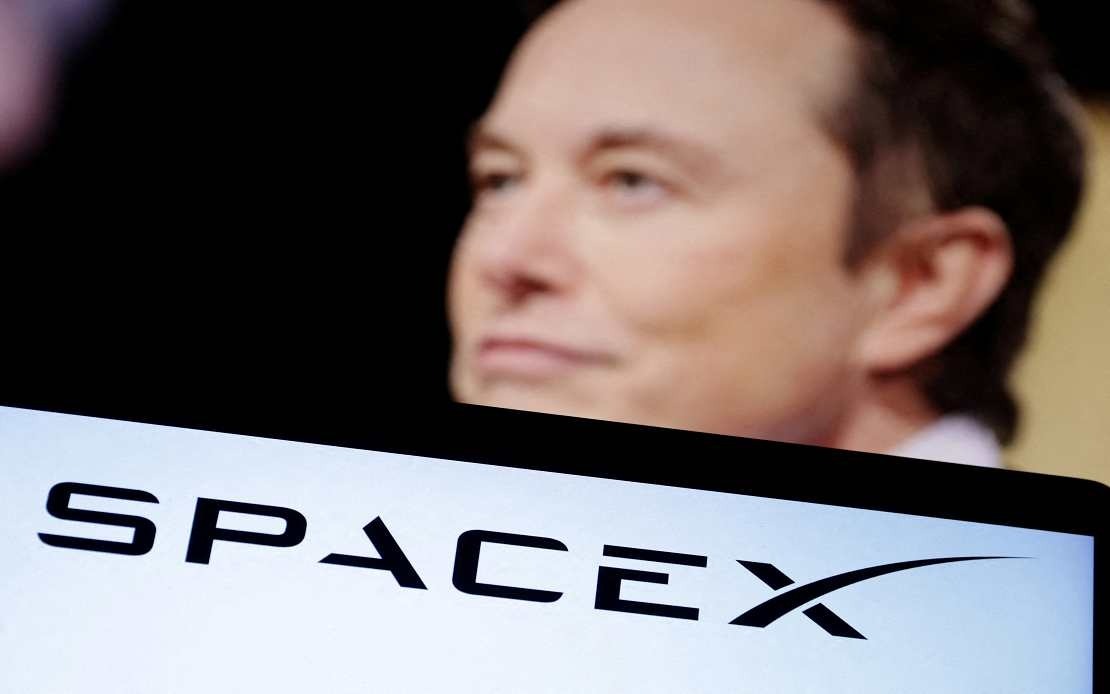
Elon Musk's SpaceX disclosed a net loss of US$541 million for the quarter that coincided with its landmark June initial public offering, marking a substantial improvement from the roughly US$1 billion loss posted in the same period a year earlier. The company's financial results, released on Tuesday, revealed a complex picture of a rapidly expanding enterprise grappling with the considerable capital expenditures required to support its moonshot ambitions even as revenue streams accelerate.
The aerospace firm's top-line performance significantly exceeded market expectations, with revenue climbing 92 per cent year-on-year to reach US$7.8 billion, substantially outpacing the analyst consensus estimate of approximately US$6.9 billion. Operating profit jumped 80 per cent to around US$1.66 billion, demonstrating improving operational leverage as the company scales its commercial ventures. These metrics underscore how SpaceX is successfully monetising its infrastructure investments across multiple business lines, a critical threshold for a company that went public at an astronomical valuation.
Starlink, the company's constellation-based broadband service, remains the principal engine of commercial growth and profitability. The satellite internet division expanded its quarterly revenue by nearly two-thirds year-on-year to approximately US$4.3 billion, fuelled by accelerating customer acquisition. The subscriber base swelled from 10.3 million to 12 million users within just three months, demonstrating the service's expanding footprint globally. Notably, commercial aviation represents an increasingly important customer segment, with major airlines now integrating Starlink connectivity into their in-flight offerings, a development that signals mainstream acceptance of the technology.
Looking ahead, SpaceX is charting an ambitious course that could reshape the telecommunications landscape. The company intends to deploy next-generation satellites capable of establishing direct connections between standard smartphones and the Starlink network, a capability that would effectively position the firm as a competitor to established telecommunications operators worldwide. This technological pivot carries significant implications for regional mobile carriers, particularly in Southeast Asia where SpaceX has begun pursuing licensing agreements. For Malaysian telecommunications providers such as Maxis, Celcom, and Digi, the prospect of a global satellite competitor offering ubiquitous connectivity represents both a challenge and an opportunity for partnership or infrastructure sharing.
SpaceX's extraordinary IPO in mid-June represented a watershed moment for commercial space ventures, raising US$75 billion at an issue price of US$135 per share and establishing an initial valuation approaching US$1.8 trillion. This valuation, while reflecting investor enthusiasm and the company's strategic significance to American space capability, appeared disconnected from the quarterly bottom line and current profitability metrics. The company justified such premium valuations by highlighting ambitious artificial intelligence initiatives and the transformative potential of its technology roadmap, arguments that resonated sufficiently with institutional and retail investors to drive share price appreciation in the post-IPO period.
However, market sentiment has shifted markedly since that celebratory June debut. Following the IPO announcement, retail investor enthusiasm propelled the stock to just over US$225 per share within weeks, reflecting the pent-up demand and retail enthusiasm surrounding space-related equities. That momentum has since dissipated dramatically. By the close of regular trading on Tuesday, shares had slumped to approximately US$125, representing a decline of roughly 7.4 per cent from the original offering price. The after-hours reaction to the earnings announcement proved even more severe, with the stock tumbling as much as eight per cent in extended trading, signalling investor disappointment despite the revenue beat and loss reduction.
The dramatic share price decline reflects several underlying concerns among investors. The persistent quarterly loss, despite the revenue surge, highlights the capital intensity of SpaceX's operations and raises questions about the timeline to sustainable profitability. Additionally, the magnitude of the IPO valuation leaves little room for error or delays in executing the company's growth roadmap. The market's reassessment is particularly significant given that institutional lock-up provisions are set to expire on Thursday, unleashing millions of additional shares held by company insiders and early investors into the secondary market. This technical catalyst could exert further downward pressure on the stock price as early shareholders potentially take profits or rebalance their positions.
Despite financial headwinds, SpaceX occupies an increasingly central position within American space infrastructure and national security considerations. The company has become virtually indispensable to United States space operations, providing critical launch capability for both commercial and government payloads. This strategic importance has insulated SpaceX from typical market discipline and investor expectations, a dynamic that distinguishes it from other publicly traded aerospace companies. The firm's dominance in the commercial launch market provides sustained demand for its services independent of Starlink's commercial fortunes.
The company is simultaneously undertaking one of the most ambitious engineering projects in contemporary aerospace: developing and testing the large Starship rocket system. The spacecraft continues to undergo incremental test flights, with each iteration providing data to refine designs and manufacturing processes. Starship represents SpaceX's aspirational vehicle for dramatically reducing the cost of space transportation and enabling activities ranging from lunar return missions to eventual interplanetary human exploration. The development programme requires sustained, substantial investment that materially impacts near-term profitability even as it promises transformative long-term capabilities. For regional powers in Southeast Asia and globally, Starship's success or failure will have profound implications for future space-based services, from telecommunications to earth observation and positioning systems.
The divergence between SpaceX's operational momentum and its stock market performance mirrors broader tensions within the technology and aerospace sectors. Investors are simultaneously rewarding innovation and penalising near-term financial results, creating a precarious balance for young, capital-intensive enterprises. SpaceX's path forward depends on demonstrating progress on the Starship programme while accelerating Starlink's profitability trajectory. The company's ability to convert its technological advantages into durable competitive moats and shareholder returns remains unproven at this stage. For Malaysian stakeholders monitoring developments in space technology and satellite communications, SpaceX's evolution will determine whether domestic and regional alternatives become more viable or whether American dominance in space infrastructure persists.

