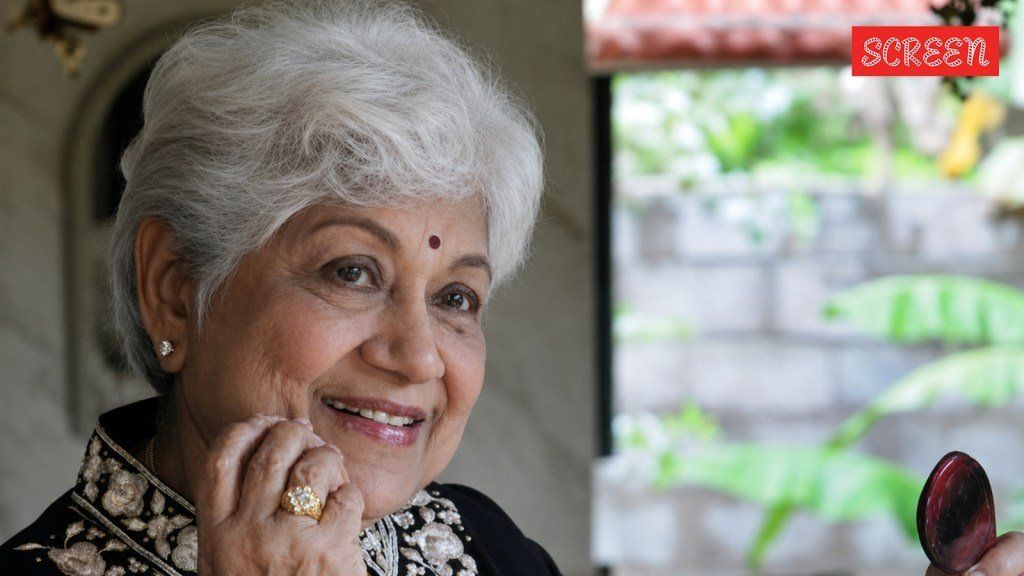
Sowcar Janaki, one of the most influential figures in South Indian cinema, passed away on Friday in Chennai following a brief hospitalization. The 94-year-old actress, born Sankaramanchi Janaki, succumbed to age-related illness at a private facility after being admitted to intensive care. Her death marks the end of an extraordinary career spanning more than seven decades that fundamentally shaped the film industries of South India and established new benchmarks for versatility and artistic excellence across multiple language industries.
The news was confirmed by Nassar, president of the South Indian Artistes' Association, who announced that her mortal remains would be placed at Cenotaph Road in Teynampet from 5 pm onwards. Sowcar Janaki's passing represents the loss of a living bridge between classical and contemporary cinema, having worked consistently from 1950 through recent years, with her final Tamil film being Biskoth in 2020 and her most recent Telugu project, Anni Manchi Sakunamule, released in 2023.
The veteran actress's filmography stands as a testament to her tireless professionalism and enduring appeal. She appeared in approximately 400 films across Tamil, Telugu, Kannada, Malayalam and Hindi cinema, a body of work that few performers anywhere in the world can match. This prolific output was not merely quantitative achievement; rather, she became a cornerstone of South Indian popular culture, adapting seamlessly to different regional film industries while maintaining a distinctive and recognizable screen presence that audiences across linguistic boundaries immediately identified.
Her contributions were widely acknowledged through numerous accolades. Sowcar Janaki received the Padma Shri, India's fourth-highest civilian honour, recognition of her cultural significance. She was also bestowed the Kalaimamani Award, which honours contributions to Tamil art and culture, along with two Nandi Awards celebrating achievements in Telugu cinema. The Filmfare Lifetime Achievement Award served as another milestone in a career that was celebrated not merely during its span but increasingly cherished as cinema scholars and enthusiasts recognized the historical importance of her work.
Chennai's film fraternity and leading figures across South Indian cinema issued heartfelt tributes that illuminated the depth of her influence. Tamil Nadu Chief Minister C. Joseph Vijay expressed profound sadness, characterizing her passing as a significant loss to the entire film industry. In his statement, the CM-actor emphasized how Sowcar Janaki had secured an irreplaceable position in audiences' hearts across generations through her distinctive interpretive abilities, noting that her seven-decade journey encompassed countless memorable roles that demonstrated versatility and artistic depth rarely seen in cinema.
Kamal Haasan, one of Tamil cinema's biggest stars, shared personal memories of their collaboration. Over forty years of working together beginning with Paarthaal Pasi Theerum, the two performers developed a screen partnership that defined an era of Tamil cinema. Haasan recalled that while he played child characters and later more complex roles, Sowcar Janaki frequently portrayed maternal figures with such naturalness and emotional authenticity that she became the preferred choice of his mentor, the legendary director K. Balachander. Haasan's emotional tribute, describing her as an indispensable talent whose departure felt like a farewell from the embodiment of motherhood itself, underscored the profound personal and professional bonds formed across decades of collaboration.
Radhika Sarathkumar remembered Sowcar Janaki as a trailblazer who embodied strength and independence, describing her as a close friend of Sarathkumar's father, the acclaimed actor Mr. Radha. Their mutual admiration and friendship exemplified how Sowcar Janaki transcended the ordinary boundaries of professional relationships, building genuine personal connections across the film community based on shared artistic values. Such testimonies reveal how she functioned not merely as a performer but as a mentor figure and source of inspiration for subsequent generations of actors seeking to build sustained, meaningful careers.
Telugu cinema luminaries also offered substantial tributes that reflected Sowcar Janaki's considerable impact beyond Tamil cinema. Junior NTR emphasized how her work left indelible marks on Telugu and Indian film industries, noting that her cinematic journey and the diverse roles she portrayed would endure in collective memory. Chiranjeevi, the Telugu superstar, provided detailed reflection on her career arc, describing her as a magnificent actress whose natural acting style brought diverse characters to vivid life while earning permanent places in audiences' affection. These testimonies from major Telugu figures underscore that Sowcar Janaki achieved something exceptional: she became a respected presence across multiple film industries simultaneously, maintaining quality and relevance in each linguistic context.
Vishnu Manchu emphasized qualities beyond mere professional accomplishment, highlighting her grace and dignity alongside her remarkable body of work. His appeal to younger performers to understand and study her legacy suggests that Sowcar Janaki represented values of professionalism, artistic integrity, and longevity that modern cinema sometimes struggles to maintain. As film industries worldwide face rapid changes driven by technology, shifting audience preferences, and evolving production methodologies, the example of an actress who remained continuously engaged and respected for over seventy years offers valuable perspective on sustainable career building and artistic relevance.
For Malaysian and Southeast Asian audiences, Sowcar Janaki's significance extends beyond nostalgic appreciation of classical cinema. Her career demonstrated how South Indian film industries developed as genuinely regional phenomenon, not merely derivative of Hindi cinema. She worked extensively across Tamil, Telugu, Kannada and Malayalam productions, suggesting that before dominant pan-Indian streaming platforms and homogenizing digital distribution, regional cinema industries maintained distinctive character while remaining interconnected. This model of regional plurality combined with inter-regional collaboration offers relevant lessons as Malaysia's own film industry navigates questions about competing in international markets while preserving cultural specificity and local language cinema.
Sowcar Janaki's career also illuminates the historical conditions that enabled such extraordinary longevity. Emerging in 1950, she built her career during an era when regional cinema industries operated vibrantly, when audiences regularly patronized local-language films, and when production was sufficiently consistent to provide steady work for skilled performers. She witnessed the evolution from classical cinema through television and later digital formats, adapting her work across media while maintaining professional standards. This flexibility and willingness to evolve, combined with genuine talent and versatile interpretive abilities, created conditions for a career that would be statistically improbable in many contemporary contexts where entertainment industry disruption occurs more rapidly.
The outpouring of tributes from across the Indian film industry reflected recognition that Sowcar Janaki represented something increasingly rare in contemporary entertainment: a performer whose career spanned multiple generations of technology, audience taste, and production methodology while maintaining consistent quality and professional respect. Her passing closes a historical era in South Indian cinema, one marked by intensive regional production, strong local-language traditions, and actors who built entire careers within specific linguistic film industries while occasionally crossing boundaries. As South Asian cinema continues evolving through streaming platforms, pan-Indian production companies, and globalized distribution networks, the model represented by Sowcar Janaki's lifetime achievement offers perspective on alternative possibilities and what may be gained or lost through structural industry transformations.

