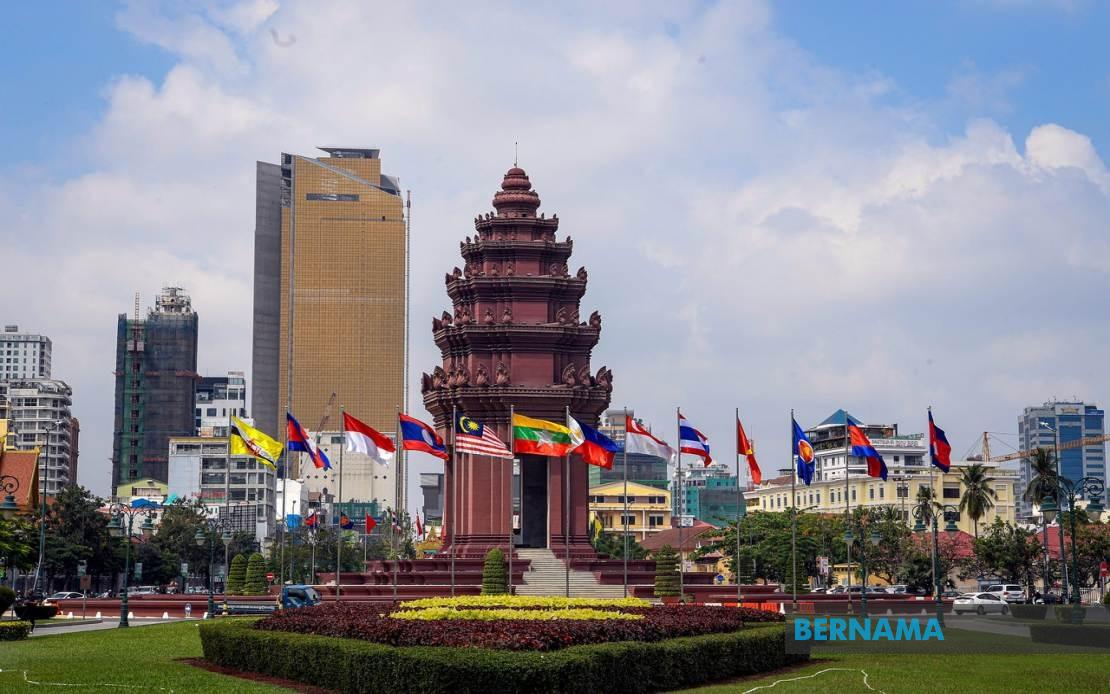
The region's political and administrative landscape continues to shift as governments prioritise development, modernisation, and tighter oversight of cross-border issues. From infrastructure investments to civil service reforms, Southeast Asia's leadership cadre is navigating competing pressures to boost economic growth whilst strengthening institutions and tackling transnational challenges that increasingly require coordinated responses.
Cambodia is deepening its regional partnerships to advance rural development. The government has formalised two new projects through the Mekong-Ganga Cooperation framework, a multilateral initiative bringing together six nations to enhance ties across South and Southeast Asia. The initiatives specifically target Kratie Province, positioning India's investment expertise alongside Cambodian priorities for community-level improvements. This partnership reflects broader strategic calculations in which smaller Southeast Asian nations leverage external partnerships to resource development projects in less-developed regions. Such arrangements often provide technical expertise and financial support that domestic budgets alone cannot sustain, particularly in agricultural provinces where infrastructure deficits constrain productivity and connectivity.
Simultaneously, Cambodia's Civil Service Ministry is undertaking a substantial overhaul of public administration. The modernisation programme centres on two parallel tracks: developing professional human capital through training and recruitment initiatives, and adopting digital systems across governance functions. This dual approach mirrors reforms pursued across the region as countries recognise that institutional effectiveness depends on both skilled personnel and technological infrastructure. For Malaysian observers, Cambodia's emphasis on digitalisation holds particular resonance given similar efforts underway domestically to enhance efficiency and transparency in public service delivery. The pressure to demonstrate tangible improvements in service quality reflects growing citizen expectations and competition from the private sector for talent.
Indonesia is pursuing aviation infrastructure expansion to relieve congestion at its primary international gateway. Transportation Minister Dudy Purwagandhi has championed plans to transform Lt. Col. Wisnu Airfield in Buleleng District into a functional air transport hub for northern Bali. The expansion aims to divert traffic from the overwhelmed Ngurah Rai International Airport, which has long struggled with capacity constraints during peak seasons. For regional air transport networks, this initiative signals Indonesia's recognition that economic growth in tourist and business hubs requires distributed infrastructure rather than centralised bottlenecks. The feasibility of this project will provide insights into Indonesia's willingness to invest in regional airports beyond the capital's shadow.
Indonesia's institutional challenges have simultaneously come into sharp focus. The National Police has formally named Febrie Adriansyah, a former senior prosecutor specialising in high-profile cases, as a suspect in a corruption and money-laundering investigation. The case carries particular significance because it involves someone from within the special crimes prosecution office itself, suggesting potential systemic vulnerabilities in oversight and accountability even within supposedly independent institutions. Such developments frequently deter investment and complicate regional cooperation on law enforcement matters, as they erode confidence in the neutrality and integrity of prosecutorial systems. The case underscores recurring institutional tensions that characterise Indonesia's anti-corruption efforts.
Myanmar's government is simultaneously pursuing energy security through renewable infrastructure. The Anisakan Airport in Mandalay Region, inaugurated this week, opens new pathways for domestic connectivity and rural economic activity. The facility aims to expedite agricultural product distribution and attract investment to regions previously constrained by transport limitations. Concurrently, the Shwemyoh solar power plant—a 15-megawatt facility—has begun operations in Naypyidaw, with government plans for expansion to 70 megawatts across multiple phases. These projects reflect Myanmar's strategic focus on decentralised development, creating economic opportunities beyond the capital whilst addressing chronic electricity shortages that historically impede industrial and commercial activity. The renewable energy component also positions Myanmar within broader Southeast Asian commitments to climate-compatible development.
The Philippines faces immediate weather challenges even as longer-term political tensions persist. The Philippine Atmospheric, Geophysical and Astronomical Services Administration confirmed that the southwest monsoon will continue delivering significant rainfall across Luzon and the Visayas even following Tropical Storm Inday's departure. Such weather patterns historically create compounding crises in communities with inadequate drainage and flood mitigation infrastructure. Simultaneously, the impeachment proceedings against Vice President Sara Z. Duterte have entered their substantive phase, with prosecutors formally laying foundational evidence during the Senate trial's opening week. The convergence of climate vulnerability and high-level political instability creates a complex environment for effective governance, particularly given the resources that constitutional crises consume even as disaster management demands immediate attention.
Singapore is implementing privacy-focused technological features whilst managing housing access concerns. WhatsApp's reservation of high-profile usernames ahead of its username privacy feature rollout demonstrates how digital platforms are accommodating Southeast Asian users' demands for connectivity without compromising privacy or enabling unwanted contact. The initiative protects public figures and government entities from impersonation whilst enabling ordinary users to manage contact through usernames rather than phone numbers. Meanwhile, Singapore's Housing and Development Board reports that over 845 income ceiling waiver appeals were approved for executive condominium applicants over the preceding five years, demonstrating both demand for housing and the availability of policy flexibility to address exceptional circumstances. These parallel developments illustrate Singapore's attention to both technological governance and housing equity within its tightly managed urban system.
Thailand is confronting transnational organised crime affecting the region's tourism sector. Thai police have issued an arrest warrant for a woman suspected of orchestrating a heroin-smuggling network that employed creative concealment methods—including elephant-print bags—and exploited airline staff to transport contraband internationally. The case exemplifies the vulnerabilities created when tourism infrastructure intersects with criminal networks operating across national borders. Simultaneously, investigators have raided five properties in Surat Thani's island communities following expansion of a nominee network probe examining foreign ownership of tourism and hospitality businesses. One searched location alone served as registered address for more than 100 companies, suggesting sophisticated arrangements designed to obscure beneficial ownership. These enforcement actions reflect Thailand's growing concerns about property and business control escaping transparent oversight, a theme resonating throughout Southeast Asia as countries balance foreign investment with protectionist impulses and security considerations.
Vietnam's government is investigating a tourist speedboat accident, though limited details remain available. Such incidents often expose enforcement gaps in tourism regulation and marine safety standards, particularly in areas where rapid expansion of commercial activity outpaces regulatory capability. The investigation's progression will provide insight into Vietnam's willingness to hold service providers and government agencies accountable when incidents harm foreign nationals, a consideration increasingly important as governments court international tourism revenue. Collectively, these developments across seven Southeast Asian countries illustrate the region's fundamental challenges: balancing rapid development with institutional strengthening, managing sovereignty concerns amid economic integration, and building administrative capacity to deliver services and enforce regulations in increasingly complex environments. Malaysia's observation of these parallel efforts provides useful comparative perspective as domestic policymakers consider institutional reform and infrastructure investment strategies for the coming years.

