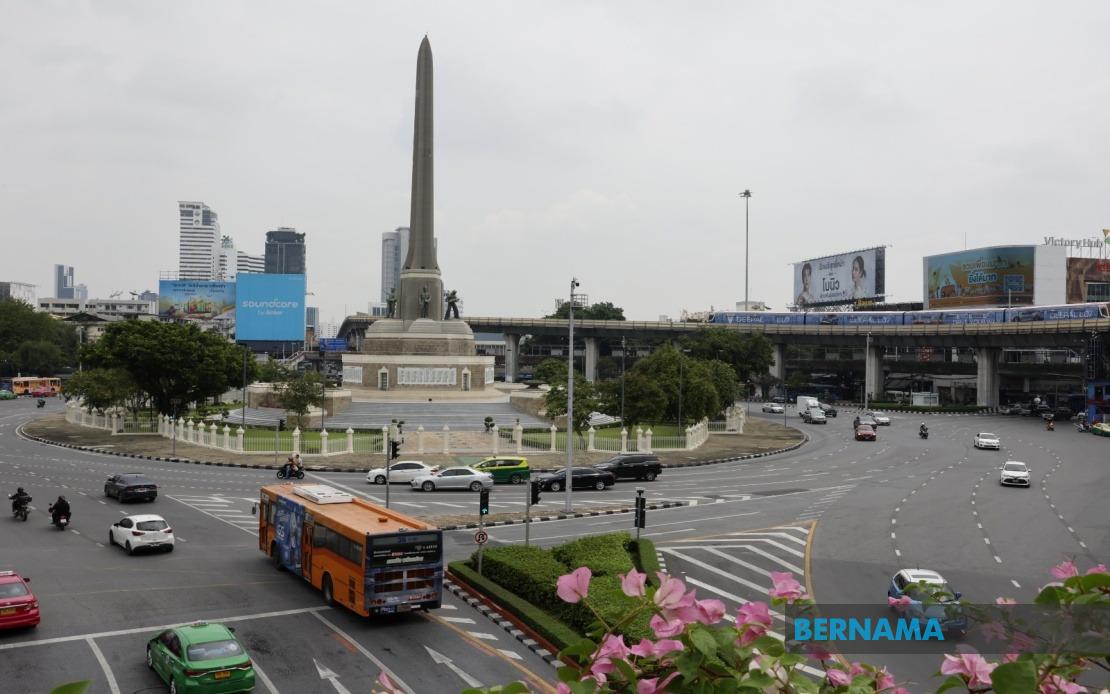
Across Southeast Asia this week, a flurry of diplomatic activity signals renewed momentum in regional cooperation and economic engagement. From infrastructure breakthroughs in the Mekong region to significant trade negotiations advancing in parallel, the period underscores how regional powers are strategically positioning themselves within broader international frameworks while addressing pressing domestic priorities. The developments carry implications for Malaysia as well, suggesting competitive dynamics in securing foreign investment and strengthening supply chains in critical sectors.
Indonesia opened the week by cementing ties with an unlikely partner. President Prabowo Subianto and Belarusian President Alexandr Lukashenko jointly launched the Roadmap for Strengthening Indonesia-Belarus Cooperation 2026–2030, establishing a comprehensive framework for bilateral relations stretching across the next five years. The timing reflects Jakarta's diversification strategy in international partnerships, particularly as Indonesia seeks to reduce dependency on traditional Western markets while simultaneously exploring relationships with nations facing their own geopolitical pressures. Such outreach efforts illustrate how Southeast Asian capitals are playing a more assertive role in global diplomacy, positioning themselves as bridge-builders rather than passive observers.
Domestically, Indonesia's legislative branch is equally focused on equitable development across the archipelago. The Budget Committee of the Indonesian House of Representatives has signalled that regional transfer funds will occupy a central place in the 2027 State Budget Draft, with explicit focus on lifting regional welfare. This signals recognition that despite Indonesia's status as the region's largest economy, prosperity remains geographically concentrated. For Malaysian observers, the approach offers lessons in fiscal federalism—how central governments can channel resources to peripheral regions while maintaining macroeconomic stability. The emphasis suggests Indonesia's policymakers understand that uneven growth threatens long-term stability and social cohesion.
In Laos, infrastructure transformation is reshaping the capital's relationship with its lifeline waterway. The Mekong River Integrated Management Project Phase II has reached completion, promising dual benefits of flood mitigation and enhanced tourism appeal. Vientiane stands to gain significantly as the riverbank undergoes transformation into an attractive recreation and tourism destination. Beyond immediate local benefits, the project exemplifies how Southeast Asian nations are increasingly viewing natural resources not merely as exploitation opportunities but as carefully managed assets underpinning sustainable development. Thailand and Cambodia, also dependent on Mekong flows, will watch developments with interest given shared water security concerns.
Paralleling infrastructure advances, Laos's National Assembly has intensified focus on socio-economic governance. Parliamentary deliberations addressed poverty reduction, clean energy transition, and natural resource management—the trinity of challenges facing lower-middle-income nations throughout the region. Crucially, lawmakers emphasised strengthening executive-legislative cooperation, recognising that institutional fragmentation hampers policy implementation. This institutional introspection reflects a maturing understanding that Southeast Asian development requires not merely policy formulation but robust implementation machinery spanning government branches.
Myanmar, navigating complex domestic and regional challenges, is simultaneously advancing external economic partnerships. High-level talks with Belarus focused on deepening cooperation across industrial, agricultural, pharmaceutical, and humanitarian sectors. The breadth of proposed collaboration suggests Myanmar's leadership understands that economic diversification and foreign investment remain critical to addressing immediate humanitarian crises and longer-term reconstruction. Meanwhile, Myanmar's military reviewed recruitment screening procedures to prevent underaged enlistment, indicating international pressure and internal recognition that child recruitment undermines institutional legitimacy and violates humanitarian norms.
The Philippines accelerated its strategic economic partnerships with a significant outcome from President Ferdinand R. Marcos Jr.'s engagement with Canadian Prime Minister Mark Carney. Four bilateral agreements targeting energy, labour, tourism, and cultural cooperation demonstrate Manila's multi-faceted approach to Canadian relations. More substantially, both leaders committed to concluding free trade agreement negotiations by year's end 2026, signalling their determination to embed commercial relations within a formal institutional framework. For the region, Philippines-Canada closer ties may facilitate technology transfer, particularly in renewable energy sectors where both nations have complementary strengths and ambitions.
Thai Prime Minister Anutin Charnvirakul confronted darker governance challenges, revealing a fact-finding probe into civil-servant recruitment examination fraud involving four implicated groups and five officials facing disciplinary action. Simultaneously, Thailand's Criminal Court sentenced eight individuals—four obstetricians and four brokers—to lengthy prison terms for orchestrating transnational commercial surrogacy networks. The prosecutions underscore growing determination to combat human trafficking and commodification of the human body. Such enforcement efforts, increasingly visible across Southeast Asia, respond to both international pressure and rising domestic consciousness that rule of law strengthens rather than weakens economies by establishing predictable, transparent governance frameworks.
Vietnam, meanwhile, is methodically expanding its economic architecture through partnerships with major development institutions and trading blocs. The Japan Bank for International Cooperation pledged continued support for Vietnam's development agenda, with specific emphasis on emerging sectors including semiconductors, artificial intelligence, digital transformation, and green energy transition. This convergence of Japanese and Vietnamese priorities reflects how technology-driven growth has become the lingua franca of development cooperation in East and Southeast Asia. Concurrently, Vietnam and the European Free Trade Association concluded trade agreement negotiations, establishing a new chapter in bilateral economic relations.
These diplomatic and economic developments across six Southeast Asian nations reveal several interconnected trends. First, regional powers are aggressively pursuing diversified foreign partnerships rather than remaining tethered to traditional relationships. Second, infrastructure and environmental management increasingly intersect with economic strategy, as nations recognise that sustainable development attracts quality foreign investment. Third, trade agreements have shifted from bilateral arrangements toward comprehensive frameworks encompassing energy, technology, labour, and cultural dimensions. Fourth, governance reforms—whether fiscal federalism, institutional coordination, or anti-corruption enforcement—increasingly accompany economic opening.
For Malaysia, these parallel developments across the region suggest both opportunities and competitive pressures. Vietnam's success in concluding multiple trade agreements simultaneously indicates the premium international partners place on rule of law and institutional stability. The Philippines' energy cooperation deals with Canada suggest third countries increasingly view Southeast Asian energy security as strategically important, opening possibilities for Malaysian firms and investors. Indonesia's regional transfer fund emphasis, meanwhile, offers comparative lessons for Malaysian federalism debates. Collectively, the week's events underscore that Southeast Asia's economic future will be shaped not by any single nation's efforts but by the cumulative effect of enhanced regional connectivity, institutional quality, and strategic partnership diversity.

