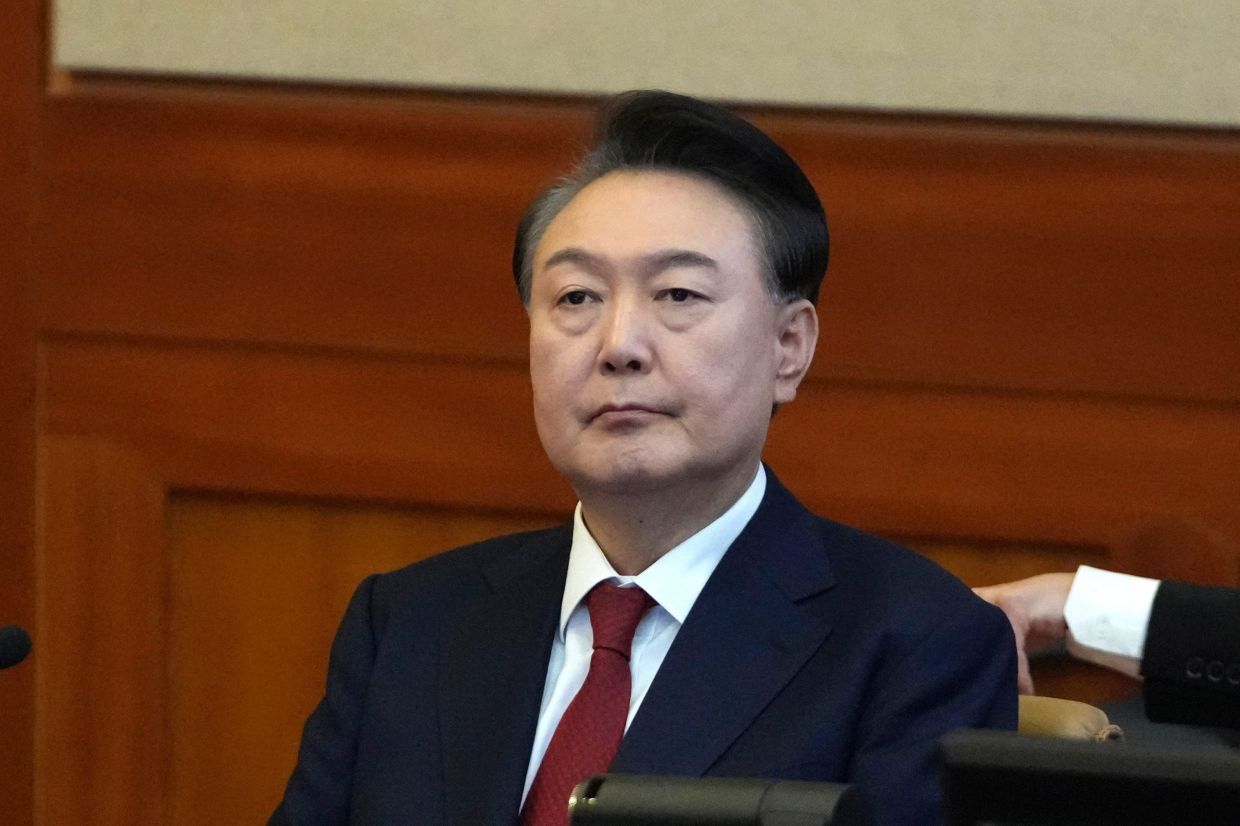
South Korea's Supreme Court has confirmed a seven-year prison sentence for former president Yoon Suk Yeol in connection with his ill-fated martial law declaration of December 2024, marking a definitive legal conclusion to one of the country's most tumultuous political episodes. The court rejected appeals from both prosecutors and Yoon's defence team, with judges declaring on Thursday that the lower court's original judgment "contained no errors" and that all appeals must be dismissed.
The crimes for which Yoon was convicted centre on orchestrating a deeply flawed attempt to circumvent democratic processes and consolidate executive power. He deliberately obstructed cabinet deliberations by assembling only a carefully selected group of ministers for a crucial meeting immediately preceding the martial law proclamation, effectively sidelining dissenting voices from the decision-making process. Additionally, prosecutors demonstrated that Yoon created and later destroyed a false martial law decree bearing forged signatures attributed to the prime minister, an act intended to provide veneer of legitimacy to the unconstitutional power grab.
Beyond the core charges of deliberative obstruction and forgery, the indictment encompassed a broader pattern of misconduct designed to consolidate and protect the extraordinary measures. Yoon directed government officials to disseminate a misleading press release to international media outlets, attempting to shape global perception of the crisis. He also instructed an army commander to expunge records stored on secure military communication systems, suggesting an effort to eliminate evidence of military involvement and coordination with the executive branch in executing the martial law declaration.
The lengthy legal process demonstrates South Korea's commitment to independent judicial review despite intense political pressure. An initial lower court had imposed a five-year sentence in January after finding Yoon guilty on most substantive charges. An appellate court subsequently strengthened that judgment in April by adding conviction on the charge related to the misleading international press release and escalating the penalty to seven years. Prosecutors had initially demanded ten years imprisonment, indicating that the Supreme Court's affirmation at seven years represents neither a full prosecution victory nor a defence vindication but rather a middle position affirmed as legally sound by the nation's highest judicial authority.
Yoon's legal representatives responded with statements expressing "deep regret" regarding the Supreme Court's decision, characterising the judicial process as insufficiently thorough. The defence team signalled intentions to challenge the ruling through constitutional grounds, though the Supreme Court's determination is technically final under South Korean legal procedure. This strategy suggests Yoon's lawyers may pursue extraordinary remedies through the Constitutional Court, which operates separately from the ordinary court system and possesses authority to review constitutional questions.
The dramatic circumstances surrounding the martial law declaration itself underscore the severity of Yoon's actions. During a late-night televised address in December 2024, he suspended civilian rule through an executive order that shocked the nation and international community alike. The extraordinary declaration lasted merely six hours before the National Assembly convened in emergency session and voted to nullify it, demonstrating the resilience of South Korea's parliamentary check on presidential power. Nevertheless, Yoon's actions triggered widespread street protests, destabilised financial markets through sharp stock declines, and caught major security partners including the United States unprepared for the constitutional crisis.
The full scope of Yoon's legal jeopardy extends beyond this confirmed seven-year sentence. In a separate prosecution, a court previously handed him a 30-year prison term for authorising drone incursions into North Korean airspace specifically designed to manufacture a security crisis that would justify the martial law declaration. This dual-front legal exposure reveals the calculated nature of the martial law attempt and its foundation in what prosecutors characterise as deliberate fabrication of foreign threats.
Yoon has consistently maintained that his martial law declaration served exclusively national interests and was motivated by concerns about stability and security rather than personal political aggrandisement. He defended the measure as necessary to counteract what he characterised as "anti-state forces" and to address perceived North Korean threats. These justifications have found little traction with the judiciary or the South Korean electorate, who ultimately removed him from office in April 2025 through the impeachment and ousting process triggered by the martial law crisis.
The political consequences of the martial law episode have fundamentally altered South Korea's leadership landscape. Yoon's removal initiated a presidential election process won by Lee Jae Myung of the centre-left Democratic Party, shifting executive power to the opposition coalition. This transition reflects public rejection of the Yoon administration's approach to governance and represents the electorate's preference for a markedly different political direction and leadership philosophy.
For Southeast Asian observers, the Yoon case illustrates both the strengths and vulnerabilities of established democracies when confronted with executive overreach. South Korea's institutional capacity to resist, investigate, prosecute, and ultimately punish a sitting president demonstrates the resilience of mature democratic systems with independent judiciaries. However, the very possibility of an elected president attempting such a dramatic constitutional violation reveals the persistent risks that democracies face when institutional checks prove inadequate in the moment of crisis. The case carries particular resonance in a region where democratic institutions have occasionally been tested by executive actors seeking to concentrate power through extraordinary measures.
The Supreme Court's affirmation of the seven-year sentence represents closure on this particular legal proceeding, but Yoon's cases remain active across multiple jurisdictions and constitutional bodies. The imprisoned former president continues fighting conviction across the ordinary court system while his defence team pursues alternative constitutional and legal remedies. As South Korea's new administration consolidates power under Lee Jae Myung's leadership, the Yoon cases will likely remain contentious political touchstones within a society still processing the unprecedented constitutional rupture of December 2024.

