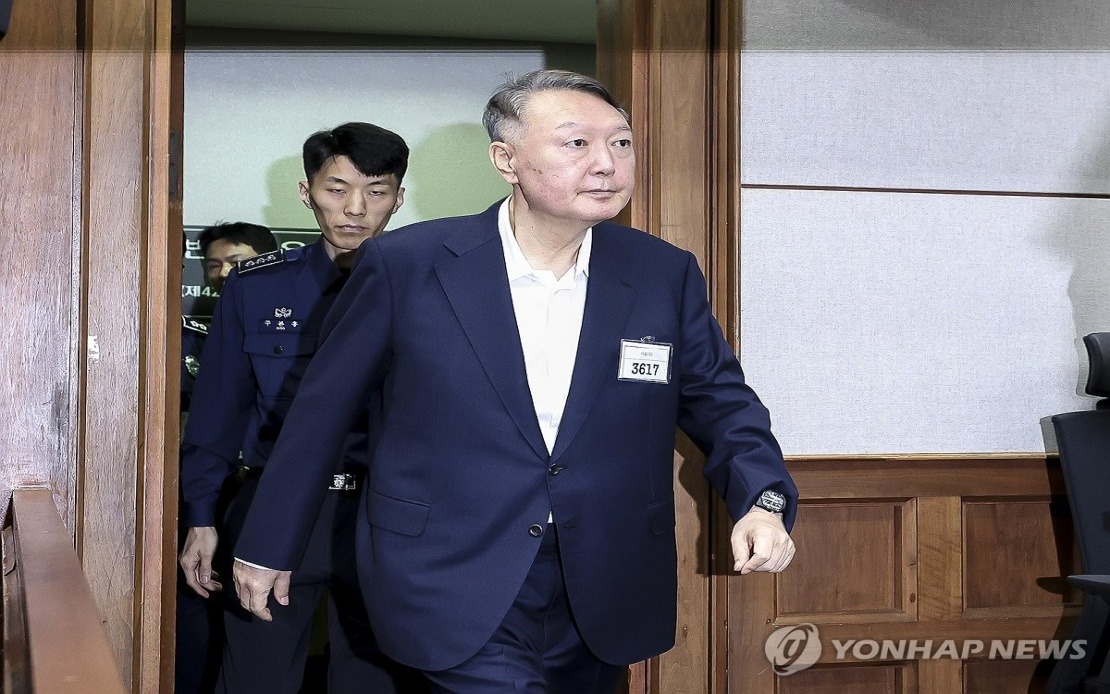
South Korea's Supreme Court has decided to permit live television coverage of its verdict in the high-profile case against former President Yoon Suk Yeol, who faces obstruction of justice charges. The court's announcement on Tuesday confirmed that broadcasters will be able to transmit the ruling, scheduled for Thursday at 2 pm, marking the first time the nation's top judicial body will deliver a verdict in any of the proceedings against the embattled former leader. This decision represents a significant moment in South Korean legal proceedings, underscoring the intense public interest in a case that has captivated the nation.
The obstruction charges against Yoon relate directly to his controversial declaration of martial law on December 3, 2024, a shock political move that ultimately lasted only hours before being rescinded. Prosecutors allege that after investigators attempted to execute a detention warrant against him in January 2025, Yoon ordered his security detail to physically prevent the law enforcement officers from fulfilling their mandate. This direct interference with the judicial process forms the crux of the obstruction allegations that have now reached the nation's highest court.
Special counsel Cho Eun-suk's investigative team had formally requested permission for the broadcast, arguing that public access to the proceedings would serve transparency interests. Yoon's legal representatives mounted a vigorous opposition to the televised verdict, contending that permitting cameras into the courtroom would inflict substantial damage to his constitutional protections and personal interests. They specifically warned the court that live broadcasting could compromise his right to an impartial trial and cause lasting reputational harm. The Supreme Court, however, rejected these concerns and proceeded with authorising the broadcast using the court's own camera equipment.
The charges against Yoon extend well beyond the simple obstruction allegation. Prosecutors have also accused him of violating the constitutional rights of nine Cabinet members by neglecting to convene a preliminary meeting with them before implementing the martial law declaration. Furthermore, they contend that Yoon falsified official government documents by altering the martial law proclamation after the decree had already been rescinded, apparently to conceal procedural irregularities in how the order had been drafted and issued. Investigators also charge that he subsequently destroyed the original document, compounding what they describe as a systematic effort to obstruct justice.
An appeals court previously weighed in on the obstruction charges in April, issuing a sentence of seven years imprisonment. This represented a significant increase from the lower court's original five-year sentence but fell substantially short of the ten-year prison term that prosecutors had requested. The fact that intermediate appellate judges increased the penalty suggested they viewed Yoon's conduct as particularly egregious, yet they nonetheless declined to impose the maximum sentence the prosecution sought.
Paralleling the obstruction trial is another, arguably more serious proceeding involving insurrection charges directly related to the martial law declaration itself. An appellate court handling that case has already rendered its decision, imposing a life sentence on Yoon after finding him guilty of leading what amounts to an armed uprising against constitutional authority. That case remains in active litigation at the appellate level, meaning multiple layers of judicial review continue to examine the former president's actions in those tumultuous December 2024 days.
For Malaysian and broader Southeast Asian observers, the Yoon case presents sobering lessons about institutional fragility and the critical importance of judicial independence. The martial law declaration, even though short-lived, represented an extraordinary assertion of executive authority that sent shockwaves through a democracy widely regarded as one of Asia's most stable. That South Korea's courts subsequently investigated, charged, tried, and convicted a sitting president—and now stand ready to broadcast the proceedings—reflects the strength of institutional safeguards, yet the very fact that such extraordinary action became necessary raises troubling questions about executive overreach.
The decision to permit live broadcasting itself merits examination, particularly for countries in the region deliberating how to balance transparency with judicial integrity. South Korea's Supreme Court determination that public access through television coverage outweighs concerns about trial fairness represents a confident assertion that robust judicial institutions can withstand public scrutiny. This contrasts sharply with approaches in some jurisdictions that restrict media coverage on grounds that publicity inherently compromises judicial proceedings.
The timing of the verdict—coming while the insurrection trial remains ongoing—ensures that Korean society will continue processing the full implications of Yoon's actions for an extended period. Each successive court decision adds layers of legal reasoning and factual findings to the historical record. For regional policymakers and legal scholars, the proceedings offer a real-time case study in how democratic institutions respond to acute constitutional challenges, the role of special prosecutors in investigating sitting and former leaders, and the mechanisms through which courts maintain their independence under intense political pressure.
The live broadcast approval also signals something about evolving attitudes toward judicial transparency in South Korea specifically. Where previous generations of Korean court proceedings might have remained largely opaque to public view, modern technological capacity combined with democratic values increasingly demands that citizens witness important judicial decisions firsthand rather than relying on media interpretation or official summaries. This transparency imperative, while potentially unsettling for those concerned about dignity and decorum in courtrooms, reflects deeper commitments to accountability that distinguish mature democracies from systems where judicial processes remain shrouded in secrecy.
As Thursday's scheduled ruling approaches, all eyes across South Korea and throughout the region will focus on how the Supreme Court articulates its reasoning in either upholding, reducing, or increasing Yoon's obstruction conviction. The court's decision to permit live coverage ensures that millions will witness not merely the verdict itself but potentially observe oral arguments and see how justices interact with counsel and consider the weighty constitutional questions at stake. For observers in Malaysia and other Southeast Asian nations, the proceedings offer an opportunity to examine how established democracies navigate extraordinary constitutional crises through law.

