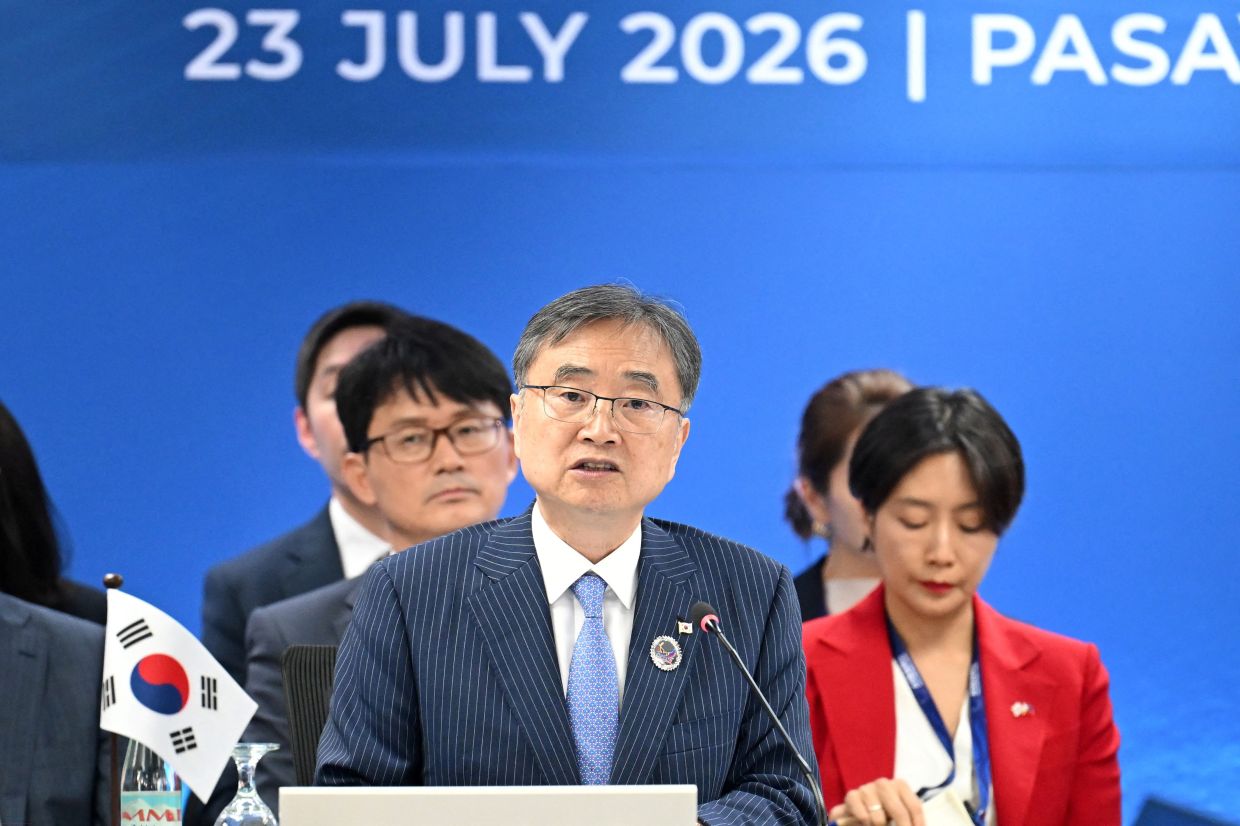
A high-profile disagreement between South Korea's top diplomatic officials this week has thrust internal government divisions into the spotlight, complicating efforts to break the diplomatic freeze with North Korea. Foreign Minister Cho Hyun directly challenged Unification Minister Chung Dong-young's approach to engagement, characterising the proposals as impractical idealism rather than grounded policy. The public nature of this dispute signals that President Lee Jae Myung's administration is struggling to forge consensus on how best to navigate relations with Pyongyang, even as Seoul desperately seeks to rekindle dormant dialogue channels.
The rift emerged during a Wednesday policy meeting where Chung unveiled a series of initiatives designed to restart communication with the North. Among his key proposals was the establishment of four-party talks involving both Korean states alongside the United States and China, a mechanism that could potentially provide a framework for addressing broader regional security concerns. However, Cho's intervention suggested that such ideas had bypassed normal inter-ministerial vetting processes, and that the Foreign Ministry harboured reservations about their feasibility. His characterisation of the proposals as "idealistic" was a pointed criticism implying they lacked grounding in diplomatic reality or institutional support across government.
Chung's response underscored the philosophical divide separating the two officials. Speaking to reporters the following day, he argued that without aspirational thinking, meaningful changes to the intractable North Korea problem would remain impossible. This exchange reflected a fundamental tension within Seoul's approach: whether the government should prioritise incremental, cautious diplomatic moves backed by consensus among relevant agencies, or embrace more ambitious initiatives that might unlock stalled negotiations. The disagreement also hinted at turf tensions between the two ministries, with each wielding different degrees of influence over Seoul's Korea policy.
President Lee's administration has signalled a strategic shift from the approach favoured by his conservative predecessors. Rather than insisting that North Korea demonstrate concrete steps toward denuclearisation before engagement proceeds, the government has embraced what it terms a "peace-first" approach. This reframing reflects a calculation that sustained pressure has failed to produce results over decades, and that a different diplomatic posture might create space for dialogue. Additionally, Seoul has been actively lobbying President Donald Trump to agree to direct talks with North Korean leader Kim Jong Un, believing that American engagement could unlock breakthrough negotiations.
To demonstrate good faith, the Lee administration has taken several confidence-building measures aimed at reducing Pyongyang's sense of threat. Anti-North loudspeaker broadcasts, long a source of tension and a symbol of confrontation from Seoul's perspective, have been discontinued. Other gestures intended to signal a less adversarial stance have also been implemented. Yet these overtures have been met with silence and continued hostility from the North, raising questions about whether the diplomatic strategy is achieving its intended effect or simply appearing weak to Pyongyang.
Academic analysts warn that the visible policy discord exposes vulnerabilities in Seoul's negotiating position. According to Lim Eul-chul, a Korea expert at Kyungnam University, the public disagreement risks reinforcing perceptions within North Korea that South Korean policy commitments lack durability and could easily be reversed through domestic political shifts. This concern carries particular weight given South Korea's volatile domestic politics and frequent shifts in government direction. If Pyongyang believes that agreements reached today could be repudiated tomorrow by a different administration or political faction, it has little incentive to take risks on the negotiating table.
The deterioration of inter-Korean relations over recent years provides sobering context for current diplomatic efforts. Since the Covid-19 pandemic disrupted normal channels, the trajectory has been steeply downward. In 2024, North Korean leader Kim Jong Un announced that Pyongyang had abandoned its long-standing goal of Korean reunification, a rhetorical bombshell that undercut a cornerstone assumption of decades of South Korean policy. Simultaneously, North Korea has systematically dismantled joint economic projects on its territory, eliminating tangible symbols of cooperation. The result has been a nearly complete cessation of meaningful dialogue between the governments.
One stark metric underscores the severity of the breakdown: defections from North to South have plummeted to historic lows. In the first half of 2026, only 63 North Koreans crossed into South Korea, compared with 1,047 during the same period in 2019. This dramatic collapse reflects both intensified North Korean border controls and potentially declining desperation among ordinary citizens, though the former explanation appears more plausible given economic stagnation in the North. The reduced flow of defectors also means fewer intelligence sources and human testimonies about conditions inside North Korea.
The Lee administration's diplomatic pivot has generated criticism from human rights advocates who view the shift as abandoning principled concern for North Korean civilians in pursuit of engagement. Previously, South Korea co-sponsored United Nations resolutions highlighting North Korean human rights violations and supported broadcasts informing North Korean audiences about conditions elsewhere. Under Lee, these activities have been scaled back, with Seoul apparently calculating that such measures antagonise Pyongyang and complicate diplomatic outreach. According to Kim Tae-Hoon, former head of the advocacy organisation PSCORE, this change in priorities has had tangible consequences, including reduced funding for groups working on North Korean human rights issues.
The tension between engagement objectives and human rights advocacy reflects a deeper strategic dilemma facing Seoul. Maximising prospects for dialogue often requires avoiding rhetoric or actions that antagonise the counterpart, yet this can appear to compromise principled positions on fundamental issues. For countries and organisations invested in North Korean humanitarian concerns, the shift signals a troubling deprioritisation. Whether Seoul's diplomatic gamble will ultimately prove rewarding remains deeply uncertain, especially given the public disagreements now visible within the government itself.
The Foreign and Unification ministries have attempted to manage the political fallout by issuing statements promising continued coordination, though their reluctance to elaborate suggests tensions remain unresolved. The presidential office's silence on the matter indicates that Lee himself has not yet definitively settled the strategic question dividing his cabinet. Going forward, how Seoul manages these internal disagreements could prove nearly as consequential as the diplomatic initiatives themselves, particularly given North Korea's demonstrated sensitivity to any signs of weakness or policy instability in its southern neighbour.

