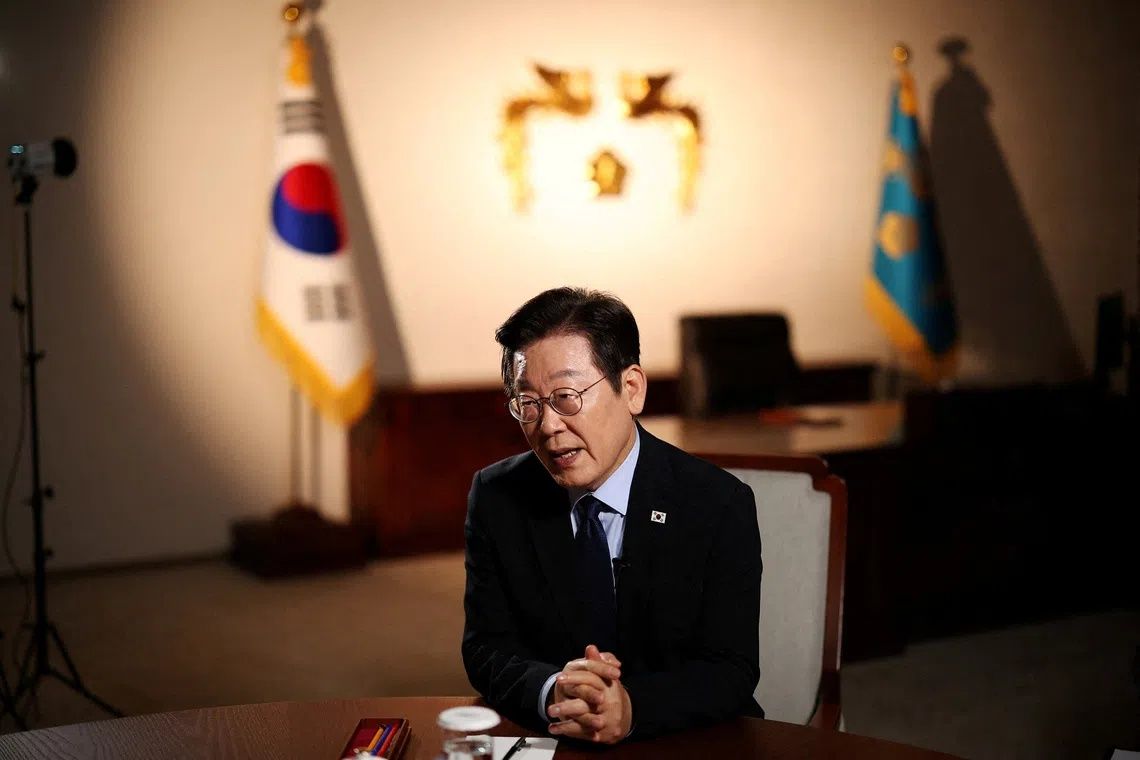
South Korean President Lee Jae Myung has thrown his weight behind a constitutional overhaul that would fundamentally reshape the nation's presidential system, according to statements made through Blue House officials on Friday. The proposed framework would replace the current single five-year term with a four-year presidency that could be renewed, while simultaneously curbing executive authority by expanding the legislative branch's powers. This shift represents a significant departure from South Korea's existing constitutional architecture, which has long concentrated considerable decision-making power in the hands of the sitting president.
The repositioning marks a notable pivot in the political discourse surrounding presidential authority in South Korea, a nation that has grappled for decades with what many observers and critics have termed an "imperial presidency." By endorsing a model that distributes power more equitably between executive and legislative branches, Lee appears to be acknowledging broader public concern about the unchecked discretion historically wielded by the office. The four-year renewable term structure would align South Korea more closely with the governance models employed in several other established democracies, though the specifics of re-election rules and term limits remain to be articulated through the formal legislative process.
According to Yonhap News Agency's reporting, Blue House officials characterised the proposed arrangement as commanding the most substantial backing among the South Korean electorate. This framing suggests that internal polling and public consultation have informed the administration's stance, and that Lee's endorsement reflects a strategic calculation about political viability. The emphasis on popular acceptance underscores the reality that any constitutional amendment must transcend partisan boundaries and gain traction across diverse demographic and ideological segments to succeed. In South Korea's polarised political environment, such consensus-building represents a formidable challenge.
The proposal directly addresses longstanding tensions within South Korea's constitutional design. The existing single five-year term was itself a reform introduced decades ago to prevent indefinite incumbency and the authoritarian patterns that characterised earlier periods of Korean governance. However, this structure has created perverse incentives, with outgoing presidents facing significant vulnerability once their mandate expires and they lose executive immunity. The four-year renewable model would theoretically reduce these extreme swings in fortune, though critics may argue it introduces different risks around perpetual campaigning and power consolidation through successive terms.
Separately, the strengthening of parliamentary powers embedded within Lee's preferred model addresses a structural imbalance in South Korea's current system. The National Assembly has historically struggled to serve as an effective counterweight to presidential prerogative, particularly in budgetary matters, appointment confirmations, and emergency declarations. A recalibration favouring the legislature could enhance governmental accountability and reduce reliance on presidential discretion for major policy decisions. For Malaysian observers accustomed to parliamentary traditions emphasising collective responsibility, this aspect of the proposal may appear to move South Korea toward more familiar institutional frameworks, though the two systems remain fundamentally distinct.
The constitutional amendment process in South Korea carries significant procedural requirements that will test the depth of political consensus behind this initiative. Any revision demands ratification from at least 200 of the 300 National Assembly members—a supermajority threshold that necessitates cross-party cooperation. South Korea's fractured political landscape, marked by deep divisions between governing and opposition camps, means assembling such support presents a formidable hurdle. Blue House officials have explicitly stated that the process must unfold through the National Assembly and rest upon genuine political consensus rather than narrow partisan advantage, an acknowledgment that unilateral executive action on such a fundamental matter would lack legitimacy.
The timing of this initiative carries political significance as well. By proactively engaging the constitutional reform debate, Lee positions his administration as responsive to public concerns about executive overreach while attempting to shape the terms of that discussion. This contrasts with reactive positioning and allows the government to frame reform as a measured, broadly acceptable recalibration rather than a response to crisis or perceived malfeasance. However, opposition parties may view such moves with suspicion, particularly if they perceive benefits accruing disproportionately to the incumbent or governing coalition.
For regional observers in Southeast Asia, South Korea's constitutional deliberations offer instructive parallels and contrasts. Malaysia, for instance, operates within a constitutional framework quite different from South Korea's presidential system, yet questions around executive power concentration resonate across the region. The Malaysian prime minister derives authority from parliament rather than direct election, creating distinct accountability mechanisms. Nevertheless, concerns about presidential or executive dominance surface periodically across multiple Southeast Asian democracies, making South Korea's wrestling with these structural questions internationally relevant.
The substantive merits of the proposed reform extend beyond immediate partisan calculations. A four-year term potentially allows administrators more time to pursue medium-term policy objectives without constant re-election preoccupations, potentially improving governance quality. Simultaneously, renewable eligibility could encourage presidents to maintain performance standards to justify re-election, creating incentive structures for sustained competence. Conversely, the risks of extended incumbency and diminished legislative independence warrant careful consideration during any constitutional amendment debate.
Looking ahead, the success of this initiative remains uncertain. South Korea's political parties must navigate competing interests, public preferences, and constitutional principles to craft workable language. The National Assembly will ultimately determine whether sufficient consensus materialises to warrant formal proceedings. Should the proposal advance, it would represent one of the most significant constitutional reorientations of South Korean governance in decades, reshaping how power operates within the presidential office and between branches of government for generations to come.

