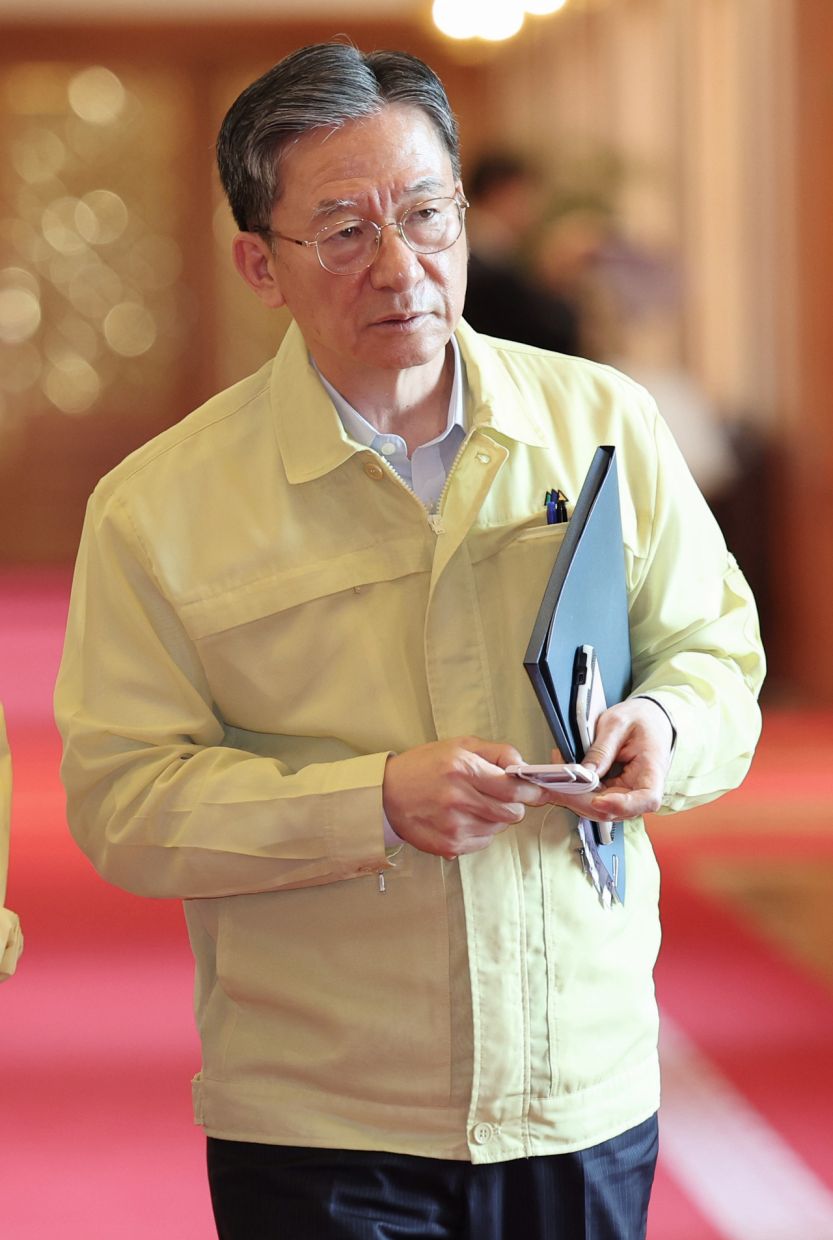
Justice Minister Jung Sung-ho ended his tenure on Tuesday afternoon, stepping aside following mounting tensions with South Korea's ruling Democratic Party over a fundamental restructuring of the nation's criminal justice system. The resignation marks another pivot in Seoul's ongoing effort to recalibrate power distribution within prosecutorial agencies, a perennial flashpoint in South Korean politics where questions of institutional oversight frequently intersect with partisan governance.
At the heart of the dispute lies a philosophical disagreement about prosecutorial independence and restraint. Jung had championed the preservation of prosecutors' supplementary investigation powers, a mechanism that allows the prosecution to conduct their own inquiries when they determine that police investigations lack sufficient depth or scope. The Democratic Party, however, has pursued an aggressive reform agenda designed to sever investigative and prosecutorial functions, arguing that consolidating these powers within a single institution creates opportunities for abuse and political manipulation.
The supplementary investigation tool has long been controversial in South Korea's legal framework. When prosecutors receive a case from police and find the initial investigation wanting, they currently possess the authority to launch parallel inquiries to gather additional evidence or clarify procedural gaps. This dual-track system, defenders argue, ensures thorough case preparation; critics contend it grants prosecutors excessive leverage over police operations and creates redundancy in the investigative apparatus.
The transformation becomes law on October 2, when the revised Criminal Procedure Act takes effect. Once implemented, prosecutors will forfeit their supplementary investigation capacity entirely. Their role will narrow to a gatekeeping function: reviewing police findings, determining whether sufficient evidence exists to proceed with charges, and representing the state in court proceedings. This represents a structural realignment comparable to prosecutorial systems in common-law jurisdictions like the United States and Australia, where investigators and prosecutors maintain clearer institutional separation.
For Malaysian and Southeast Asian readers, this reform carries instructive parallels. Many countries in the region grapple with similar tensions between executive power and institutional independence. The concentration of investigative and prosecutorial authority has prompted comparable debates across ASEAN, particularly in nations modernising their criminal justice architecture. South Korea's explicit effort to separate these functions reflects growing international consensus that such division strengthens procedural fairness and reduces the risk of politicised prosecution.
Jung's departure was framed through dual justifications. Officially, he cited personal health concerns as his primary motivation. Yet his statement carried pointed undertones, specifically noting that it would be "desirable for the new criminal justice system to be completed under new leadership." This phrasing suggests Jung recognised that his continued presence might impede the Democratic Party's legislative agenda, indicating a negotiated transition rather than purely health-driven necessity. Political exits in Seoul frequently deploy health concerns as a diplomatic formulation allowing all parties to claim dignified conclusions.
The timing of Jung's exit reflects the urgent timeline driving criminal justice reform. With October 2 as the binding implementation date, the ruling party seeks unified leadership committed to shepherding the transition. A justice minister fundamentally sceptical of the reforms would create administrative friction and potential legal challenges during the critical transition phase. By departing before the changes take effect, Jung avoids presiding over a system he disagreed with implementing.
Vice Justice Minister Lee Jin-soo will assume acting responsibilities pending formal appointments. Lee's background and orientation toward prosecutorial reform remain significant variables shaping the immediate implementation landscape. The acting minister will oversee prosecutorial infrastructure adjustments, resource reallocation from investigative divisions to prosecutorial review units, and staff training on modified procedures. Smoothness in this transition depends substantially on leadership commitment to the Democratic Party's vision.
South Korea's prosecutors have historically wielded formidable institutional power, investigating high-profile corruption cases involving politicians, corporate executives, and government officials. The prosecution's independence—and occasional resistance to executive pressure—has alternately been celebrated as institutional integrity and criticised as prosecutorial overreach depending on partisan perspectives. This reform attempt represents a deliberate constraint on prosecutorial autonomy, reflecting broader democratic societies' conclusions that unchecked prosecutorial discretion poses governance risks.
The conflict between Jung and his party reflected deeper philosophical divisions within South Korean conservatism regarding institutional design. Progressive factions have long advocated for prosecutorial constraint through functional separation; conservative figures often defend robust prosecutorial authority as necessary counterweight to potential executive or legislative overreach. Jung's departure signals Democratic Party dominance in this particular ideological contest, at least during the current parliamentary period.
Implementation challenges will emerge as the October 2 transition unfolds. Police organisations may resist collaborative arrangements with prosecutors operating under narrower mandates. Defence attorneys might challenge evidentiary gaps created by reduced prosecutorial investigation. International legal observers will scrutinise whether functional separation genuinely improves fairness or merely redistributes investigative burdens. These practical complications will test whether the reforms achieve their stated objectives of reducing concentrated power and enhancing procedural justice.
For regional observers, South Korea's prosecutorial reform demonstrates how established democracies periodically reassess institutional power distributions when genuine concerns about concentration accumulate. Malaysia and other Southeast Asian nations similarly confront questions about prosecutorial independence, investigative authority, and checks on executive influence. While South Korea's specific mechanisms may not translate directly, the underlying principle—that prosecutorial systems require structural safeguards against politicisation and overreach—reflects internationally validated democratic practice.

