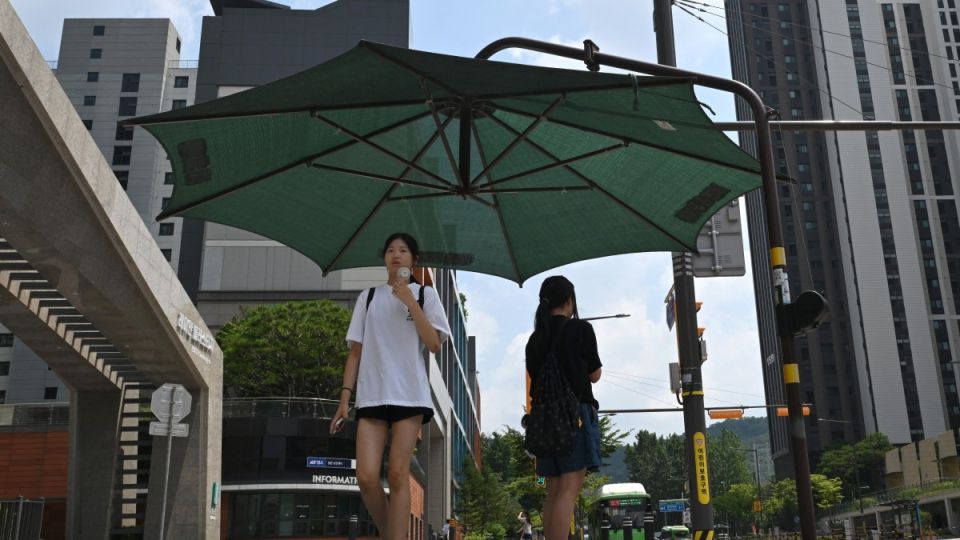
As South Korea swelters under unprecedented temperatures that have sent heatwave warnings across the nation, major companies are scrambling to protect their workforces with extended rest periods, sophisticated cooling systems, and redesigned work schedules. Yet behind this corporate adaptation lies a troubling reality: the country's heat-related workplace protections have cleaved along class lines, with workers at smaller businesses and outdoor sites facing continued vulnerability as temperatures soar and the toll in injuries and fatalities climbs steadily.
The scale of the heat emergency is unmistakable. Yangsan in South Gyeongsang Province has registered a national high of 42.5 degrees Celsius, while Seoul remains locked under the highest-level heatwave warning for consecutive days. This extreme weather has transformed into a public health crisis at work, with the Korea Workers' Compensation and Welfare Service documenting 195 heat-related occupational accidents between 2022 and June of this year—a figure that encompasses 20 deaths. What makes this statistic more alarming is the temporal concentration: by the end of June alone, before the brutal July and August peak season typically unfolds, the nation had already registered 13 cases with four fatalities. The trajectory suggests this year will surpass previous records significantly.
The regulatory environment shifted decisively last year when a district court convicted a construction company under the Serious Accidents Punishment Act following a subcontractor's employee's heatstroke death. This landmark case marked the first conviction under the severe legislation involving heat-related mortality, fundamentally altering the legal calculus for employers. The decision signalled that corporate leadership could face criminal liability for inadequate heat protections, spurring many large firms to invest substantially in worker safety infrastructure. Construction companies, which account for a disproportionate burden of industrial fatalities nationwide, have emerged as among the most proactive implementers of comprehensive heat mitigation strategies.
Hyundai Engineering & Construction has pioneered incentive-based approaches, rewarding workers who utilise designated rest areas during shifts. Lotte E&C operates an Internet of Things monitoring system spanning approximately 80 construction sites, measuring perceived temperature readings every five minutes and categorising heat exposure into five distinct risk tiers. This granular technological approach enables real-time decision-making about work continuation or mandatory breaks. Daewoo E&C has adopted a worker-centric policy permitting employees experiencing physical distress to cease work without penalty—a seemingly straightforward measure that represents meaningful cultural change in Korea's traditionally demanding industrial environment.
Recognising that migrant workers face compounded vulnerability, several major contractors have tailored protective measures specifically for this population. Hyundai E&C distributed emergency reporting guides in 22 languages and supplied cooling vests equipped with integrated fans alongside oral rehydration solutions. Kumho E&C partnered with beverage manufacturer Lotte Chilsung to supply bottled water, sports drinks, cooling towels, and portable shelter infrastructure across construction sites through September. These initiatives acknowledge that language barriers and relative unfamiliarity with Korean workplace norms can impede migrant workers' ability to advocate for their own safety.
Heavy industrial operations that cannot be suspended during extreme weather have implemented strict work-rest ratios calibrated to temperature thresholds. Posco, whose blast furnaces operate continuously regardless of season, mandates 15-minute rest periods following every 45 minutes of labour when perceived temperatures exceed 35 degrees Celsius, with the threshold dropping to 10-minute breaks after 50 minutes of work when temperatures exceed 31 degrees. Hyundai Steel enforces minimum 10-minute hourly rest at 31 degrees, escalating to 15-minute minimums above 35 degrees. The shipbuilding sector has similarly extended respite periods: Hanwha Ocean doubled its morning and afternoon breaks from 10 to 20 minutes through August's end, while extending lunch periods by 30 minutes at 28 degrees and a full hour at 31.5 degrees. HD Hyundai Heavy Industries lengthens lunch from 60 to 90 minutes and operates over 270 cooling facilities across shipyards, complemented by cooling vests, ice water, and electrolyte provisions. Samsung Heavy Industries established a dedicated task force coordinating heat response measures and deploying portable cooling equipment, while SK hynix extended rest periods during extreme conditions and Coupang expanded climate control systems at logistics facilities.
Yet these comprehensive protections cluster almost exclusively among major corporations with sufficient capital reserves to finance infrastructure installation and operational restructuring. Official data reveals a stark employment-size divide: of 195 recognised heat-related accidents since 2022, more than half occurred at workplaces employing fewer than 50 people, with 42 cases at operations with fewer than five workers. Labour experts and legislators highlight that smaller enterprises typically lack dedicated occupational safety personnel, adequate cooling infrastructure, and appropriate rest facilities—leaving their workforces dangerously exposed during extreme weather events. The disparity reflects Korea's broader economic structure, wherein small and medium enterprises operate with lean margins and minimal regulatory oversight compared to the conglomerates dominating national commerce.
Agricultural and outdoor sectors present an even grimmer picture, as migrant workers remain profoundly exposed to ambient heat without access to the technological monitoring or facility infrastructure available to industrial workers. Last month, a Thai seasonal labourer collapsed and died while working in a field in Haenam, South Jeolla Province, followed shortly by a Vietnamese national's death while working outdoors on a farm in Goesan, North Chungcheong Province. These tragedies underscore how seasonal migrants, often undertaking arduous outdoor labour for minimal wages and limited legal protections, absorb the most severe consequences of climate extremes. Many lack comprehensive health insurance, workplace representation, or the language skills necessary to seek assistance when experiencing heat exhaustion symptoms.
Parliamentary representative Kim Wi-sang of the ruling People Power Party has called upon government authorities to move beyond what he characterises as an excessive focus on large workplace protections and substantially strengthen inspections alongside practical safety measures targeting seasonal migrant workers and employees at small outdoor operations. This appeal reflects growing political recognition that corporate voluntarism alone cannot address systemic vulnerability. Without mandatory minimum standards, equipment provisions, and enforcement mechanisms applicable across employment sizes and sectors, significant portions of Korea's workforce will continue bearing disproportionate risk from increasingly severe heat events. The challenge facing policymakers involves establishing protective frameworks stringent enough to prevent deaths while remaining economically feasible for smaller enterprises operating with constrained resources.

