South Korea is bidding farewell to one of its most contentious culinary traditions. From February 2027, the production and sale of dog meat will become illegal throughout the country, marking the conclusion of a practice deeply embedded in Korean culture for centuries but increasingly challenged by evolving ethical standards and changing public sentiment. The transformation represents a significant cultural and legislative milestone for a nation grappling with the tension between tradition and modern animal welfare concerns.
The journey towards this prohibition began in earnest with landmark legislation passed in January 2024, which granted farmers and businesses a three-year transition period to cease operations. This grace period was deliberately designed to allow the industry time to wind down rather than impose an abrupt shutdown. According to South Korea's Ministry of Agriculture, Food and Rural Affairs, the measure has proven remarkably effective: more than eighty per cent of the approximately 1,500 registered dog meat farms that existed prior to the ban had closed by May 2026, leaving fewer than 300 farms still operating. This rapid closure rate suggests that industry participants understood the irreversibility of the legislative decision and acted accordingly.
Government incentives have played a crucial role in facilitating this transition. Recognising the economic hardship that closure would impose on farming families, the administration structured a compensation scheme offering up to 600,000 won per dog, equivalent to approximately US$426. Beyond direct financial assistance, farmers have access to low-interest loans and comprehensive support programmes designed to facilitate career transitions. These initiatives include job-transition assistance and re-employment counselling, acknowledging that many farmers lack alternative income sources and require genuine support to restart their lives outside the dog meat industry.
The impact on the retail sector has been equally dramatic. While comprehensive national data on restaurant closures remains unavailable, interviews with business owners and meat vendors paint a picture of accelerating decline. A vendor at Seoul's Gyeongdong Market, one of the last bastions of dog meat sales, has witnessed a staggering transformation: prices have tripled from approximately 20,000 won per kilogram in 2024 to 60,000 won today, a reflection of drastically reduced supply and shifting market dynamics. The anonymity requested by this vendor illustrates how sensitive the issue has become in South Korean society, even among those whose livelihoods depend on its continuation.
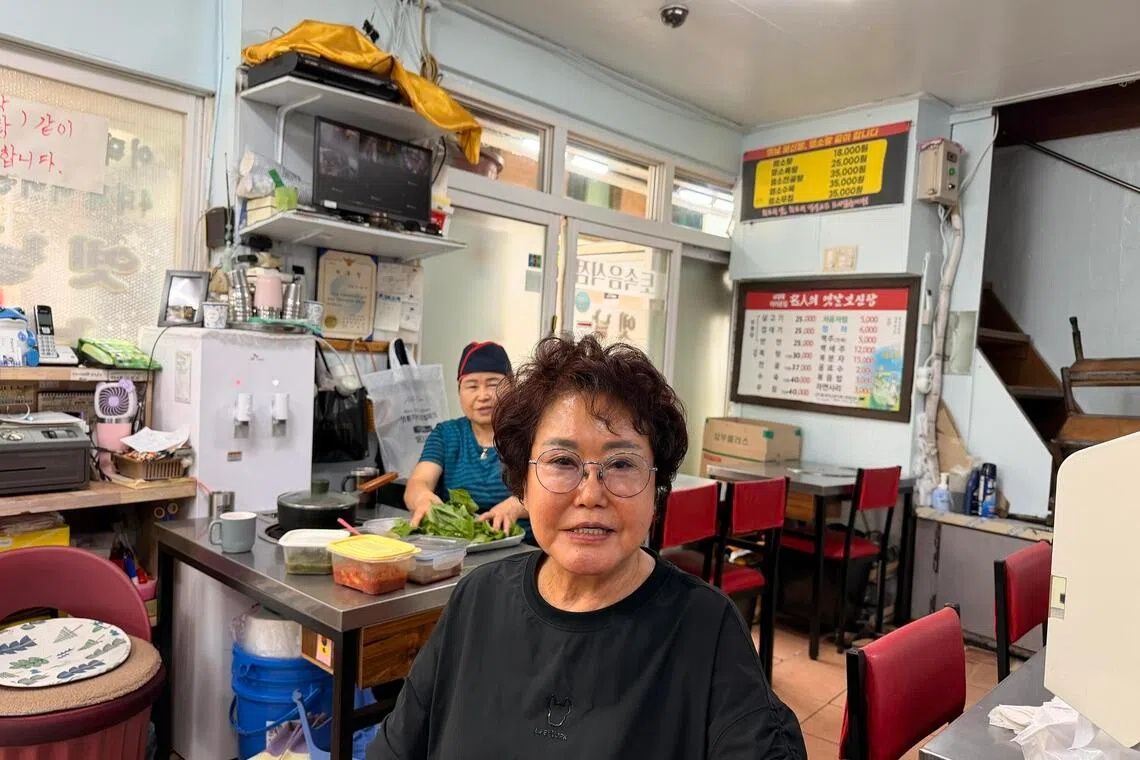
Traditional establishments near Seoul's Dongdaemun Market exemplify the struggles facing long-standing businesses. Lee Deok-sung, who has operated a dog meat stew restaurant for forty-five years, describes the current summer as a commercial disaster. The restaurant's signature dish, boshintang, has been traditionally consumed during boknal—the three hottest days of summer when many Koreans believe the warming properties of dog meat replenish energy lost to heat. This year's boknal periods fall on July 15, July 25, and August 14, representing the last seasonal consumption cycle before the ban takes full effect. Yet even during this traditionally peak season, Lee faces mounting challenges, having raised bowl prices from 16,000 won to 25,000 won while struggling to clear daily inventory and break even on operations.
Across a narrow alley, Lee Kyung-ja operates a similarly historic boshintang restaurant that has served customers for over four decades. Both establishments represent institutional touchstones in Korean food culture, yet both now grapple with existential challenges. In an attempt to navigate the transition, both restaurants introduced black goat stew in 2026, deliberately selecting this alternative because of its textural and flavour similarities to dog meat. However, customer reception has disappointed expectations. Lee Kyung-ja reports days with zero customers, and the patrons who do visit overwhelmingly prefer the taste of dog meat to goat. Some customers, influenced by traditional Korean medicine practitioners, continue to seek dog meat specifically for its purported restorative properties during illness recovery. At seventy-five years old, Lee acknowledges that the prospects for 2027 weigh heavily: rebuilding a customer base at her age while learning new culinary techniques presents challenges she finds daunting.
The historical roots of Korean dog meat consumption extend far deeper than most Western observers realise. Historical records suggest the practice dates at least to the Joseon Dynasty, with one of the most significant references appearing in the Donguibogam, a seventeenth-century medical compendium compiled by royal physician Heo Jun. This text explicitly describes dog meat as a warming food capable of replenishing energy and vitality, embedding the practice within Korea's sophisticated medical philosophy. The consumption pattern intensified dramatically during Japan's colonial occupation from 1910 to 1945 and in the desperate aftermath of the Korean War, when widespread poverty and food scarcity compelled many Koreans to seek inexpensive protein sources. Dog meat thus became intertwined with narratives of national survival and resilience.
Yet attitudes have undergone seismic transformation, particularly among younger Koreans influenced by global animal welfare movements and changing relationships with pets. The story of musician Annie Ko and her rescued Labrador, DeeJay, emblematises this shift. Ko, who had never owned a pet before 2015, was moved to adopt DeeJay—a trembling runt from a farm cage near Wonju—after witnessing his vulnerability. DeeJay had spent his first three months confined with six siblings on a dog meat farm before rescue. Through her work with the non-profit organisation Humane World for Animals, Ko participated in a broader movement that has rescued approximately 2,800 dogs from such farms, facilitating adoptions across the United States, Britain, and Canada. DeeJay represents the sole survivor from his litter to remain in South Korea, a poignant reminder of what industrial dog farming typically yields.
The February 2027 deadline represents far more than a policy implementation date; it symbolises South Korea's deliberate choice to redefine its relationship with companion animals. The ban reflects decades of debate, indicating no sudden legislative whim but rather a gradual evolution in societal values. For restaurant owners like Lee Deok-sung and Lee Kyung-ja, the deadline approaches with existential urgency. Neither has formulated definitive post-ban strategies, though Lee Kyung-ja hinted at possible retirement. For advocates like Ko, the ban validates campaigns spanning years. For rescued dogs like DeeJay, now thriving in Korean homes, the legislation promises that others might escape the fate that once seemed inevitable.
As South Korea approaches this legislative milestone, the nation faces the challenge of managing this transition humanely for all stakeholders. The government's compensation schemes and support programmes attempt to ease the financial burden on farmers and restaurant owners, recognising that economic desperation could undermine compliance. Simultaneously, animal welfare organisations continue advocating for enhanced enforcement mechanisms to prevent illegal operations after the ban takes effect. The success of South Korea's experiment in legislating away a centuries-old culinary practice will likely influence how other nations address controversial food traditions amid shifting cultural values and international pressure regarding animal welfare standards.

