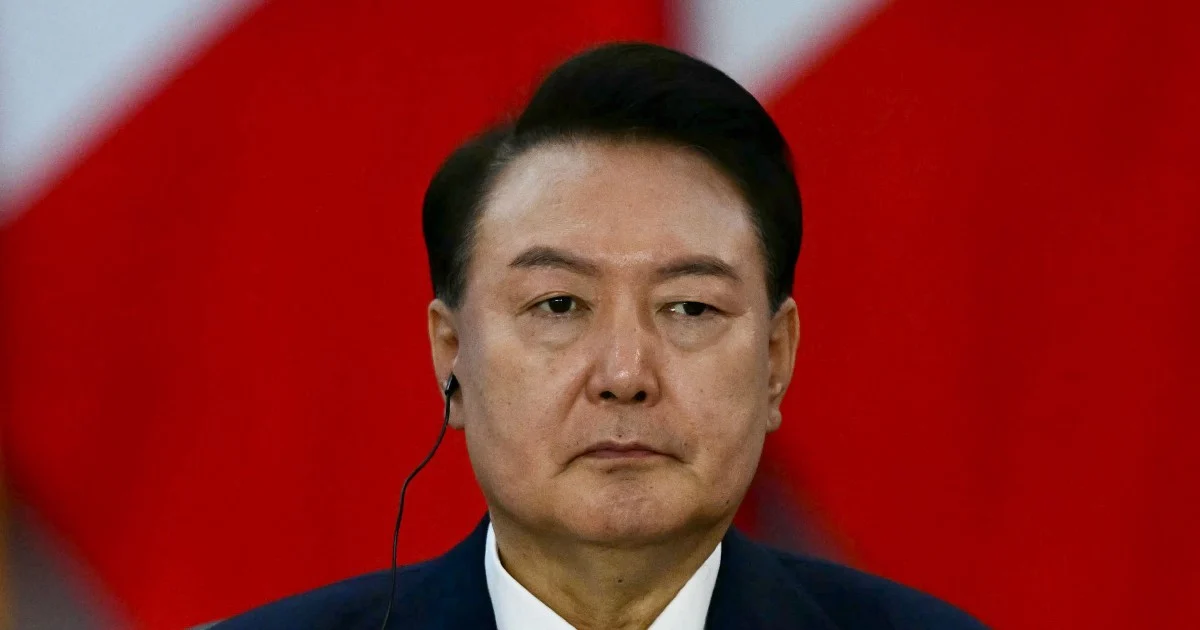
South Korea's Constitutional Court will deliver its long-anticipated verdict Thursday on former president Yoon Suk Yeol's attempted martial law proclamation and the turbulent political aftermath that engulfed the nation. This ruling marks a pivotal moment in the country's democratic institutions, as the nation's highest constitutional body prepares to adjudicate whether the ex-leader violated fundamental legal and constitutional frameworks during his stunning move to declare emergency rule.
The case represents one of the most serious constitutional challenges in modern South Korean history. Yoon's December martial law announcement triggered immediate national upheaval, sparking clashes between armed forces and legislative authorities, and ultimately accelerating the unraveling of his political authority. The Constitutional Court's deliberations have consumed months of intense legal arguments, testimony, and constitutional analysis as justices grappled with questions about executive overreach, the limits of presidential power during emergencies, and the sanctity of democratic governance.
The broader implications of this ruling extend far beyond the courtroom. For Malaysia and other Southeast Asian democracies, the case demonstrates how constitutional courts function as crucial bulwarks against executive overreach. The proceedings illuminate the mechanisms by which established democracies respond to existential threats to constitutional order, offering instructive lessons about the resilience—or fragility—of institutional safeguards. South Korea's handling of this constitutional crisis will reverberate across the region as observers assess whether democratic systems possess adequate checks against authoritarian impulses.
Yoon's martial law declaration, announced via televised address on December 3, stunned both domestic and international observers. The proclamation arrived without legislative consultation, catching parliament members off guard and triggering their immediate efforts to nullify the order. Opposition lawmakers rushed to the National Assembly to block the emergency decree, resulting in dramatic confrontations as military and police cordoned off the building. The chaotic scenes—legislators climbing through windows, security forces deploying batons—underscored the gravity of constitutional breakdown and exposed how fragile democratic transitions can prove when institutions clash.
The legal charges against Yoon encompass multiple serious allegations. Prosecutors have argued that he abused presidential authority by declaring martial law without legitimate constitutional justification, thereby violating citizens' fundamental rights. The investigation also examined potential charges of sedition, insurrection, and abuse of power. These allegations strike at the heart of presidential prerogatives and force the Constitutional Court to define precisely where emergency powers terminate and constitutional limits commence—a question that remains contested across democratic systems globally.
South Korea's Constitutional Court operates as the arbiter of constitutional disputes and possesses authority to remove officials through impeachment proceedings. The nine-justice panel has the capacity to convict Yoon and permanently bar him from holding political office, representing the most severe constitutional punishment available. A conviction would cement the precedent that even sitting presidents cannot invoke emergency powers arbitrarily and would underscore the primacy of legislative oversight and constitutional restraint over executive discretion.
The verdict holds profound consequences for South Korea's ongoing political polarization. The nation remains deeply divided along ideological lines, with conservative and progressive factions interpreting Yoon's actions through starkly different lenses. Conservatives view the martial law declaration as a justified response to legislative obstruction, while progressives characterize it as an attempted coup against parliamentary democracy. The Constitutional Court's ruling will either validate one interpretation or the other, inevitably shaping national discourse and potentially deepening existing social fractures.
International observers have closely monitored these proceedings as an indicator of South Korean democratic health. Democratic allies, particularly the United States and Japan, have emphasized support for institutional processes and constitutional legality. The court's decision will signal whether South Korea's democratic architecture can withstand extraordinary constitutional crises while maintaining institutional legitimacy and rule-of-law principles. A thorough, reasoned verdict that appears politically impartial enhances democratic credibility; conversely, a decision perceived as politically motivated would undermine public confidence in constitutional governance.
The timing of Thursday's ruling arrives amid ongoing domestic turbulence. Prime Minister Han Duck-Soo, who served as acting president following Yoon's effective removal, now faces his own political challenges. The government remains fragmented across competing power centers, complicating the nation's capacity to address economic concerns and regional security matters. The Constitutional Court verdict effectively determines whether stability can be restored and whether the nation can move beyond this constitutional rupture toward institutional healing and renewed political cooperation.
For Malaysia and other regional democracies navigating between authoritarian temptation and democratic accountability, the South Korean case illustrates how constitutional courts function as democracy's ultimate safeguard. The proceedings demonstrate both the institutional resilience of well-established democracies and the persistent vulnerability of democratic systems to leaders who challenge fundamental rules. The verdict will either reinforce faith in constitutional democracy or provide cautionary evidence about the fragility of institutional protections when political actors disregard established norms.
The Constitutional Court's decision will also influence South Korea's diplomatic standing and international credibility. Nations assessing South Korea's commitment to democratic governance and rule of law will interpret the ruling as a statement about national values and institutional integrity. A conviction signals that no leader stands above constitutional constraints; an acquittal would suggest that emergency authorities possess broader scope than many democracies recognize. Either outcome reverberates through the region's broader understanding of how democracies function and what democratic governance demands.
As the court prepares to announce its verdict, South Korea enters a critical juncture. The ruling will determine not merely Yoon's individual political fate but rather constitutional principles governing presidential authority, the inviolability of parliamentary democracy, and the scope of judicial power to oversee executive actions. The decision arrives at a moment when democratic systems worldwide face renewed pressures and skepticism, making South Korea's constitutional resolution particularly significant for the region.

