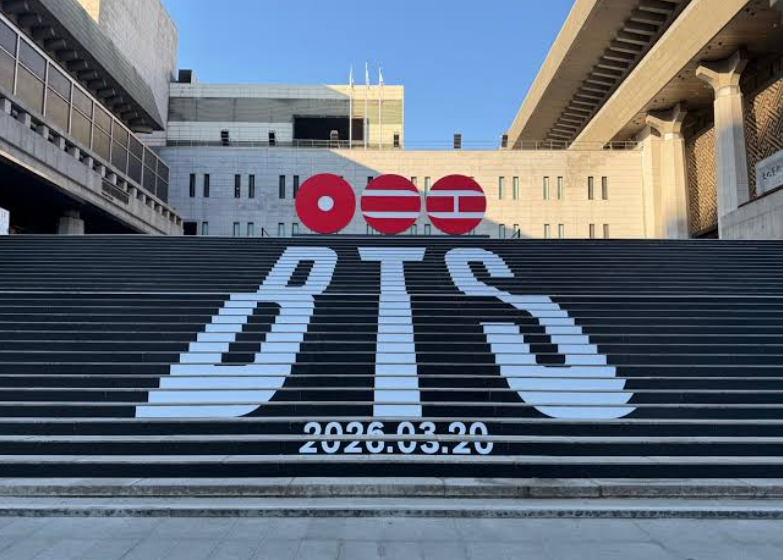
South Korean law enforcement has intensified its crackdown on ticket-scalping networks, referring a woman in her 30s for prosecution after she allegedly orchestrated one of the most sophisticated schemes targeting the country's booming K-pop concert market. The Seoul Metropolitan Police Agency disclosed on August 26 that the suspect used macro programming software to automatically purchase roughly 2,600 tickets to performances by major Korean artists between April 2023 and March 2026, before reselling them at significantly marked-up prices. The case has drawn particular attention because it included nine tickets to BTS' Gwanghwamun concert, one of the most coveted performances in recent memory, which took place in March 2026.
The woman's modus operandi reveals how ticket fraud has evolved into a technical arms race in Southeast Asia's entertainment sector. Rather than queuing online like ordinary fans, she exploited automated purchasing technology to bypass the system's protective mechanisms. Most K-pop concerts in South Korea implement strict purchase limits—typically one or two tickets per person per performance—to ensure equitable access for genuine fans. The suspect circumvented these safeguards by creating multiple accounts registered under the names of family members and acquaintances, then deploying her macro programme to complete transactions at inhuman speed, securing far more inventory than a single individual should legally obtain. This layered approach meant that detection became significantly more difficult for ticketing platforms and authorities monitoring for suspicious activity.
According to police investigations, the woman's enterprise operated with remarkable consistency and scale across nearly three years. She systematically targeted major K-pop performances, identifying events with high demand and limited ticket availability—the exact conditions that maximise resale value. The Seoul Metropolitan Police Agency estimates her illegal proceeds totalled approximately 442 million won, equivalent to around S$409,000 or US$319,000. This substantial sum underscores how the intersection of rabid K-pop fandom and secondary market economics creates powerful financial incentives for organised ticket fraud. Police have initiated proceedings to seize and preserve the alleged criminal proceeds before trial, effectively freezing assets and preventing the suspect from disposing of her profits while the legal process unfolds.
The investigation took a decisive turn on February 23 during ticket sales for the BTS Gwanghwamun performance. Authorities, already heightened alert due to exceptional public demand for the show, were conducting enhanced monitoring of the ticketing platform in real time. When the suspect attempted to secure nine tickets using identical methods to her previous purchases, law enforcement intervened immediately and prevented the resale transaction from occurring. This successful interdiction suggests that police coordination with ticketing platforms has become more sophisticated, allowing detection of automated purchasing patterns that might otherwise blend into normal traffic during high-demand events. The Gwanghwamun concert case essentially served as a smoking gun, providing concrete evidence of the woman's broader scheme and demonstrating a pattern consistent with her earlier activities.
The charges filed against the woman encompass three separate legal violations reflecting the multifaceted nature of her alleged crimes. The primary count involves breaching the Information and Communications Network Act, which criminalises unauthorised use of automated systems to circumvent security measures on digital platforms. A second charge addresses obstruction of business, acknowledging that her activities directly interfered with legitimate commerce and fair competition in the ticketing market. The third charge falls under the Public Performance Act, legislation specifically designed to regulate concerts and live entertainment events and protect both artists and genuine fans. This triangulated charging strategy reflects South Korean authorities' determination to pursue comprehensive prosecution rather than pursuing single-count convictions that might result in lenient sentencing.
Parallel to this major case, police have simultaneously prosecuted another organised scalping operation in Ulsan, a southeastern industrial city. A suspect in his 30s developed similar macro programming software and deployed it to purchase over 1,700 K-pop tickets between November 2024 and October 2025. The perpetrator resold his inventory at prices ranging from three to thirteen times face value, accumulating approximately 420 million won in profits before arrest and prosecution. The fact that two separate sophisticated operations emerged within roughly the same timeframe suggests ticket scalping has become an organised phenomenon rather than sporadic opportunism. These cases likely represent only the visible portion of a broader underground economy connected to K-pop ticket resales.
The timing of these prosecutions proves particularly significant because the South Korean government is fundamentally escalating its enforcement approach. Beginning August 28—just days after the police announcement—revised provisions of both the Public Performance Act and the National Sports Promotion Act take effect. These amendments authorise authorities to impose administrative fines of up to fifty times the face value of illegally resold tickets. Under previous legislation, penalties were insufficient to deter determined scalpers whose profit margins often exceeded such sanctions. The new regime transforms the economics of ticket fraud by ensuring that penalties substantially exceed potential gains, theoretically creating powerful disincentives across the entire scalping ecosystem.
For Malaysian and Southeast Asian readers, this development carries considerable relevance given the regional explosion of K-pop fandom and the proliferation of secondary ticket markets. As Korean entertainment companies increasingly tour Malaysia, Singapore, Indonesia, and Thailand, similar scalping problems emerge in local jurisdictions. While Southeast Asian countries may lack South Korea's highly sophisticated K-pop industry infrastructure, the underlying problem—desperate fans willing to pay premium prices, combined with technically capable individuals exploiting automated systems—transcends geography. The South Korean approach provides a policy blueprint: strict administrative penalties, real-time monitoring coordination between platforms and authorities, and multi-pronged criminal charges addressing different aspects of organised scalping operations.
The cases also illuminate broader tensions within the entertainment industry regarding market fairness and access. Artists and event promoters have legitimate interests in preventing artificial ticket scarcity and price inflation that diminishes their audience diversity. Genuine fans face barriers when wealthy scalpers monopolise allocation through technological advantages. Meanwhile, secondary markets serve genuine functions for people whose circumstances change or who acquire additional disposable income. Balancing these interests requires calibrated policy rather than prohibition. South Korea's revised legislative approach attempts precisely this calibration by permitting resale while heavily penalising systematic, technology-enabled fraud conducted at scale.
Beyond the legal dimensions, these prosecutions underscore evolving criminal sophistication in the digital age. Ticket scalping has evolved from simple manual resale to organised networks deploying custom software, accounting for multiple revenue streams, and operating across years and numerous events. Investigators must now possess both law enforcement expertise and technical literacy to track and disrupt such schemes. This convergence of crime and technology places significant demands on police capacity throughout Southeast Asia, where cybercrime investigation remains less developed than in South Korea. Regional authorities may require training programmes and resource allocation focused on digital forensics, platform monitoring, and macro-programme detection to effectively address similar problems in their own jurisdictions as K-pop concerts proliferate across Asia.

