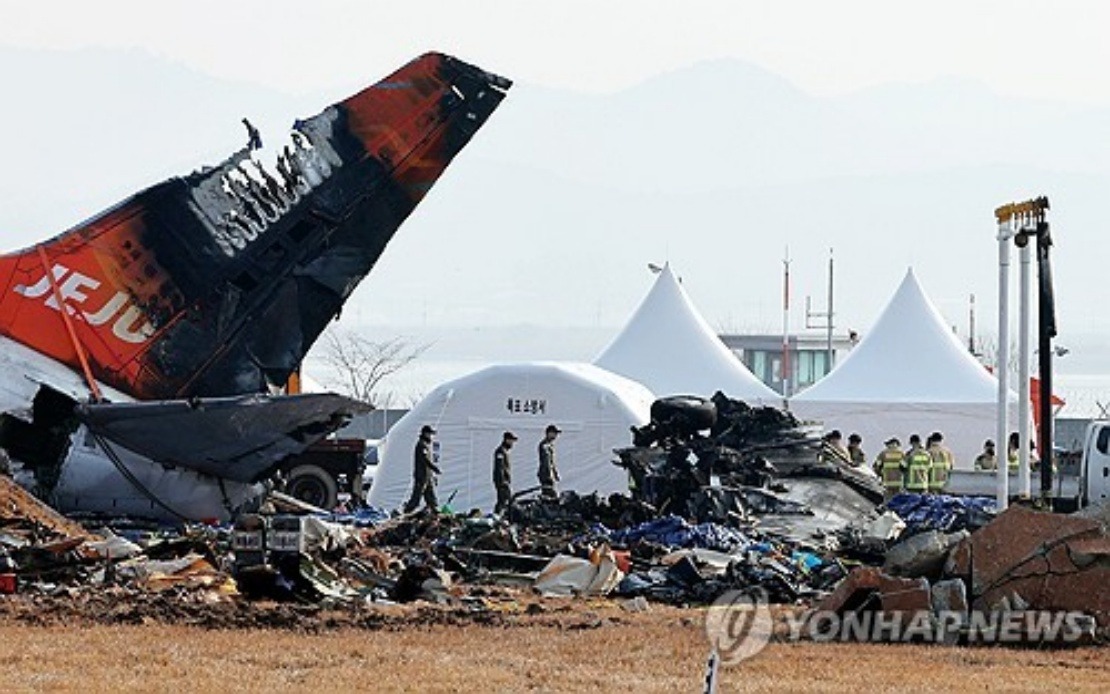
Seven officials from South Korea's transport ministry are facing criminal prosecution following allegations that they systematically concealed critical safety information about equipment involved in the Jeju Air disaster last December. The referral to prosecutors, announced by police investigators on Wednesday, marks an escalation in accountability efforts surrounding one of the nation's deadliest aviation incidents in recent history. The officials are accused of fabricating official communications that misrepresented the safety compliance status of navigation equipment, raising serious questions about institutional transparency and governmental responsibility in the immediate aftermath of the tragedy.
The Jeju Air plane crash occurred on December 29, 2024, when a Boeing 737-800 aircraft carrying 181 people attempted an emergency landing at Muan International Airport, located approximately 290 kilometres south of Seoul. The aircraft executed a belly landing on the airport runway before colliding with a concrete structure positioned dangerously close to the landing zone. The impact proved catastrophic, resulting in 179 deaths among passengers and crew members, leaving only two survivors from the flight. The high casualty rate immediately drew international scrutiny regarding airport safety protocols and equipment placement standards.
Central to the investigation is the localiser, a precision navigation system that provides critical guidance to pilots during landing approaches, particularly in adverse weather conditions. Following the crash, officials quickly identified the concrete mound housing this equipment as a potential contributor to the severity of the disaster. The structure's proximity to the runway created a hazardous obstacle that the aircraft struck during the emergency landing sequence. This discovery prompted investigators to examine whether the localiser installation met established safety regulations and whether responsible parties had disclosed any deficiencies to the public or relevant authorities.
According to the special police investigation team's findings, the seven officials drafted and released official statements asserting that the localiser installation fully complied with regulatory standards. However, investigators determined that these officials possessed knowledge that the equipment did not actually meet all required specifications. This deliberate misrepresentation constitutes a serious breach of public trust and governmental accountability. The decision to proceed with misleading communications despite known safety concerns suggests a potential institutional effort to deflect criticism and evade responsibility during the critical period following the crash.
The implications of this cover-up extend beyond the immediate incident. Aviation safety systems depend fundamentally on transparent reporting and accurate documentation of equipment status. When government officials knowingly issue false statements about compliance matters, they undermine the entire regulatory framework designed to protect the flying public. Airlines, pilots, and passengers rely on the integrity of official safety certifications when making decisions about aircraft operations and risk assessment. The alleged deception in this case demonstrates how institutional failures at the governmental level can compound the consequences of technical failures.
For Malaysian aviation stakeholders, this case offers important lessons about the importance of rigorous oversight mechanisms and transparent reporting structures. The Malaysian aviation industry operates under similar international standards and regulatory frameworks as South Korea. Incidents like the Jeju Air crash, and particularly the subsequent efforts to conceal contributing factors, underscore the necessity for regulatory bodies across Southeast Asia to maintain stringent documentation practices and resist institutional pressures that might compromise safety reporting. The Malaysian Civil Aviation Authority and related agencies must ensure that their own protocols emphasise transparency and accountability above all other institutional considerations.
The investigation also highlights vulnerabilities in how transport infrastructure is designed and maintained across the region. The decision to position a concrete localiser mound in close proximity to a runway represents a fundamental design risk that should have been identified and mitigated through comprehensive safety audits. Airports throughout Southeast Asia, including those in Malaysia, must review similar installations and hazardous structures to ensure they do not create unnecessary collision risks. This review should encompass not only the physical placement of equipment but also the integrity of maintenance records and compliance documentation.
The prosecutorial referral suggests that South Korean authorities are pursuing accountability not merely for the operational failures that directly caused the crash, but also for the governmental response that attempted to obscure contributing factors. This approach recognises that institutional integrity matters as much as technical compliance. Officials who knowingly misrepresent safety information face consequences that may include criminal charges, potentially resulting in imprisonment and permanent damage to professional careers. Such accountability mechanisms serve as powerful deterrents against similar behaviour in other jurisdictions and governmental agencies.
The broader context reveals tension between immediate institutional self-protection and long-term public safety. In the days and weeks following a major disaster, organisations often experience pressure to demonstrate competence and maintain public confidence. This pressure can create temptation to minimise information about failures or deficiencies, particularly when such information might suggest negligence or poor oversight. However, as this case demonstrates, such short-term protective measures ultimately cause far greater institutional damage when discovered, as they transform what might have been a technical failure into a scandal involving governmental misconduct and betrayal of public trust.
The referral of these seven officials represents an important step toward comprehensive accountability for the Jeju Air disaster. While the immediate cause of the crash involved the aircraft's collision with the concrete mound during an emergency landing, the broader story encompasses how institutional actors responded to that tragedy. Moving forward, both South Korea and other nations in the region must ensure that transparency, honesty, and public interest take precedence over institutional reputation management. Only through such commitment can aviation regulators and airport operators maintain the public confidence necessary to sustain safe aviation operations.

