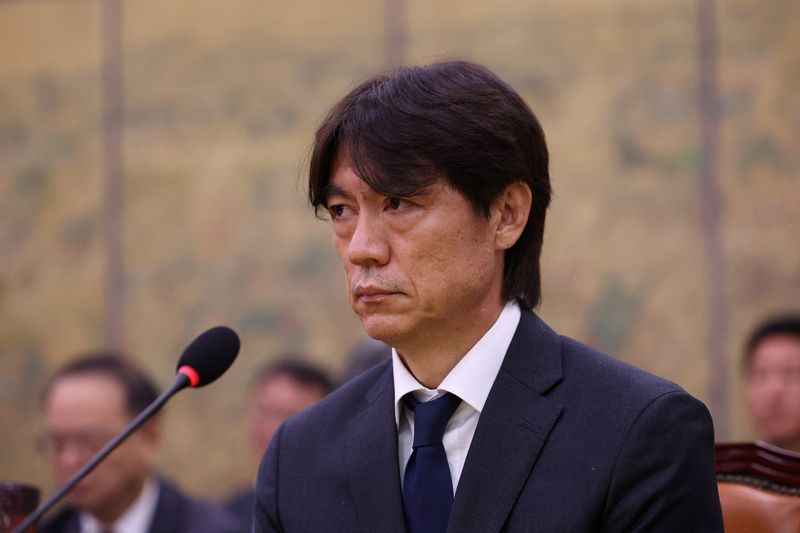
Investigators descended on the Korea Football Association headquarters in Seoul on Thursday as part of a widening inquiry into how the organisation selected Hong Myung-bo as national team coach, with police formally citing obstruction of business as the grounds for their investigation. The raids represent an escalation in scrutiny surrounding one of South Korean football's most contentious administrative decisions, marking the authorities' first physical intervention in the case after months of mounting political and public pressure.
Hong Myung-bo took over the national team's reins in 2024, returning to a position he had previously held between 2013 and 2014. What appeared initially as a straightforward coaching appointment quickly attracted criticism when details of the selection process emerged, revealing that the KFA had terminated a comprehensive international recruitment effort spanning several months to bring Hong back through what observers described as an unusually compressed decision-making timeline. The hasty nature of the transition raised immediate questions about whether established procedural safeguards had been properly observed.
The timing of the appointment placed it under additional scrutiny following South Korea's underwhelming performance at the World Cup tournament, where the national side finished third in its group and departed at the earliest opportunity. This disappointing campaign intensified public and political demands for accountability, prompting lawmakers to summon Hong for questioning at a parliamentary forum. During those hearings last month, Hong defended his selection process while accepting responsibility for the team's World Cup shortcomings, rejecting claims that he had been granted preferential treatment in his appointment.
The KFA's administrative breach became formally documented in October 2024, when South Korea's sports ministry published findings from its own investigation concluding that the association had violated its own internal regulations in recruiting both Hong and his predecessor Juergen Klinsmann. The ministry's report was particularly critical of how the KFA conducted its engagement with Hong, determining that a brief technical director's meeting fell considerably short of constituting a legitimate formal interview process as required by the association's established protocols. Despite these procedural violations, the ministry investigation stopped short of declaring that any criminal laws had been broken and chose not to recommend terminating Hong's contract.
The current police operation unfolding at KFA headquarters represents a distinct phase in the accountability process, moving beyond administrative review into potential criminal territory. Police have been conducting inquiries into complaints from various parties alleging that improper influence and irregularities marred Hong's appointment, with such investigations having begun even before the World Cup competition took place. The obstruction of business allegation suggests that investigators are examining whether KFA officials may have impeded legitimate administrative or legal procedures in ways that crossed into unlawful territory.
The distinction between the sports ministry's findings and the ongoing police investigation is significant for understanding the broader implications. Whereas the administrative review identified procedural violations but found no criminal misconduct, the police inquiry operates under different legal frameworks and standards of proof, potentially opening pathways to charges against individuals if investigators determine that deliberate wrongdoing occurred. This layered approach to accountability reflects how South Korea's system handles governance failures in major sports institutions, with administrative bodies addressing compliance issues while criminal investigators examine whether illegality occurred.
For Malaysian and Southeast Asian observers, the Hong appointment controversy illustrates the high stakes surrounding national team coaching selections in East Asian footballing nations, where such decisions frequently become intertwined with broader political considerations and public expectations. The intensity of scrutiny applied to Hong's appointment reflects how seriously South Korean football takes the legitimacy of administrative processes, particularly when public resources and national sporting pride intersect with concerns about fairness and transparency. The involvement of police investigators demonstrates that questions about procedural integrity can escalate into criminal investigations if authorities determine that laws have been violated.
The case also highlights tensions between meritocratic recruitment principles and pragmatic considerations in elite sports management. The KFA's decision to abandon its international search process in favour of appointing Hong, a figure with established connections to South Korean football, represents a common dynamic in regional sports organisations where institutional relationships and proven familiarity sometimes override transparent competitive selection mechanisms. Whether such decisions constitute legitimate administrative choices or improper interference remains the central legal and ethical question driving the current investigation.
Neither Hong nor any KFA officials have faced criminal charges to date, and police have not yet announced findings suggesting criminal wrongdoing by any parties involved. The investigation remains in its fact-gathering phase, with the raid aimed at securing documentation and evidence from KFA offices. As the inquiry progresses, it will determine whether the appointment process crossed from administrative irregularity into territory constituting criminal obstruction of business operations or related offences. The outcome will carry implications not only for Hong's position and the KFA's leadership but also for how South Korean sports governance handles future high-profile appointments and the standards to which administrative bodies are held accountable.

