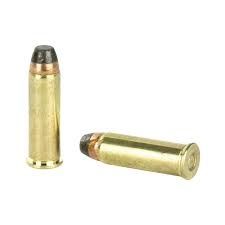
A Gyeonggi province police officer has attracted official scrutiny after airport authorities discovered live ammunition in his possession as he prepared to board a domestic flight at Jeju Airport on June 28. The incident, which came to light when Jeju Island police confirmed the investigation on July 3, underscores the sensitivity surrounding firearms management within South Korean law enforcement and raises fresh questions about adherence to weapons protocols among serving officers.
The officer, who is in his 30s, was apprehended with two live rounds intended for a .38-calibre pistol—the standard sidearm issued to most members of the South Korean police force. Notably, the officer himself was not carrying a firearm at the time of the attempted boarding, making the discovery of the ammunition alone sufficient to trigger the formal probe. The Jeju Seobu Police Station has initiated a comprehensive investigation into the circumstances surrounding the violation, with authorities examining how the ammunition came into the officer's possession and why he attempted to transport it.
According to investigators, the officer claimed that the two bullets were given to him by a former colleague who had recently retired from the force. This explanation has become central to the investigation, as authorities work to establish whether the transfer was deliberate or accidental, and whether the retired officer was aware of the regulations governing such transfers. The provenance of the ammunition raises broader concerns about institutional oversight of weapons management and the pathways through which controlled materials can enter circulation.
The discovery itself reveals an interesting temporal inconsistency that investigators are now probing. During an initial screening on June 26, when the officer boarded a flight from Gimpo Airport to Jeju, airport security did not detect any ammunition in his luggage. However, on June 28, when he attempted to board a return flight from Jeju back to Gimpo, the live rounds were found. This timeline suggests the ammunition may have been acquired or transferred after his arrival on the island, a detail that could prove significant in determining the officer's intent and the circumstances of the exchange with his retired colleague.
The National Forensic Service has confirmed through ballistic analysis that the recovered ammunition is specifically calibrated for the .38-calibre pistol, eliminating any ambiguity about the nature of the material involved. This precision in identification underscores the seriousness with which South Korean authorities treat such incidents and demonstrates the sophisticated forensic capabilities deployed to investigate weapons-related breaches.
For Malaysian readers and others in the Southeast Asian region, this incident illustrates the substantial regulatory frameworks that govern firearms within South Korea's security apparatus. Unlike some neighbouring nations, South Korea maintains exceptionally stringent controls over the circulation and storage of weapons and ammunition. Standard protocol requires all police officers to store their personal firearms and related materials at the armoury of their respective police stations, with strict accountability measures for every round issued. Personal possession of ammunition outside of operational necessity is explicitly prohibited under the Act governing the safety management of guns, swords and explosives.
The investigation into the officer represents a potential breach of these codified regulations, and the implications extend beyond individual misconduct. The fact that ammunition could move from a retired officer to an active-duty officer without triggering immediate alarms suggests possible gaps in the systems designed to monitor weapons transfers and enforce compliance. Such concerns are particularly acute in law enforcement contexts, where the capacity for weapons to be misused is considerably higher than in civilian populations.
South Korea's approach to firearms regulation reflects a broader societal commitment to public safety and risk minimisation. The country has implemented graduated licensing systems, mandatory training requirements, and continuous oversight mechanisms that are among the world's most comprehensive. However, as this case demonstrates, even well-designed regulatory systems depend on consistent enforcement at every level, and instances of individual non-compliance occasionally emerge despite institutional safeguards.
The investigation will likely examine not only the officer's conduct but also the adequacy of institutional controls within the Gyeonggi province police force. Questions will arise about whether supervisory mechanisms existed to detect the unauthorized acquisition of ammunition, and whether the officer's movements and behaviour prior to the airport incident gave any indication of a policy violation. Such institutional reviews are routine in major police forces worldwide and serve to strengthen operational protocols and prevent future breaches.
For the broader security community in East Asia, the incident represents a reminder that human factors—individual judgment, institutional communication, and personal integrity—remain critical variables in weapons management systems. No amount of procedural sophistication can entirely eliminate the risk posed by deliberate or negligent non-compliance by individual officers, making workplace culture, training reinforcement, and supervisory attention essential counterbalances to formal regulations.
The case also carries implications for aviation security across the region. While airport security systems successfully detected the ammunition at Jeju, the fact that the material cleared initial screening at Gimpo suggests ongoing opportunities for refinement in detection protocols. Collaboration between aviation authorities and law enforcement in sharing intelligence about repeated passengers or suspicious patterns could enhance preventive capacity and reduce reliance on reactive discovery.
As the investigation into the Gyeonggi officer unfolds, the findings will likely inform policy discussions about ammunition storage, transfer protocols, and oversight mechanisms within South Korean law enforcement. Whether the incident proves to be an isolated lapse or symptomatic of broader compliance challenges will determine the scope and nature of any subsequent institutional reforms. For regional security partners, the outcome will offer valuable insights into how mature democracies address internal compliance challenges within their security forces.

