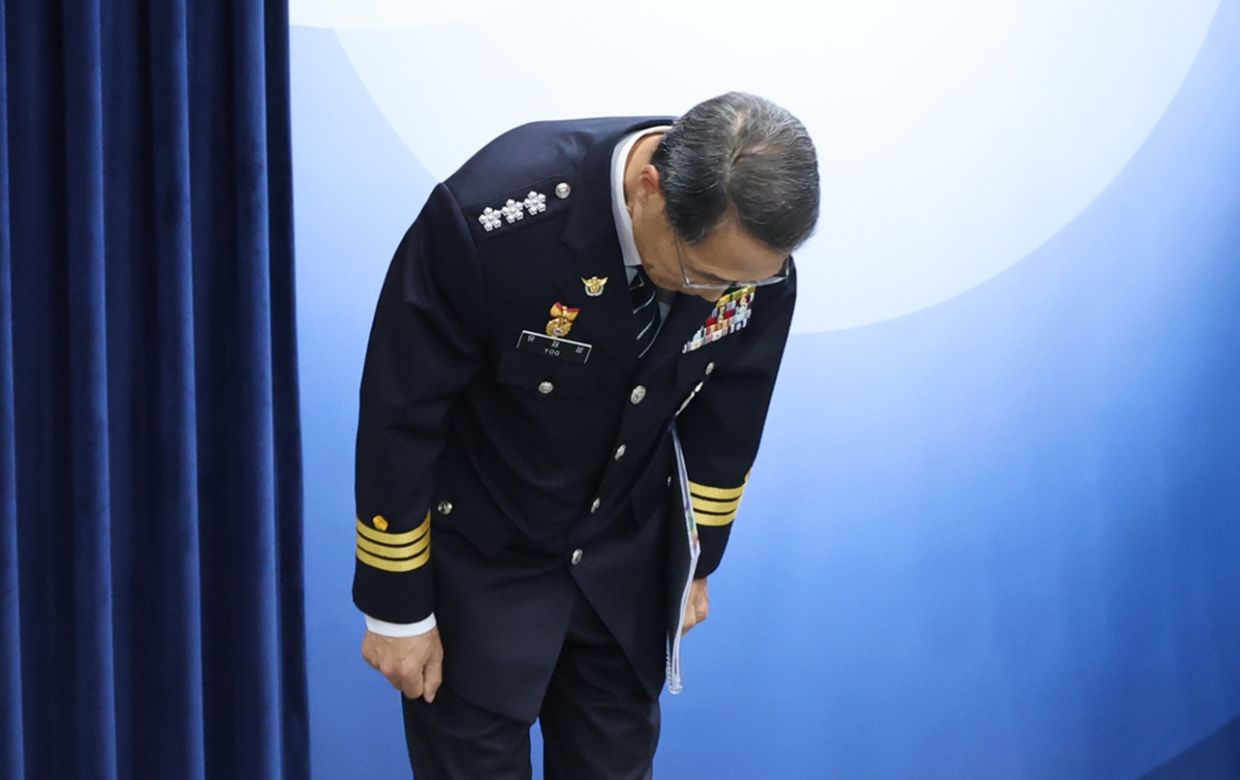
South Korea's National Police Agency is embarking on a significant overhaul of its investigative framework following mounting public outcry over allegations that officers bungled a major case and improperly assisted a suspect with family ties to the police force. Acting Commissioner General Yoo Jae-sung publicly committed to sweeping institutional reforms this week, acknowledging that the force must fundamentally reshape its practices to restore credibility among citizens who have grown increasingly distrustful of police conduct.
The scandal centres on the investigation into Jang Yoon-gi, who was arrested in connection with the death of a teenage girl in the southern city of Gwangju in May. What began as a straightforward criminal inquiry has evolved into a test of police accountability after claims emerged that investigators disclosed sensitive investigative details to Jang's father, a serving police officer, and failed to properly preserve crucial evidence. The revelations have sparked intense public criticism and demands for senior officials to accept responsibility through resignation.
Yoo addressed these mounting pressures during a formal briefing, stating that the police force views the crisis as a catalyst for necessary change rather than merely a public relations challenge. He positioned the reforms not as defensive measures but as an opportunity for the agency to fundamentally reconsider how it conducts investigations, manages internal relationships, and interacts with vulnerable populations. His commitment to "faithfully carry out his duties without clinging to his position" appeared designed to signal that leadership changes are on the table if required to restore public confidence.
The reform package introduces several structural innovations intended to create independent oversight and prevent future conflicts of interest. A dedicated investigative reform task force, set to commence operations by the end of July, will comprise between seven and ten members, with external specialists constituting more than half the composition. This external representation marks a significant departure from purely internal assessments and reflects recognition that police cannot credibly investigate themselves without civilian participation. The task force's mandate extends beyond procedural improvements to encompassing personnel reforms that would sever improper connections between officers and their local communities—a critical issue that allegedly enabled information sharing in the Jang case.
Complementing this civilian-led initiative, a new internal affairs unit operating under the National Office of Investigation will investigate serious misconduct allegations involving police personnel at all ranks. This represents a notable shift from previous arrangements where rank often insulated senior officers from thorough scrutiny. The unit's authority to examine violations regardless of an officer's seniority addresses a perception that the force has historically protected its own rather than holding all members to uniform standards of conduct.
Perhaps the most ambitious component involves establishing a fresh oversight body under the Korean National Police Commission, comprising approximately 100 civilian investigators tasked with examining alleged human rights violations and investigative misconduct. Yoo acknowledged that implementing this structure requires amending the Police Act, a legislative process already initiated through submission to the National Assembly. This reform extends beyond creating new positions; Yoo emphasized that the oversight body must possess genuine enforcement capacity, with findings translating into actual recommendations for personnel changes and disciplinary action. Without teeth, such civilian bodies risk becoming performative institutions that create the appearance of accountability without delivering meaningful consequences.
The broader context for these reforms reveals an administration determined to address systemic vulnerabilities in police operations. Yoo explicitly connected the proposed changes to the current government's policy objectives regarding enhanced oversight of law enforcement, signalling political will to push through institutional resistance. However, he also demonstrated pragmatism by committing to consult with rank-and-file officers before implementing the Interior Ministry's proposal to expand the police rotation system—a measure intended to reduce familiarity and corruption but viewed as burdensome by field personnel.
The rotation system proposal illustrates the tensions inherent in police reform. Currently, superintendent-level officers and some senior inspectors undergo nationwide transfers. Extending this practice across all ranks would enhance transparency and reduce the entrenchment of local connections that enabled the alleged Jang investigation misconduct. Yet Yoo candidly acknowledged practical obstacles: providing official residences to transferred lower-ranking officers would strain budgets substantially and raise fairness concerns, while the disruption to officers' personal lives could undermine support for broader reform efforts. This candour suggests the police leadership recognizes that sustainable reform requires officer buy-in, not merely top-down directives.
For Malaysian and Southeast Asian observers, the Korean situation offers important lessons about institutional accountability in law enforcement. The Jang case demonstrates how family connections within police hierarchies can compromise investigations and undermine public trust. Similar dynamics exist across the region, where personal relationships sometimes override professional obligations. South Korea's response—establishing civilian oversight bodies with investigative authority and implementing transparent personnel policies—contrasts with approaches in some neighbouring jurisdictions where police accountability remains primarily internal and opaque.
Yoo's explicit commitment to wait for final findings from a special investigation team before concluding the internal inspection of Jang's father suggests the government is avoiding the appearance of predetermined outcomes. This measured approach, while potentially frustrating those demanding immediate accountability, reflects institutional maturity and recognition that durable reforms require credible processes, not just symbolic actions.
The comprehensive nature of South Korea's proposed reforms indicates that officials recognize the scandal has damaged public confidence sufficiently to warrant fundamental restructuring rather than cosmetic adjustments. Whether these changes genuinely transform police culture or merely create new bureaucratic layers remains to be seen. The success of civilian oversight bodies will depend critically on whether they operate with genuine independence and whether police leadership resists the bureaucratic impulse to neutralise external scrutiny. The coming months will reveal whether South Korea's police force embraces transformation or simply adapts its institutional defences.

