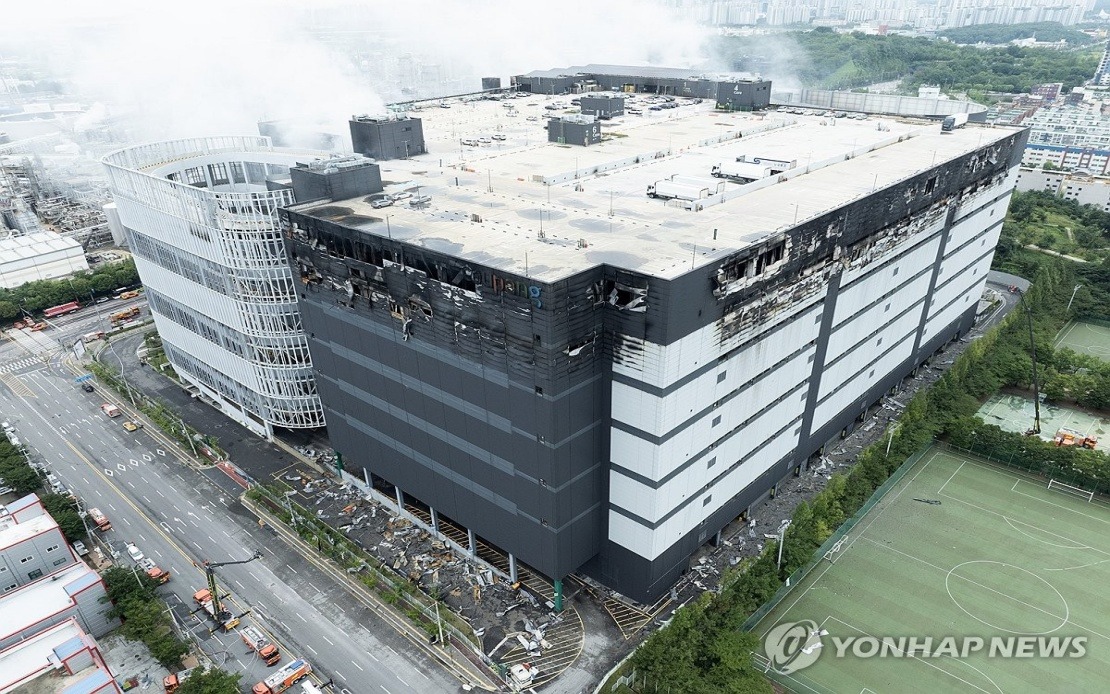
A major fire that consumed a Coupang logistics facility in Incheon, located just west of Seoul, has been declared under initial control following an intensive three-day firefighting operation. The blaze, which ignited on Saturday, was officially brought under control at 8 p.m. on Monday, marking the end of a critically demanding response that tested South Korea's disaster management capabilities and highlighted the vulnerabilities of large-scale storage facilities housing flammable materials.
The sheer scale of resources mobilised underscores the severity of the incident. Firefighting authorities deployed 812 firefighters to the scene alongside 231 pieces of equipment, representing a coordinated national response ordered immediately after the fire broke out. This mobilisation reflected the government's recognition that a standard local response would prove insufficient given the warehouse's size, contents, and proximity to residential areas. The decision to escalate to national-level coordination ensured that personnel and equipment from multiple jurisdictions could be brought to bear on the conflagration.
The structural complexity of the logistics centre posed significant obstacles to firefighting teams attempting to contain the flames. Large warehouse facilities are inherently challenging to navigate during active fires due to their open floor plans, multiple levels, and intricate internal layouts that can trap heat and smoke. Compounding this challenge was the warehouse's inventory of highly flammable materials typical of a modern e-commerce logistics hub, which fed the fire's intensity and spread. Firefighters found themselves battling not just the visible flames but also the chemical composition of burning goods, which complicated suppression strategies and created unpredictable fire behaviour.
Weather conditions proved instrumental in shifting the operational momentum on Monday. Rainfall provided natural assistance to firefighting efforts, reducing ambient temperatures, increasing humidity levels, and potentially slowing the fire's expansion. In large-scale industrial fires, such meteorological factors can be as consequential as human intervention, as precipitation helps cool structures, reduces the likelihood of re-ignition, and limits the generation of new fire fronts. The arrival of rain demonstrated how environmental elements can either accelerate or hinder disaster response, a lesson relevant to fire management protocols across the region.
The human impact extended well beyond the warehouse itself. Local authorities issued evacuation orders late Sunday affecting areas within 116 metres of the warehouse's ramp zone, a precautionary measure designed to protect residents from potential structural collapse, toxic fumes, and flying debris. This evacuation order displaced 178 people who sought temporary refuge at nearby schools, transforming educational institutions into emergency shelters. The decision highlighted the immediate danger posed by large industrial fires in populated regions and the necessity for well-coordinated civil defence protocols.
Educational facilities bore the brunt of disruption measures adopted by local authorities. In response to the fire and its ongoing threat, officials ordered the closure of schools and childcare facilities throughout the affected zone. One elementary school and fourteen daycare centres shuttered their operations on Monday, affecting hundreds of children and disrupting family routines. Such closures reflect the precautionary approach taken by local government, prioritising safety over operational continuity, though the economic and social costs of extended closures merit consideration in post-incident reviews.
This incident carries particular relevance for Malaysia and Southeast Asia, where rapid urbanisation has increased the proximity of residential areas to large industrial and logistics facilities. The integration of e-commerce infrastructure into densely populated regions creates similar risk profiles to those encountered in Incheon. South Korea's response, while effective, also reveals the resource demands and societal disruption that accompany major industrial fires in urban settings. Regional authorities might examine this case to strengthen their own fire safety protocols, particularly regarding facility design standards, emergency access routes, and the storage of flammable materials.
The logistics sector's critical role in modern economies means that disruptions to warehouse operations carry cascading effects beyond the immediate disaster zone. Coupang, South Korea's largest e-commerce platform, depends on efficient warehouse operations to maintain its same-day and next-day delivery guarantees. A major facility fire threatens supply chain continuity and consumer service levels, creating economic pressure to resume operations quickly—potentially before comprehensive safety assessments are completed. Balancing rapid recovery with thorough investigation poses a genuine challenge for incident management.
Looking forward, the investigation phase will prove as important as the active firefighting operation itself. Authorities must determine the fire's origin, identify any systemic safety failures in the facility's design or maintenance, and assess whether warehouse operations met all regulatory requirements. In Malaysia, where industrial growth has sometimes outpaced regulatory enforcement, such investigations abroad provide valuable insights into what can go wrong and how preventive measures might avert similar tragedies. The findings will likely influence future building codes and safety standards not only in South Korea but across East Asia and potentially further afield.

