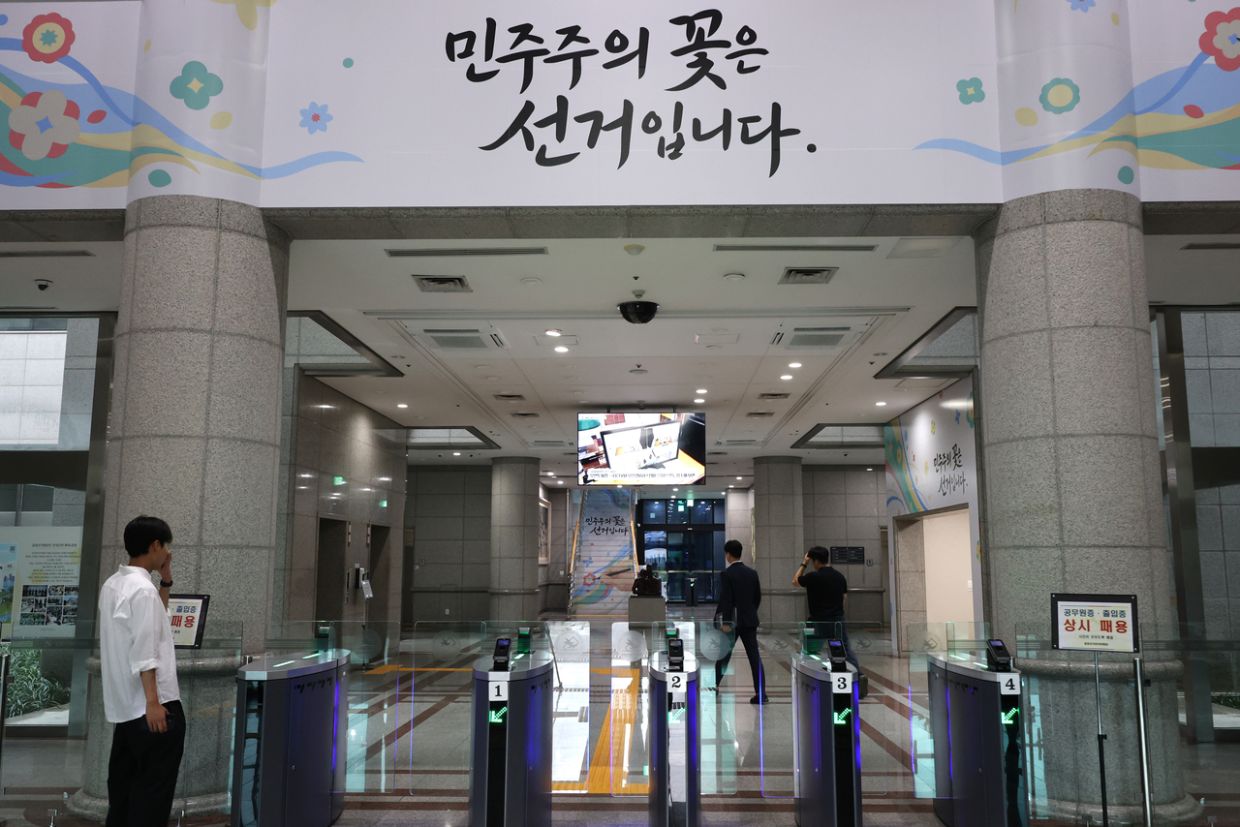
South Korean prosecutors and police launched a coordinated raid on the National Election Commission's headquarters in Gwacheon on Thursday, escalating an investigation into irregularities that disrupted voting during the country's June 3 local elections. The operation marked a significant escalation in scrutiny of the electoral body, as investigators sought to recover evidence concerning allegations that commission staff had deliberately falsified statistics within the organisation's computer systems to conceal reporting errors related to voter tallies.
The ballot shortage incident exposed systemic vulnerabilities in South Korea's electoral infrastructure at a critical juncture for the nation's democratic institutions. On election day, numerous polling stations across the country ran out of ballots, forcing considerable numbers of citizens to leave voting booths without completing their civic duty. This unprecedented shortfall undermined the principle of universal suffrage and sparked public concern about the reliability of the country's election administration mechanisms.
The joint prosecution-police task force executed the search warrant based on evidence obtained during earlier stages of the investigation, which suggested that election commission employees had manipulated data to obscure the extent of errors in voter registration numbers. Rather than transparently reporting the problems that occurred during the June 3 voting, these officials allegedly altered records in their internal systems, a decision that compounded the original operational failures with intentional deception.
Election watchdogs play a crucial role in maintaining democratic legitimacy and public confidence in electoral processes, particularly in a country like South Korea where recent decades have witnessed tremendous democratic development. When the body responsible for administering elections itself becomes the subject of a criminal probe, the reputational damage extends beyond the specific individuals involved to undermine systemic trust. The allegations raised questions about whether adequate oversight mechanisms existed to detect such misconduct and whether proper checks and balances were functioning within the election administration hierarchy.
The ballot shortage phenomenon itself revealed operational deficiencies that required urgent examination. Multiple polling stations experiencing simultaneous supply exhaustion suggested either significant planning failures or distribution problems that should have been preventable through competent inventory management. Election officials in well-functioning democracies typically conduct detailed calculations before election day to ensure sufficient ballot supplies, accounting for expected voter turnout and maintaining contingency reserves.
For Malaysian observers, the South Korean situation offers instructive lessons about the importance of strong institutional integrity within election management bodies. While Malaysia's own election commissions have their own particular context and challenges, the principle that electoral administrators must maintain absolute transparency about their operations remains universally relevant. Public confidence in election results depends fundamentally on trust that the machinery conducting the vote counts and records election outcomes operates with complete honesty.
The scope of the investigation appeared to widen considerably with the raid, suggesting prosecutors suspected more extensive problems than initially apparent. If evidence recovered during the search corroborated claims of systematic data manipulation, charges could extend beyond individual employees to raise questions about whether supervisory officials or institutional policies facilitated the alleged cover-up. Such findings would have profound implications for electoral governance in South Korea and potentially influence how other democracies approached election administration oversight.
The timing of the raid also carried political significance for South Korea's broader institutional health. Unlike authoritarian regimes where election commissions might be weaponised for partisan advantage, the investigation demonstrated that democratic societies can hold their own electoral bodies accountable through independent prosecution mechanisms. However, the mere fact that such corruption became possible indicated potential weaknesses in the commission's internal auditing, quality control, and whistleblower protection systems that would require remedial attention.
International observers watching South Korea's response to the scandal could assess the country's commitment to maintaining democratic standards and rule of law. How thoroughly prosecutors pursued the investigation, whether meaningful reforms followed, and whether perpetrators faced appropriate consequences would collectively signal the maturity of South Korea's democratic institutions and their capacity for self-correction when problems emerged within the system.
The affected voters who had been turned away from polling stations during June 3 represented a tangible harm to democratic participation that crystallised the importance of administrative competence in electoral contexts. Election administration might seem like a technical, bureaucratic function, but when failures occur, they translate directly into citizens being denied their fundamental right to participate in choosing their representatives and determining policy directions.
Moving forward, South Korea's election authorities would likely face pressure to implement strengthened internal controls, independent auditing mechanisms, and greater transparency in their data management systems. The scandal underscored how even advanced democracies with established institutions required continuous vigilance and periodic reforms to prevent institutional decay and maintain public confidence in the foundations of democratic governance.

