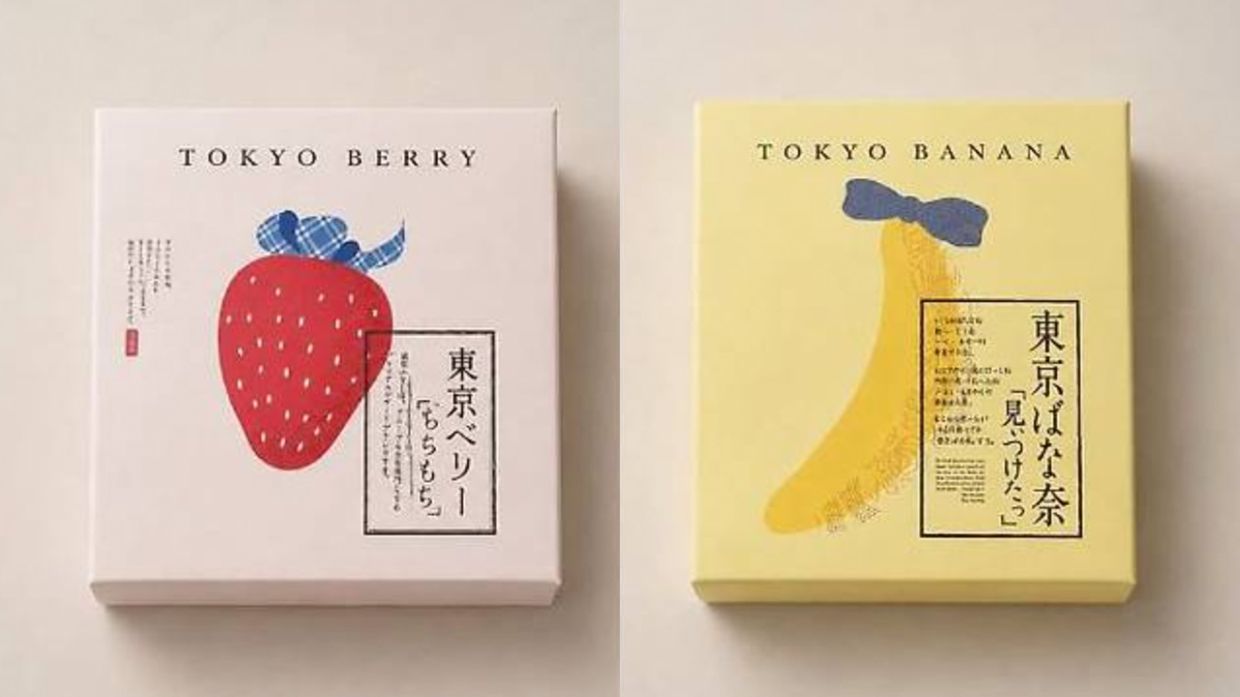
A contentious intellectual property dispute has erupted in East Asia's confectionery market as South Korean dessert brand Tokyo Berry faces mounting accusations of having replicated the distinctive visual identity of Japan's beloved Tokyo Banana brand. The controversy represents a broader tension in the regional food industry where product packaging and brand recognition carry significant commercial weight, and has ignited considerable debate about design ethics and consumer protection across social media platforms.
Tokyo Banana, manufactured by Japanese confectionery company Grapestone, has long been established as a premium banana-shaped sponge cake beloved by consumers throughout the region. The brand's distinctive packaging and product form have become synonymous with quality Japanese confectionery, making it instantly recognizable to discerning shoppers across East and Southeast Asia. Its reputation rests not only on product quality but also on the carefully cultivated visual identity that distinguishes it in crowded retail environments.
Tokyo Berry, by contrast, represents a recent market entrant to South Korea's competitive dessert landscape. The newly launched brand has pursued an aggressive retail strategy by securing prime locations through pop-up stores at major department store chains including Lotte and Shinsegae, establishing a visible presence in Seoul's most trafficked shopping destinations. The promotional momentum initially appeared successful, with certain locations drawing substantial customer queues and generating considerable foot traffic that typically signals strong consumer interest.
The allegations of design imitation surfaced when social media users began circulating side-by-side photographic comparisons of the two brands' packaging, drawing attention to striking visual parallels that many consumers found difficult to overlook. These online discussions quickly snowballed into a broader conversation about the ethical dimensions of product design and whether Tokyo Berry had crossed the boundary from inspiration into outright replication. The visual similarities extended beyond superficial elements, with observers noting comparable colour schemes, typography treatments, and overall aesthetic approaches.
Separately troubling to many consumers was Tokyo Berry's marketing messaging, which emphasized concepts such as "capturing the flavours of seasonal fruits and the essence of Tokyo." This promotional language apparently created a deliberate ambiguity regarding the brand's origin, with marketing materials seemingly designed to evoke Japanese sophistication and heritage. For many purchasers who discovered that Tokyo Berry was in fact a South Korean creation, this discovery bred a sense of having been deliberately misled about the product's provenance and authenticity.
The reputational damage proved swift and substantial. Department store operators quickly moved to distance themselves from the controversy, with officials confirming that all scheduled Tokyo Berry pop-up store operations would be cancelled effective immediately. This decision reflected retailers' calculation that continued association with the brand had become commercially untenable, as negative publicity threatened to overshadow other merchandising activities and damage the stores' own brand reputation.
The controversy deepened when online commentators expanded their scrutiny to encompass Tokyo Berry's inner packaging materials. Critics argued that the brand had additionally borrowed design elements from Hanjungsun, a premium Korean dessert manufacturer known for utilizing hanji, the country's traditional handmade paper, to wrap its chapssaltteok rice cakes. This second layer of alleged copying—borrowing from another Korean competitor rather than simply mimicking Japanese precedent—crystallized public sentiment that Tokyo Berry represented a pattern of unoriginal design thinking rather than isolated coincidence.
The incident acquired nationalist dimensions as segments of South Korea's online community branded the controversy a "national embarrassment," viewing the affair as reflecting poorly on Korean business ethics and creative originality. This framing transformed what might have remained a consumer protection issue into a matter touching on broader questions of Korean industrial reputation and integrity. The emotional resonance of such framing amplified the backlash considerably, as commenters weaponized the controversy to make statements about Korean commercial values.
Tokyo Berry's response to mounting criticism included removing promotional content from its Instagram account and disabling the comment functionality on remaining posts, a defensive posture that observers interpreted as acknowledging the legitimacy of consumer grievances. Rather than engaging substantively with critics or mounting a vigorous defense, the brand's retreat into digital silence appeared to many as tacit admission of wrongdoing.
Grapestone, the Japanese manufacturer and proprietor of the Tokyo Banana brand, officially entered the fray by confirming that it had escalated the matter internally to relevant departments for comprehensive review. The company's cautious statement—neither rushing to pursue legal action nor dismissing the allegations—suggests that Japanese brand owners are carefully evaluating their options while assessing the commercial implications of public backlash in South Korean markets. Such disputes carry particular significance given the integrated nature of East Asian retail and the importance of brand reputation across borders where consumers frequently travel and encounter products from multiple countries.
The Tokyo Berry affair illustrates the vulnerability of emerging brands in internationally interconnected markets, where social media amplifies design comparisons instantaneously and consumer consciousness regarding intellectual property has substantially heightened. For Malaysian and Southeast Asian food and beverage companies seeking to expand regionally, the case serves as cautionary reminder that shortcuts in product design and marketing messaging carry elevated risks in today's image-conscious consumer environment, where authenticity and originality command premium valuations.

