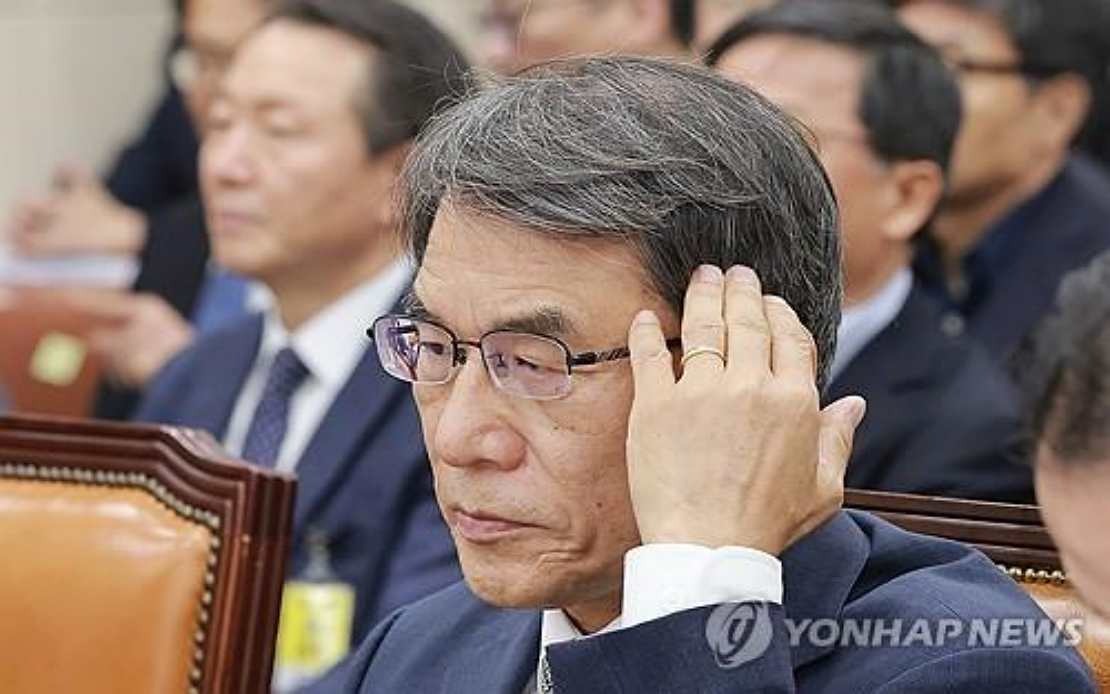
South Korean authorities conducted a formal search of the National Election Commission headquarters on Monday, intensifying their investigation into allegations of financial misconduct and misappropriation spanning the organisation's leadership and broader staff operations. A joint team from police and the prosecution executed the raid after obtaining warrants identifying former Commission chief Roh Tae-ak and several other unnamed officials as criminal suspects in what investigators describe as a systematic case of occupational embezzlement involving agency resources.
The search focused on the office of the NEC chairperson and aimed to gather documentary evidence related to the suspected mishandling of public funds. Although Roh's private residence was not included in Monday's search scope, investigators have already begun scrutinising financial records and travel documentation held at the Commission's central offices. The operation marks a significant escalation in what has become one of South Korea's more notable public sector corruption cases in recent months.
At the heart of the investigation lies Roh's conduct during his tenure as the Commission's chief. Specifically, authorities are examining three high-profile overseas missions that took him and his spouse to Australia and New Zealand, Germany and Estonia, and Denmark and Sweden. While these trips were documented in official NEC records as business travel, the Commission's publicly released reports systematically omitted any reference to his spouse's participation in these journeys—a discrepancy that has triggered suspicion that the spouse's travel costs were inappropriately charged to the NEC's operational budget, effectively constituting embezzlement of public resources.
The scope of the alleged misconduct extends far beyond Roh's personal conduct. Investigators have uncovered a broader pattern of questionable international travel by NEC personnel that suggests institutional rather than individual problems. Between 2022 and June 2024, a total of 461 employees from the Commission undertook 107 overseas business trips to destinations that included the Maldives, Bangkok, Kota Kinabalu, and Florence—locations better known as holiday destinations than centres for international electoral governance meetings. This pattern has prompted speculation that official business travel was being exploited to provide subsidised leisure trips to staff members, representing a substantial drain on the Commission's finances.
The timing of the investigation reflects broader political pressure on South Korea's electoral institutions. The People Power Party, which operates as the country's principal opposition force, formally lodged a complaint against Roh on June 19, formally initiating the criminal investigation. This move came just weeks after Roh had already stepped down from his position in the wake of significant operational failures during the June 3 local elections, when ballot shortages disrupted voting procedures at multiple polling stations across southern Seoul. His resignation appeared designed to contain the political damage from that debacle, but the subsequent financial probe has transformed the crisis from an administrative matter into a criminal investigation with wider implications for the Commission's leadership and credibility.
Roh's departure from office, while sudden, now appears to have been precipitated by mounting pressure rather than his own initiative. The ballot shortage incident exposed what critics characterised as systemic management failures at the Commission, undermining public confidence in the institution responsible for administering South Korea's electoral process. The financial allegations that have since surfaced suggest that organisational problems extended well beyond simple operational shortcomings into potential criminal abuse of resources. These revelations have intensified calls for comprehensive reform of the Commission's governance structures and oversight mechanisms.
For Malaysian observers, the South Korean case offers instructive lessons about the vulnerability of electoral institutions to misuse of public resources. Like South Korea, Malaysia places significant responsibility for managing electoral processes and voter confidence in national commissions operating under established legal frameworks. The incident demonstrates that even supposedly professional, hierarchically organised electoral bodies can become sites of institutional corruption when adequate oversight mechanisms prove insufficient or when internal accountability cultures become compromised. The scale of the travel-related misconduct—involving 461 staff members and 107 trips—suggests that problems had persisted undetected for extended periods, indicating that routine financial audits and accountability procedures had either failed to function effectively or had been deliberately circumvented.
The investigation also highlights how political opposition can play a constructive role in exposing institutional malfeasance, at least in democracies with functioning legal systems that permit such challenges to proceed. The People Power Party's decision to file a formal complaint transformed what might otherwise have remained an internal matter handled through administrative channels into a full criminal investigation. This dynamic reveals the importance of institutional checks on executive power and the capacity of opposition forces to mobilise legal remedies when public institutions fail.
South Korea's prosecution service and police collaboration on this case reflects international best practice in handling complex institutional corruption cases. By pooling investigative resources, the two agencies can access both criminal law expertise and administrative knowledge necessary to fully reconstruct the Commission's financial operations and identify all individuals involved in misconduct. This joint approach appears more effective than allowing either institution to proceed independently, particularly given the case's technical complexity involving overseas transactions, travel documentation, and systematic record-keeping failures.
The broader implications for South Korean governance are substantial. The National Election Commission operates at the crucial intersection of democratic legitimacy and institutional credibility. When the organisation responsible for conducting fair elections becomes itself the subject of criminal investigation for financial misconduct, public trust in electoral outcomes can be significantly undermined. This effect extends beyond South Korea itself, as regional observers assess the health of Korean democracy and its institutions' capacity for self-correction through legal processes. The investigation's outcome will signal whether South Korea's legal institutions possess sufficient independence and effectiveness to hold even senior public officials accountable for misappropriation of state resources.

