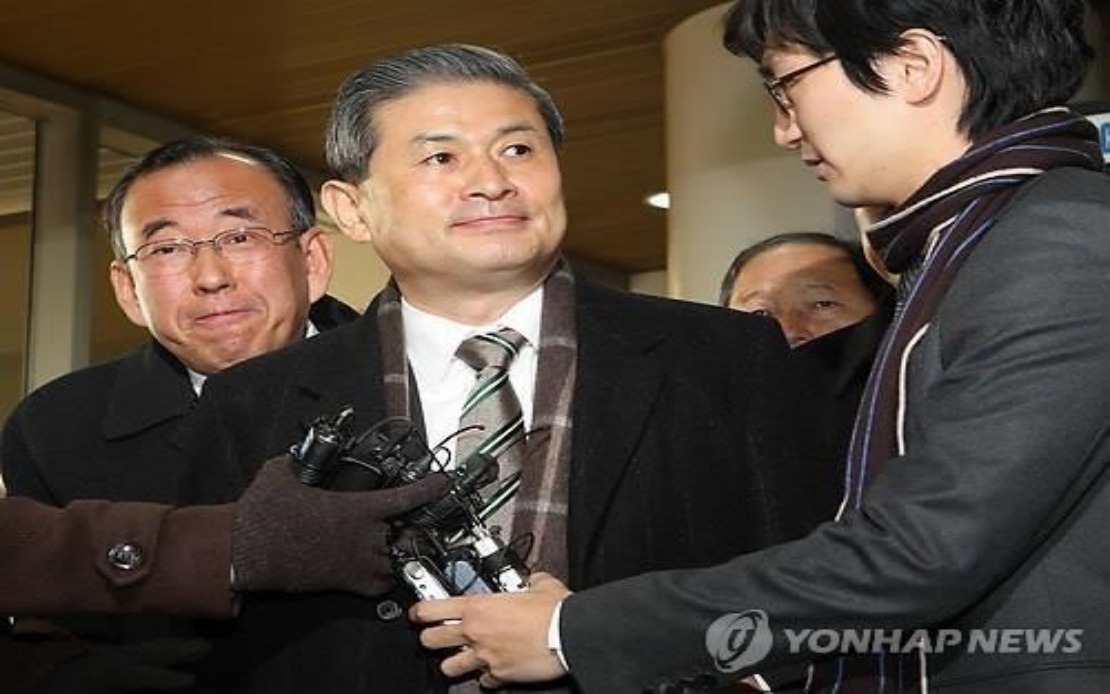
South Korea has taken formal action to strip its highest science and technology honour from Hwang Woo-suk, the disgraced Seoul National University professor whose groundbreaking claims about human embryonic stem cell research crumbled into one of the most significant scientific frauds of the 21st century. The revocation, completed this week through presidential approval, comes 22 years after the prestigious award was conferred in 2004, marking the final chapter in a saga that shook the global scientific community and raised uncomfortable questions about oversight, peer review, and institutional accountability.
The interior ministry confirmed the decision on Wednesday following a request initiated by the science ministry in March. The process moved swiftly once submitted for presidential consideration, with approval granted on Tuesday, formally nullifying Hwang's status as a recipient of South Korea's premier scientific honour. The award, typically presented to scientists and technologists deemed to have made substantial contributions to advancing the nation's scientific and technological capabilities, carried not just prestige but also a monetary prize of 300 million won, equivalent to approximately US$201,200 at the time of presentation.
Hwang's downfall stands as a cautionary tale about the pressures facing ambitious researchers in competitive scientific environments and the ease with which fraudulent work can initially penetrate peer-reviewed publication systems. When his fabricated research paper claimed in 2004 that he had successfully created the world's first cloned human embryo, the announcement generated international headlines and positioned South Korea at the forefront of cutting-edge biotechnology. For a nation investing heavily in scientific advancement as a national priority, Hwang's purported achievement represented a moment of triumph, justifying the award committee's recognition of his work.
Yet within a mere year, the foundation supporting these claims collapsed entirely. An investigation in 2005 exposed that Hwang had systematically used forged data and manipulated experimental results to support conclusions that had never actually been achieved. The deception was comprehensive and deliberate, extending beyond the primary claims to encompass multiple layers of fabrication designed to withstand scientific scrutiny. The revelation devastated not only Hwang's career but also damaged South Korea's international scientific reputation and raised broader concerns about the robustness of peer review mechanisms across the field.
Institutional consequences followed swiftly. Seoul National University dismissed Hwang from his position in 2006, stripping him of his academic credentials and ending what had appeared to be a distinguished career in reproductive biology. Yet the question of his official awards and honours remained unresolved for years, partly due to complex questions about proper legal procedures for revocation. The government had attempted to revoke the Top Science and Technology Award previously in 2020, but that action was later deemed invalid by the courts, which identified significant procedural irregularities that undermined the legitimacy of the earlier revocation.
This latest revocation represents a more carefully constructed legal process, designed to withstand judicial scrutiny and ensure that the action cannot be challenged on technical grounds. The involvement of multiple government bodies—the science ministry coordinating the request, the interior ministry processing the revocation, and presidential approval providing executive authority—suggests an effort to create an airtight decision that respects both the principles of justice and administrative law.
For countries across Southeast Asia, including Malaysia, the Hwang case carries instructive lessons about maintaining scientific integrity in an era of intense international competition. As nations throughout the region invest increasingly in biotechnology, life sciences research, and other cutting-edge fields, ensuring robust oversight mechanisms and fostering a culture that rewards genuine discovery over flashy announcements becomes crucial. The pressure to produce breakthrough results can inadvertently create environments where corners are cut or data is manipulated, particularly when institutional prestige and national pride become entangled with research outcomes.
The case also illuminates how formal recognition systems—awards, prizes, honours—create reputational stakes that extend far beyond individual scientists. When prestigious national honours are bestowed on fraudulent work, it compromises public trust not only in the specific institution awarding them but in scientific authority more broadly. The prolonged nature of this revocation process, spanning from initial fraud discovery in 2005 to final revocation in 2024, demonstrates how difficult it can be to fully repair institutional credibility once compromised.
Hwang's fate serves as a stark reminder that scientific misconduct ultimately cannot survive sustained scrutiny, regardless of how convincing the initial presentation or how politically convenient the claimed results might be. The financial and reputational investments made in supporting his work—the awards, the university positions, the national prestige—could not protect him once the fraudulent nature of his research was documented. Today, with greater emphasis on data transparency, reproducibility standards, and collaborative verification in research, the probability of similar large-scale fabrications avoiding detection for extended periods has diminished significantly.
The formal revocation this week represents not merely an administrative correction but a public affirmation by the South Korean government that scientific integrity cannot be compromised for national ambition. As other nations in the region pursue their own scientific advancement goals, this precedent suggests that maintaining rigorous standards, however difficult or nationally embarrassing the process, ultimately strengthens rather than weakens scientific credibility and institutional legitimacy.

