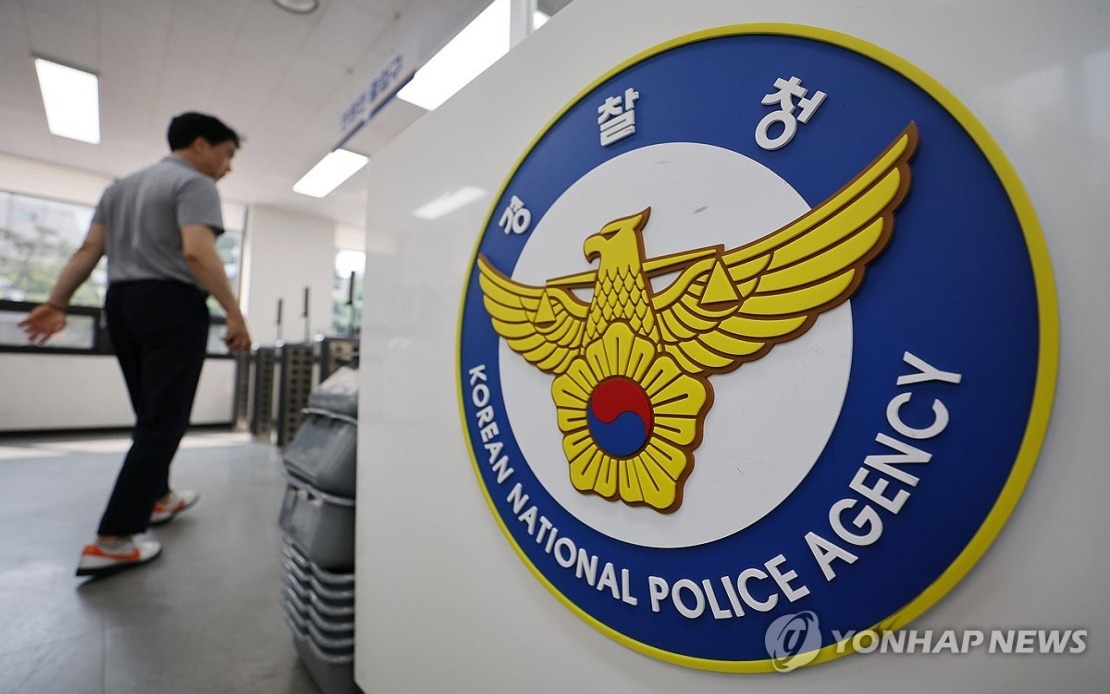
South Korea's Korean National Police Agency has signalled its determination to tackle a rising tide of organised crime by unveiling an intensive enforcement operation that will run until the end of October. The initiative, commencing on Monday, represents an escalation in law enforcement response to what officials view as a troubling shift in criminal behaviour, particularly among younger offenders who are increasingly turning to financial crimes rather than traditional gang activities.
The scope of the operation reflects the evolving nature of organised crime in South Korea. Rather than focusing solely on street-level gangsterism, the KNPA has identified high-yield financial schemes as its primary concern, including sophisticated fraud networks, unlicensed lending operations that prey on vulnerable borrowers, clandestine online gambling platforms, and complex money laundering arrangements. This strategic pivot acknowledges how criminal organisations have adapted their methods to exploit digital platforms and financial systems, making detection and prosecution significantly more challenging than conventional enforcement approaches.
A particularly troubling element of the crackdown targets a behavioural pattern that has emerged among younger criminals: the public flaunting of illicitly obtained wealth through social media and online platforms. Investigators have determined that this ostentatious display not only generates fear within communities but also serves as a recruitment tool for criminal organisations seeking to attract new members. The KNPA intends to aggressively pursue these cases while simultaneously implementing asset-freezing measures designed to disrupt criminal cash flows and undermine the financial sustainability of these networks.
International dimensions of organised crime have become increasingly prominent in South Korea's law enforcement agenda. The crackdown will specifically target drug trafficking operations, with synthetic drugs such as ketamine receiving particular attention from authorities concerned about their proliferation and public health implications. Beyond narcotics, the KNPA plans to intensify investigations into organised crimes involving foreign nationals, reflecting growing concerns about transnational criminal networks operating within South Korean territory.
To effectively combat these international crime syndicates, the KNPA has announced plans to substantially expand its intelligence gathering capabilities. This expansion will involve heightened surveillance and information collection around foreign communities, their workplaces, and entertainment districts frequented by expatriates. For Malaysian readers and Southeast Asian businesses operating in South Korea, this represents an important reminder that law enforcement scrutiny in these areas will intensify considerably over the coming months.
The announcement follows a stark assessment of crime trends during the first half of this year. Between mid-March and the end of June, police apprehended 1,185 gang members with 225 of those individuals arrested, representing a 9.7 per cent increase in apprehensions and a particularly alarming 48.3 per cent spike in formal arrests compared to the previous comparable period. These figures suggest not merely more criminal activity, but more serious criminal activity warranting formal prosecution rather than administrative detention.
Demographic analysis of those apprehended reveals a troubling generational shift in organised crime. Individuals aged 30 and younger comprised 63.6 per cent of all suspects encountered, indicating that South Korea's organised crime problem increasingly reflects the activities of young adults and youth rather than established gang hierarchies. Among this younger cohort, fraud-related offences dominated, accounting for 42.7 per cent of their criminal activities. This concentration suggests a calculated criminal strategy focused on financial gain rather than territorial control or protection rackets that traditionally characterised gang activity.
Foreign nationals have featured increasingly prominently in South Korea's crime statistics, raising questions about criminal networks that span international boundaries. During the first half of this year, police processed 18,130 foreign nationals on criminal charges, representing a 9.1 per cent increase from the equivalent period in 2023. More dramatically, drug-related crimes involving foreign nationals surged by 29 per cent, suggesting either intensified enforcement activity or genuine expansion of drug trafficking operations with international dimensions. This trend has significant implications for regional security and for Southeast Asian governments attempting to coordinate responses to transnational organised crime.
The timing of this operation deserves careful consideration within South Korea's broader political and social context. Law enforcement agencies worldwide often deploy high-visibility crackdowns to demonstrate responsiveness to public concerns about crime and disorder. The KNPA's announcement emphasises close cooperation with other relevant government authorities, suggesting that tackling organised crime has become a whole-of-government priority rather than purely a police matter. Such coordination typically involves financial regulators, customs officials, immigration authorities, and intelligence agencies working in concert to disrupt criminal operations across multiple fronts.
For Malaysia and other Southeast Asian nations, South Korea's experience offers sobering lessons about contemporary organised crime trends. The willingness of young criminals to engage in financial crimes and their effective use of digital technologies to coordinate activities and launder proceeds mirrors patterns observed throughout the region. Southeast Asian law enforcement agencies may benefit from studying South Korea's enforcement approach, particularly its focus on asset tracing and digital forensics rather than relying solely on conventional investigation methods.
The KNPA's explicit commitment to intelligence gathering around foreign communities signals that South Korea intends to take a more proactive stance on transnational organised crime. This represents a significant shift from reactive enforcement to strategic intelligence collection, suggesting that future operations will be increasingly sophisticated and potentially coordinated with international partners. Southeast Asian nationals and businesses operating in South Korea should be aware that heightened scrutiny will characterise the coming months, and scrupulous compliance with local laws becomes particularly important during intensified enforcement periods.
The stated objective to freeze criminal assets and cut off funding sources represents the most strategically significant element of this operation. By targeting financial flows rather than merely incapacitating individual criminals, the KNPA aims to fundamentally undermine the economic viability of organised crime networks. This approach aligns with international best practices in organised crime suppression and suggests that future enforcement actions may increasingly focus on financial investigations and asset recovery rather than traditional street-level policing.
As the operation unfolds over the coming three months, observers throughout the region will monitor outcomes closely to assess whether this intensified enforcement approach successfully disrupts organised crime networks or merely displaces criminal activity. The results may influence law enforcement strategies adopted by other Asian nations grappling with similar challenges of youthful organised crime, international criminal networks, and the sophisticated financial crimes that generate enormous profits for criminal enterprises while undermining economic stability and public safety.

