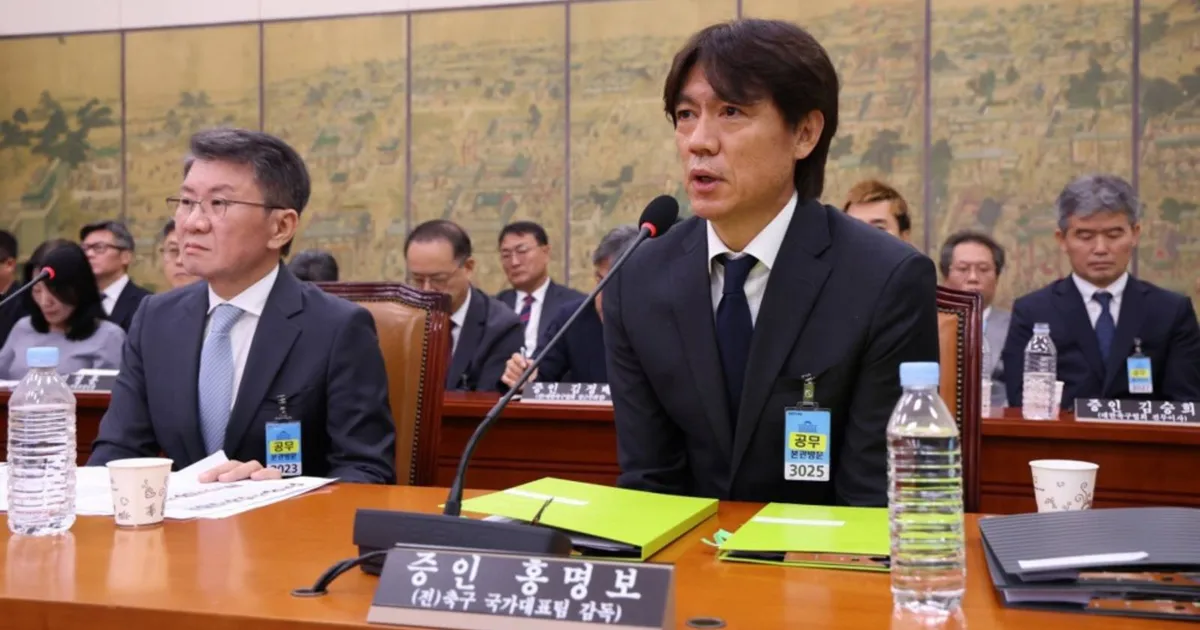
South Korean law enforcement has launched a formal investigation into the football association, conducting raids as part of a widening inquiry into how Hong Myung-bo secured his position as the national team's head coach. The action marks an escalation in scrutiny surrounding an appointment that has proven deeply contentious within Korean football circles, with officials now examining whether procedural irregularities or misconduct characterised the hiring process.
The investigation hinges on allegations of obstruction of business, a charge that suggests authorities believe proper channels and protocols may have been circumvented or deliberately impeded during the appointment procedure. Such accusations carry particular weight in South Korean administrative and corporate contexts, where procedural integrity is treated as fundamental to institutional credibility. The vagueness of the obstruction allegations has fuelled speculation that the inquiry extends beyond simple administrative oversights.
Hong's appointment arrived at a fraught moment for South Korean football. The national team's performance at the most recent World Cup had fallen far short of expectations, generating intense public disappointment and prompting soul-searching within the football establishment about leadership and direction. When the federation moved to install Hong in the top role, rather than rallying support, the decision triggered immediate controversy and raised questions about whether the appointment reflected merit-based selection or other considerations.
The timing of the police action suggests that dissident voices within the football association, or possibly external stakeholders invested in the sport's governance, have formally escalated their concerns to law enforcement. In South Korea's highly competitive and often fraught sports bureaucracy, internal disputes frequently escalate to police investigations when one faction perceives that fundamental rules have been breached. The willingness to involve police underscores the depth of opposition to Hong's hiring among certain quarters.
Hong Myung-bo brings considerable experience and credibility as a former international player and coach, with a track record that includes success in the K-League and previous roles within national team structures. However, experience and past achievements alone do not insulate against procedural challenges. For many observers, the substance of who was appointed matters less than the process by which the appointment occurred. If investigators uncover evidence that decision-making bodies were bypassed or that legitimate candidates were excluded through irregular means, the legitimacy of Hong's position becomes compromised regardless of his qualifications.
The World Cup disappointment that preceded this appointment cannot be separated from current events. South Korean football has historically occupied a position of considerable importance within the national sporting hierarchy, with the national team serving as a focal point for public pride and investment. When performance falters, particularly at a tournament of World Cup magnitude, the resulting backlash can destabilise existing structures and embolden those seeking change or reform. Hong's appointment, rather than resolving discontent, appears to have channelled and intensified it.
For Malaysian and broader Southeast Asian observers, the South Korean situation illuminates persistent governance challenges within football administration across the region. Many football associations in Asia grapple with questions of transparency, merit-based decision-making, and the proper balance between technical expertise and administrative oversight. While each national context differs, the fundamental tensions—between powerful individuals or factions within federation hierarchies, between short-term results and long-term institutional health, between external expectations and internal capability—recur frequently.
The investigation may determine that the appointment process was conducted entirely appropriately, with all procedures followed correctly. Alternatively, it could reveal genuine irregularities that warrant intervention. Either outcome carries implications for how football associations across Asia approach leadership transitions and appointment procedures. Enhanced scrutiny, while potentially slowing decision-making, may strengthen the legitimacy of future appointments and reduce the space for patronage or improper influence.
For the national team itself, the swirling controversy creates an awkward backdrop for preparation and performance. Players and coaching staff must operate in an environment where fundamental questions about the legitimacy of leadership remain unresolved. Such uncertainty can undermine team cohesion and create distractions that ultimately affect on-field performance. Hong must navigate both the technical challenges of rebuilding after World Cup failure and the reputational and administrative pressures generated by the ongoing investigation.
The police inquiry also raises broader questions about the relationship between law enforcement and sports governance. While serious allegations of obstruction warrant investigation, the involvement of criminal authorities in what are fundamentally administrative and governance questions risks politicising sporting institutions and introducing adversarial legal frameworks into contexts where collaborative problem-solving might be more appropriate. How South Korean authorities ultimately handle this matter may set precedents that influence how regional sports bodies address similar disputes.
Looking ahead, the federation faces a delicate task: maintaining operational continuity while the investigation proceeds, preserving Hong's ability to perform his duties effectively, and ultimately arriving at truth-based determinations about what occurred during the appointment process. The outcome will likely shape how South Korean football approaches future leadership changes and may inform broader conversations about governance standards within Asian football administration.

