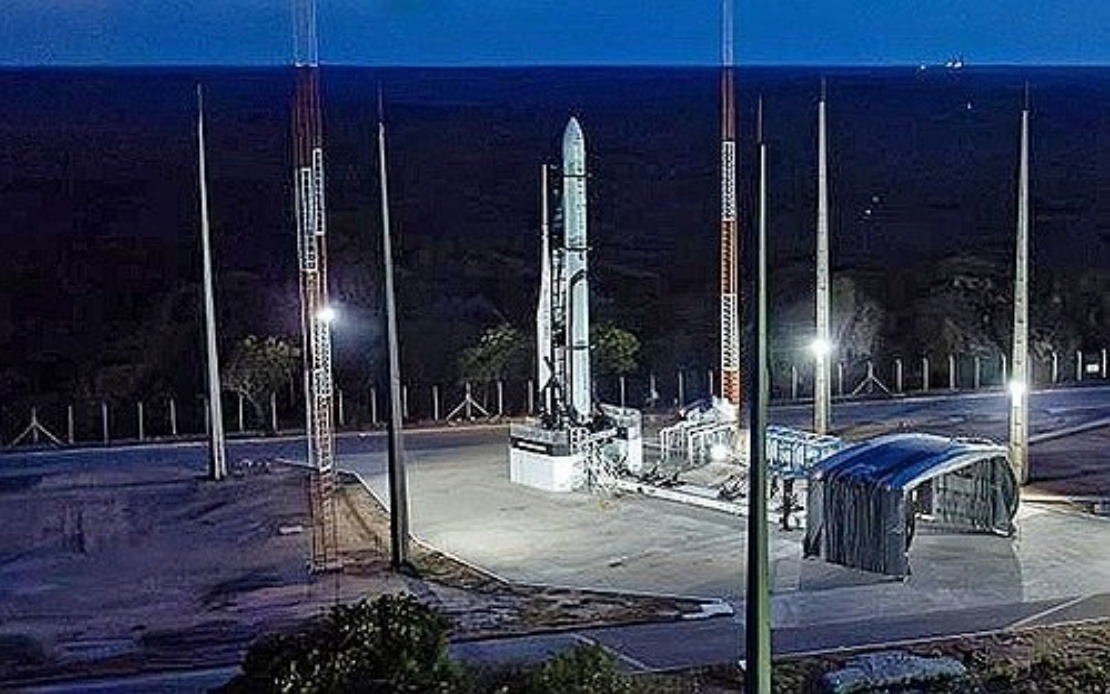
South Korea's defence ministry announced on Tuesday that it has postponed the scheduled launch of its Mir solid-fuel space rocket, citing safety concerns that emerged during final pre-launch preparations. The rocket was set to lift off at 2 pm from a sea-based launch platform positioned off the coast of Jeju Island in the nation's south, but officials opted for caution after detecting technical issues that warranted investigation. The ministry confirmed in a media statement that the launch would be rescheduled for a later date, though no new timeframe was immediately provided.
This postponement represents a setback for what would have been a significant milestone in South Korea's space programme. The Mir launch would have marked the first test flight of a fully integrated four-stage configuration, advancing beyond the partial three-stage trials conducted during 2022 and 2023. Those earlier tests had validated key components and subsystems, but the full assembly represented a qualitatively different engineering challenge. The decision to delay underscores the complex engineering involved in solid-fuel rocket development and the rigorous safety protocols that Seoul has adopted as it matures its indigenous launch capabilities.
South Korea initiated its solid-propellant space launch vehicle development programme in 2021, with the explicit goal of achieving independent capacity to deliver small observation and surveillance satellites into low-Earth orbit at altitudes below 500 kilometres. This indigenous capability addresses a strategic imperative for the nation: enhancing its ability to monitor threats from North Korea without relying entirely on external partnerships or intelligence sharing agreements with allied powers. The solid-fuel approach offers distinct advantages over liquid-fuelled systems, including simplified structural design, extended shelf-life permitting storage for years without degradation, and the ability to launch on shorter notice when operational requirements demand rapid deployment.
The Mir programme functions as a complementary initiative to South Korea's broader military satellite reconnaissance effort. Since November last year, Seoul has successfully orbited five reconnaissance satellites using SpaceX's Falcon 9 rockets, establishing an initial foothold in space-based surveillance. However, reliance on foreign launch services creates strategic vulnerabilities and dependency relationships that the government seeks to mitigate. By developing indigenous launch capabilities through the Mir programme, South Korea aims to assert greater autonomy over its space operations and reduce its need for American satellite intelligence, fostering self-sufficiency in critical national security domains.
The scale of Seoul's ambitions becomes apparent when examining the full scope of the Mir initiative. The programme envisions deploying up to 60 small spy satellites into orbit by 2030, creating a dense constellation capable of providing comprehensive coverage of regional security concerns. This cluster of smaller satellites would complement the existing fleet of five larger military reconnaissance spacecraft, working in concert to generate layered surveillance capabilities. Such a network would enable persistent monitoring of adversary activities, critical infrastructure, and strategic movements across the Korean Peninsula and surrounding regions.
The strategic implications of this satellite constellation extend beyond immediate military applications. A domestic, independent space-based surveillance system enhances South Korea's negotiating position in regional geopolitics, signals technological advancement to international observers, and demonstrates national commitment to space sector development. The capability to independently monitor threats reduces the information lag inherent in relying on allied intelligence assessments and enables Seoul to maintain situational awareness according to its own priorities and operational tempo rather than external schedules.
For Malaysian and Southeast Asian observers, South Korea's space programme development offers instructive lessons regarding indigenous technological advancement and strategic autonomy. The Mir initiative exemplifies how regional powers can systematically build domestic capabilities to reduce dependency on larger allies or external service providers. As Southeast Asian nations increasingly prioritise space technology and satellite capabilities for resource management, disaster response, and maritime security, the South Korean experience provides a template for long-term investment in indigenous space infrastructure despite technical setbacks and developmental challenges.
The safety-driven postponement also illustrates the mature engineering standards that advanced space programmes maintain. Rather than proceeding with a launch under potentially compromised conditions, South Korea's decision reflects institutional commitment to rigorous testing protocols and risk management. This approach, while creating short-term delays, builds public confidence in the programme's reliability and establishes credibility with international partners and investors who may eventually support or cooperate in space ventures.
The rescheduled launch, whenever it occurs, will represent a crucial validation point for South Korea's solid-fuel rocket technology. Successful completion of the four-stage integrated test would unlock the pathway to operational deployment of the Mir system and accelerate the timeline for achieving the full 60-satellite constellation. Conversely, if additional technical issues emerge upon investigation, they will inform design modifications that strengthen the overall programme architecture. Either outcome contributes to Seoul's steady progression toward the goal of comprehensive, domestically-controlled space-based surveillance capabilities that reinforce national security and regional strategic positioning.

