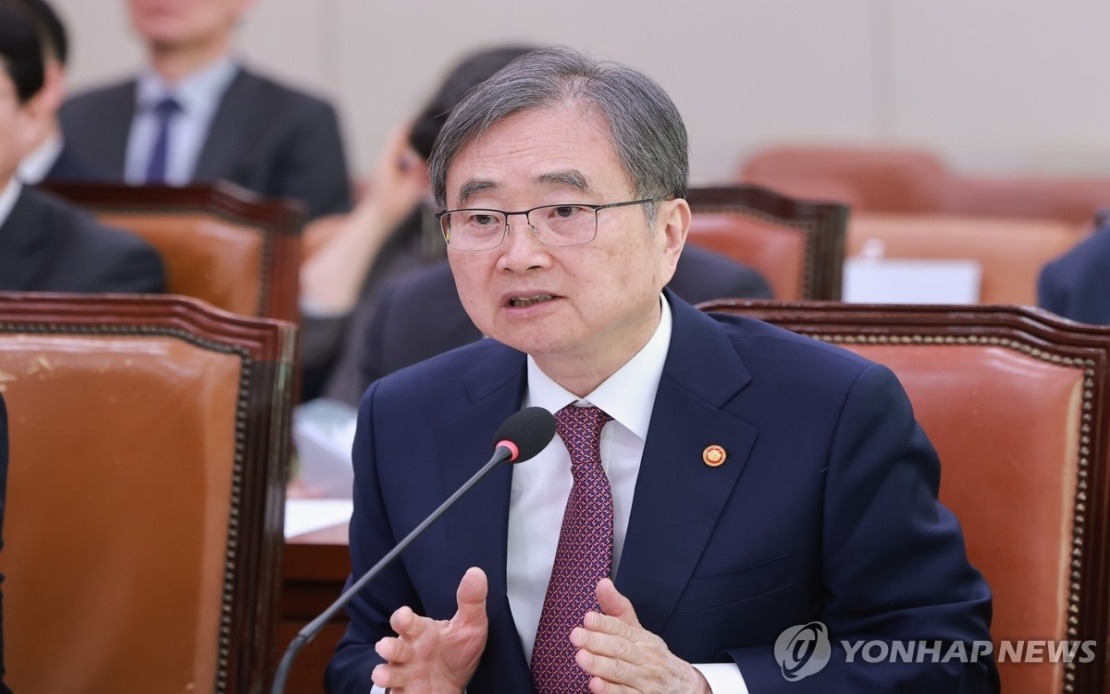
South Korean Foreign Minister Cho Hyun found himself in an awkward position this week when he learned of significant reductions to joint military exercises with the United States not through official diplomatic channels, but through a public social media announcement by President Donald Trump. The revelation underscores the unpredictable nature of contemporary geopolitical communication and highlights the challenges facing Seoul as it navigates its security alliance with Washington amid shifting strategic priorities.
Choing the parliamentary committee overseeing foreign affairs and unification, Cho made clear that neither Seoul nor Washington had provided prior notification of the policy shift. The foreign minister's testimony indicates that the announcement caught South Korean government officials entirely off guard, suggesting a breakdown in the consultation mechanisms that typically govern such significant military decisions between allied nations. This represents a notable departure from standard diplomatic practice, where major shifts in security arrangements are typically coordinated through formal channels well in advance of public disclosure.
The scope of the announced changes is substantial. The Ulchi Freedom Shield exercise, an annual summertime joint military drill between Seoul and Washington, will now run for five days rather than the originally scheduled eleven days. The exercise, which encompasses field manoeuvres, computer-simulated command post exercises, and civil defence drills, stands as a cornerstone of South Korea-US military coordination and has historically served to reinforce operational readiness and interoperability between the two forces.
Trump's announcement came via social media on August 16, in which he stated he had directed the Pentagon to significantly scale back the joint military exercises. The move reflected broader concerns within the Trump administration regarding the costs and strategic rationale of maintaining large-scale military operations on the Korean peninsula. However, the method of announcement—public and unilateral—represents a departure from the diplomatic norms that have typically governed such sensitive matters involving a major US security ally.
Attempting to soften the narrative, Cho suggested that Defence Minister Ahn Gyu-back had been in active consultation with the US side following the social media post, characterizing the situation as an evolving dialogue rather than a unilateral declaration. This framing appears designed to preserve the narrative of allied cooperation and downplay any suggestion of a diplomatic rift. However, the fact that consultations occurred only after the public announcement highlights the degree to which Seoul was left reactive rather than proactive in shaping the outcome.
Commander of the US Forces Korea Xavier Brunson visited South Korea's defence ministry building on Tuesday, suggesting that some form of high-level engagement was occurring to discuss the implications of the announced changes. This visit, coming in the wake of the social media announcement, may represent an attempt to smooth relations and provide Seoul with additional context regarding the Pentagon's reasoning.
For Malaysian and Southeast Asian observers, this episode carries several implications. It illustrates the potential volatility of bilateral security arrangements when one party possesses significantly greater military and economic leverage. The incident also demonstrates how social media has fundamentally altered the pace and nature of diplomatic communication, potentially circumventing established protocols that historically provided time for careful negotiation and consensus-building among allies.
The reduction in exercise scope raises substantive questions about deterrence posture on the Korean peninsula. Both Seoul and Washington rely on joint military exercises to maintain combat readiness and to demonstrate resolve to potential adversaries. A reduction in the scale and duration of these exercises sends signal implications regarding the commitment level of both allies to their mutual defence arrangement, particularly given the ongoing nuclear and conventional military capabilities of North Korea.
The incident also reflects broader tensions within the Trump administration regarding the appropriate level of US military commitment to regional allies. The administration has consistently questioned whether current troop deployments and exercise schedules represent an efficient use of American defence resources. These concerns about cost-sharing and strategic burden have periodically surfaced in public statements, creating uncertainty among allied governments regarding the durability of security commitments.
For South Korea specifically, the situation presents a delicate diplomatic challenge. Seoul must balance the desire to maintain strong ties with Washington against the reality that the Trump administration operates according to different strategic and financial calculus than previous US administrations. The country cannot afford to appear weak in response to what many view as a slight, yet it also cannot afford to damage relations with its most important security guarantor at a time of persistent North Korean military threat.
Regionally, the episode underscores the broader pattern of great power uncertainty that characterizes contemporary Asia-Pacific security dynamics. Nations throughout the region that rely on security partnerships with the United States must contend with the possibility that major policy announcements could arrive through unconventional channels and without prior consultation. This creates incentives for countries to develop more self-reliant defence capabilities and to consider diversifying security partnerships.
Moving forward, the incident will likely prompt South Korea to seek clearer protocols and advance notification procedures for any future changes to joint military operations. The episode serves as a reminder that even among long-standing allies, the mechanisms for coordinating security policy remain vulnerable to disruption when normal diplomatic channels are bypassed in favour of more immediate and public modes of communication.

