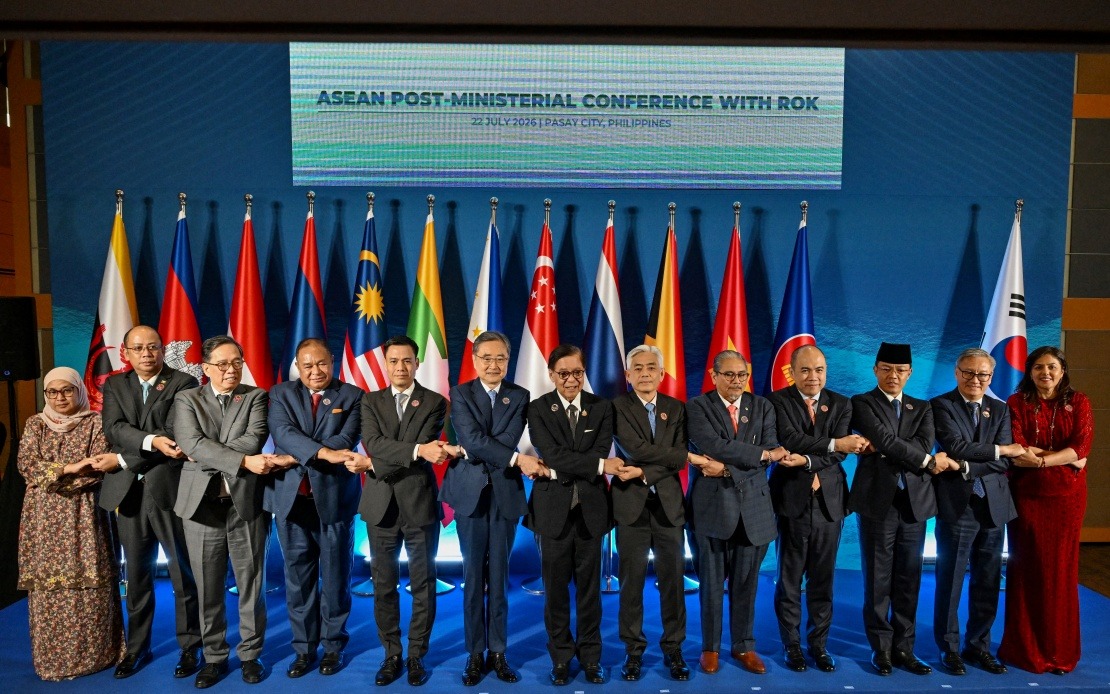
South Korea and the ten member nations of ASEAN have signalled their intention to dramatically expand collaboration across emerging technological and cultural sectors, marking a significant deepening of ties that reflects both sides' recognition of their growing interdependence in an increasingly complex regional landscape. The commitment emerged from a Korea-ASEAN foreign ministers' meeting held in Manila on July 22, where Seoul's Foreign Minister Cho Hyun and his Thai counterpart presided over discussions that extended far beyond traditional diplomatic pleasantries to encompass concrete new initiatives designed to benefit both parties.
At the heart of Seoul's strategy lies a newly launched "Korea-ASEAN AI Partnership Initiative," which represents an attempt to position South Korea as a technology leader willing to share its advanced capabilities with regional partners. The initiative encompasses three interconnected components: establishment of artificial intelligence ecosystems across ASEAN member states, promotion of collaborative research efforts, and development of local talent pools equipped to work with cutting-edge AI technologies. By framing this as a partnership rather than a technology transfer programme, Seoul appears intent on building long-term institutional relationships that will bind ASEAN nations closer to South Korean technological and economic interests.
Beyond the AI sector, the meeting produced agreements on cultural and creative industries cooperation—a domain where South Korea has achieved remarkable global success through its entertainment exports and digital content creation capabilities. This dimension carries particular resonance for Malaysian policymakers and business leaders who have watched Korean popular culture capture regional audiences and generate substantial economic returns. The introduction of initiatives targeting online scam prevention and a joint maritime safety academy demonstrates that Seoul recognises ASEAN's security challenges and seeks to address them through cooperation, rather than viewing the region solely through a commercial lens.
The philosophical underpinning for this expanded engagement rests on what South Korea describes as the Comprehensive Strategic Partnership vision, originally unveiled by South Korean leadership at last year's Korea-ASEAN summit. This framework organises cooperation around three pillars—people-centred development, growth and innovation, and peace and stability—that acknowledge both traditional and emerging priorities facing Southeast Asian nations. For Malaysian readers accustomed to balancing economic advancement with social cohesion and regional security concerns, this tripartite approach will resonate as pragmatic and comprehensive.
Foreign Minister Cho's characterisation of South Korea and ASEAN as "indispensable partners" carries weighty implications for the region's geopolitical trajectory. His emphasis on partnership necessity in the context of global supply chain restructuring and rapid technological change reflects a reality that Southeast Asian nations have increasingly grasped: individual countries cannot navigate major economic transitions alone, and coordinated regional action offers superior outcomes to fragmented national approaches. This positioning occurs against the backdrop of intensifying competition among major powers to influence ASEAN, making Seoul's emphasis on mutuality particularly noteworthy.
The economic dimension of this relationship deserves closer examination, particularly for businesses and policymakers in Malaysia and across ASEAN. Seoul and ASEAN launched formal negotiations last month to upgrade their existing free trade agreement, which currently covers goods, services, and investment arrangements established across 2006-2009. These talks specifically target emerging sectors including the digital economy and critical minerals—areas of strategic importance as Southeast Asian nations seek to diversify their economic bases and reduce dependence on traditional manufacturing. For Malaysia, a nation with significant critical mineral resources and growing digital ambitions, this negotiation holds tangible consequences for future trade and investment flows.
The scale of South Korea's existing economic commitment to ASEAN underscores the seriousness behind these partnership declarations. Seoul exported approximately US$122.5 billion worth of goods to ASEAN member states in 2025, establishing the regional bloc as South Korea's third-largest trading partner globally. This figure reflects both the region's importance as a consumer market and its role in South Korean supply chain strategies, suggesting that Seoul's deepening partnership initiatives serve both altruistic and pragmatic commercial interests.
During the Manila meeting, ASEAN member states responded positively to Seoul's partnership proposals, with officials expressing willingness to collaborate on the full range of initiatives presented. This receptiveness reflects ASEAN's broader strategic calculations: the region benefits from engagement with multiple technological leaders and economic powers, and South Korea's emphasis on cooperation rather than dominance aligns with ASEAN's preference for balanced regional relationships. The fact that Foreign Minister Cho conducted bilateral meetings with counterparts from the Philippines and Thailand alongside the broader ASEAN session illustrates Seoul's sophisticated approach to regional diplomacy, combining bloc-level engagement with strategic bilateral relationships.
Another dimension worthy of emphasis concerns Seoul's request for ASEAN support regarding Korean Peninsula matters. The foreign minister sought continued backing for South Korea's policies aimed at achieving peaceful coexistence and shared development with North Korea. ASEAN member states duly reaffirmed their position that stability on the peninsula constitutes a prerequisite for broader regional peace—a stance reflecting the universal recognition that uncontrolled conflict on the peninsula would impose costs across Southeast Asia. For Malaysia and other ASEAN nations navigating complex great power relationships, this commitment demonstrates their consistent interest in reducing rather than amplifying tensions among their major partners.
The convergence of technological, economic, and security dimensions in this Korea-ASEAN partnership offers a template for how regional cooperation might evolve in coming years. Rather than viewing partnerships as zero-sum competitions between rival powers, Seoul and ASEAN appear determined to build frameworks emphasising mutual benefit and shared prosperity. The specific focus on artificial intelligence development carries particular weight, as the nations that succeed in deploying AI effectively across their economies will gain substantial competitive advantages in the coming decades. By establishing cooperative mechanisms now, ASEAN and South Korea position themselves to shape AI development trajectories rather than merely adopting technologies designed elsewhere.
For Malaysia specifically, these developments warrant careful monitoring and strategic engagement. As a founding ASEAN member with substantial economic ties to South Korea and technological ambitions of its own, Malaysia stands to benefit significantly from expanded cooperation on AI, creative industries, and supply chain resilience. The proposed free trade agreement upgrades could open new opportunities for Malaysian exporters and technology companies seeking to access South Korean markets or participate in regional supply networks. Simultaneously, Malaysian policymakers should ensure that partnerships serve domestic development objectives rather than creating new dependencies that constrain future policy flexibility.

