South Africa has escalated its legal battle at the International Court of Justice by submitting a detailed filing that challenges Israel's compliance with provisional measures the court ordered in the ongoing genocide case. The submission, made under Article 11 of the ICJ's Resolution on internal judicial practice, represents a significant step in Pretoria's strategy to enforce the international court's authority and hold Israel accountable for what it characterises as systematic non-compliance with legally binding orders.
The case itself originated when South Africa filed a complaint on December 29, 2023, accusing Israel of violating the 1948 United Nations Convention on the Prevention and Punishment of the Crime of Genocide. This move came amid mounting international concern over the humanitarian situation in Gaza and shaped the broader discourse on accountability for alleged violations of international law. Since then, the ICJ has issued three separate orders for provisional measures—in January, March, and May 2024—each directing Israel to undertake comprehensive measures to prevent acts prohibited under the Genocide Convention and to refrain from actions that could cause irreparable harm.
Central to South Africa's latest filing is the assertion that these provisional measures carry full legal weight and constitute binding obligations under international law. The submission emphasises that Israel has demonstrably failed to honour these orders, creating a situation that undermines the credibility and effectiveness of the ICJ itself. This framing transforms the dispute from a question of substantive law into one about institutional compliance and the rule of international law—matters that resonate across the developing world and small nations that depend on multilateral institutions to balance global power dynamics.
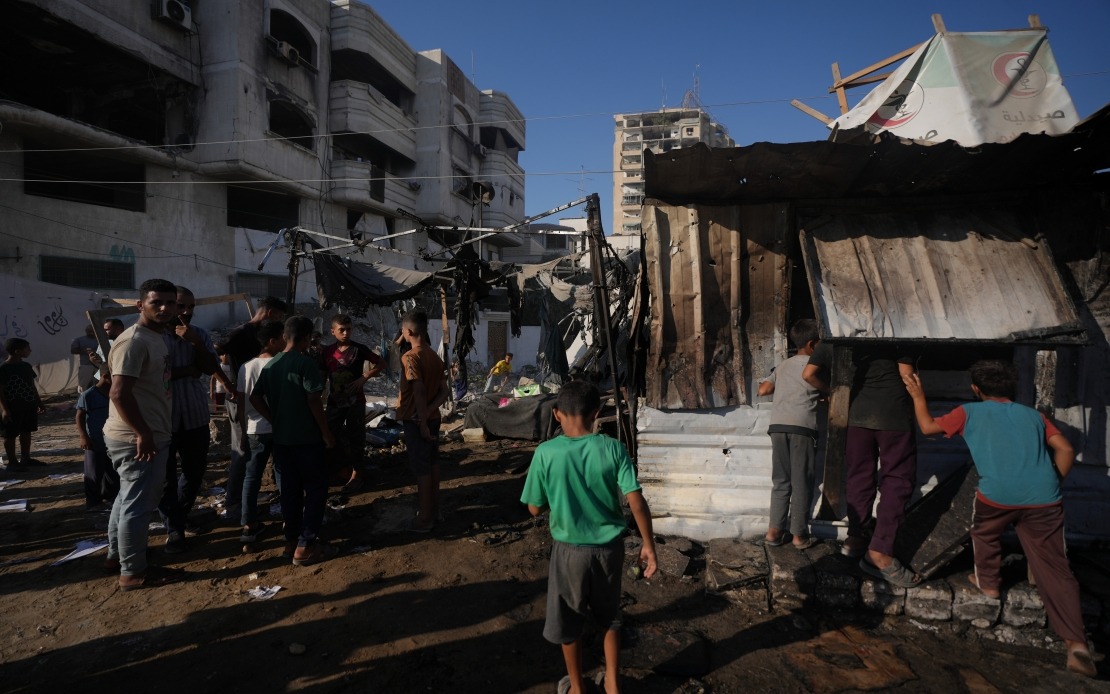
The humanitarian dimension of the filing cannot be overstated. South Africa's statement documents the ongoing trauma experienced by Palestinian survivors in Gaza, many of whom face increasingly desperate conditions in what the filing describes as a shrinking geographic area. The cumulative effect of displacement, resource scarcity, and exposure to violence creates what human rights organisations characterise as a deteriorating humanitarian catastrophe, with civilians enduring multiple layers of vulnerability and hardship.
According to the filing, Israeli military operations have continued to inflict significant casualties despite a ceasefire that came into effect on October 10, 2025. The documented figures are stark: more than 1,300 Palestinians have been killed and over 4,330 wounded following the ceasefire commencement. Additionally, rescue and recovery teams have extracted hundreds of bodies from collapsed buildings and rubble sites, indicating the scale of destruction that persists even after formal cessation of major hostilities. These figures underscore the gap between ceasefire declarations and the actual cessation of violence on the ground.
The broader context reveals even more sobering statistics. According to data from the Palestinian Health Ministry, the conflict that began on October 7, 2023, has resulted in approximately 73,438 Palestinian deaths and 174,447 injuries across the Gaza Strip. These aggregated numbers illustrate the cumulative humanitarian toll and provide the factual foundation for South Africa's argument that Israel's alleged non-compliance with ICJ orders has permitted ongoing violations to continue unabated.
For Malaysian and Southeast Asian observers, this case carries important implications regarding the authority and enforceability of international court decisions. The region has long grappled with questions about how smaller and developing nations can leverage multilateral institutions to address grievances against more powerful states. South Africa's persistence in using the ICJ, despite the challenges inherent in enforcement against a state with significant geopolitical weight, offers a model of sustained legal engagement that other nations may study and potentially emulate.
The provisional measures themselves target specific conduct: they direct Israel to refrain from acts that could violate the Genocide Convention and to take affirmative steps to prevent such violations. The measures are intended as temporary protections to preserve the rights of Palestinians under international law while the ICJ deliberates on the merits of South Africa's broader claim. By submitting this compliance filing, South Africa is essentially arguing that the provisional measures represent the court's preliminary assessment that there is at least a plausible case of genocide—a determination that carries significant legal and moral weight.
South Africa's Department of International Relations and Cooperation has signalled its determination to pursue all available legal avenues to secure Israel's compliance. This statement reflects the broader diplomatic commitment of the South African government to use international law as an instrument for accountability and justice. The department's emphasis on the binding nature of ICJ orders reinforces a principle central to international law: that court decisions create enforceable obligations, regardless of the political or military power of the defendant state.
The strategic importance of this filing extends beyond the immediate dispute. By documenting alleged non-compliance, South Africa creates an administrative and legal record that will inform the ICJ's eventual judgment on the merits. Moreover, the filing serves to mobilise international attention and solidarity from other nations and civil society organisations that have expressed concern about the humanitarian situation in Gaza. This layered approach—combining legal argument with political and humanitarian narrative—reflects how modern international litigation often operates in high-profile cases with significant geopolitical dimensions.
For regional observers in Southeast Asia, where several nations have historically maintained careful diplomatic positions on Middle Eastern conflicts, South Africa's case illustrates both the possibilities and limitations of international law. While the ICJ provides a forum for grievances and can issue binding decisions, enforcing those decisions against states unwilling to comply remains fundamentally challenging. This reality has prompted discussions within the region about how to strengthen enforcement mechanisms and enhance the authority of international institutions.
The filing also reflects broader patterns in contemporary international law whereby states increasingly invoke the Genocide Convention in disputes with significant humanitarian dimensions. The Convention, adopted in the aftermath of World War II, was designed to prevent future atrocities through international accountability. South Africa's invocation of this instrument demonstrates how international law frameworks are being deployed in current conflicts, even as debates continue about whether particular situations meet the legal threshold for genocide classification.
Looking ahead, the ICJ's response to South Africa's compliance filing will be closely watched. The court may issue additional orders, impose penalties, or request further briefing from both parties. Whatever direction the proceedings take, South Africa's persistent engagement with the institution underscores the continuing relevance of international law in addressing disputes that involve fundamental human rights and humanitarian concerns, even when enforcement remains uncertain and contested.

