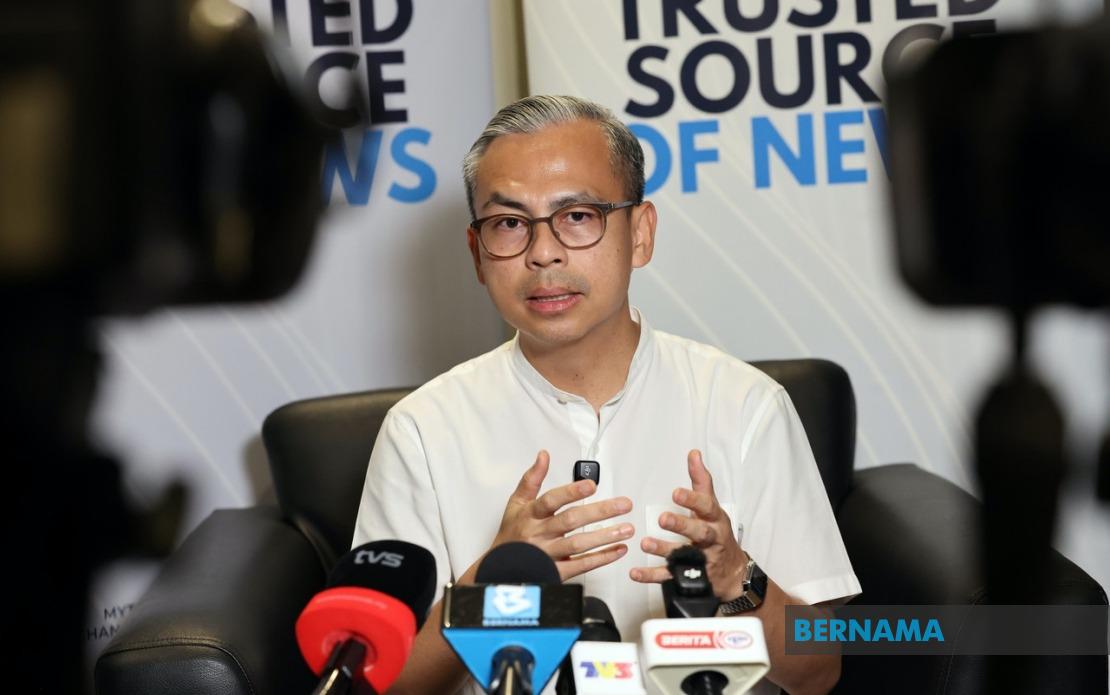
Communications Minister Datuk Fahmi Fadzil has issued a stark warning to social media platform operators, demanding they step up their vigilance against the rapid spread of false information surrounding Johor's 16th state election. Speaking during a visit to the Malaysian National News Agency operations centre in Johor Bahru on July 7, Fahmi expressed particular concern about potential disinformation campaigns on polling day, emphasising that the digital platforms must move beyond passive policies to active, real-time intervention.
The scale of the challenge has grown substantially, with online falsehoods now representing one of the most pressing threats to electoral integrity across Southeast Asia. While major social media platforms maintain stated policies prohibiting misleading election content, the gap between policy and enforcement remains dangerously wide. Fahmi's remarks underscore a reality that government officials across the region have increasingly had to confront: voluntary compliance mechanisms have proven insufficient to contain coordinated or viral disinformation, particularly during high-stakes political events when emotions run highest and misinformation spreads fastest.
Fahmi highlighted a critical distinction that often goes overlooked in discussions about digital misinformation. Beyond the relatively contained problem of fake graphics and manipulated media outlets—where logos are fraudulently repurposed to lend credibility to fabricated claims—lies a far larger challenge: organic content generated by millions of individual users. This user-generated disinformation, whether posted as images, screenshots, or text-based claims, frequently contains election predictions, false result announcements, or inflammatory political allegations. The sheer volume of such content, combined with algorithmic systems that often reward engagement over accuracy, creates an environment where false narratives can dominate the information landscape before fact-checkers can respond.
To address this multifaceted problem, Fahmi emphasised that social media platforms must establish formal cooperation mechanisms with Malaysia's regulatory bodies, specifically the Malaysian Communications and Multimedia Commission (MCMC). This institutional coordination would enable faster response times to emerging false claims, clearer communication channels between platforms and authorities, and more consistent enforcement standards across different regions and languages. Previously, both MCMC and the Malaysian Media Council had signalled their readiness to assist in tackling misinformation, yet the minister's comments suggest their efforts have remained somewhat limited in scope and impact.
For Malaysian voters and policymakers watching these developments, the implications extend well beyond a single state election. Johor's electoral contest serves as a testing ground for how effectively the nation's media ecosystem—combining government regulation, platform governance, and civil society oversight—can manage the intersection of technology and democracy. The outcomes here will likely inform approaches to future national and state contests, as well as set precedents for how other Southeast Asian democracies might strengthen their institutional responses to digital-era election interference.
A particularly concerning element mentioned by Fahmi was the absence of reported misconduct complaints to MCMC so far, a silence that may reflect either genuine compliance or simply inadequate monitoring and public reporting mechanisms. Election disinformation campaigns often operate through subtle means that evade straightforward complaint procedures—viral rumours spread through private messaging groups, misleading graphics shared without explicit false captions, insinuated allegations that stop short of concrete falsehoods. These tactics make detection and verification significantly harder than outright fabrication.
The government's parallel strategy to address low voter engagement adds another dimension to the broader picture. Fahmi revealed that the People's Hope coalition was intensifying efforts to encourage outstation voters—particularly young people working or studying outside Johor—to return home for polling day. Multiple bus operators were reportedly offering special transportation packages, while authorities had arranged for students at the Youth and Sports Skills Training Institute to receive voting leave. These logistics-focused initiatives tacitly acknowledge that voter turnout itself influences both the election outcome and the political narrative that emerges afterward; low turnout amplifies the relative impact of organised voter mobilisation and increases susceptibility to claims that results lack legitimacy.
Fahmi's target of exceeding 60 percent voter turnout reflects international best practice regarding electoral legitimacy. Turnout figures below this threshold often generate questions about whether the resulting government truly represents the electorate's preferences, potentially creating space for disinformation campaigns claiming the election was unrepresentative or compromised. In the Malaysian context, where religious, ethnic, and regional divisions sometimes complicate political messaging, lower turnout could disproportionately advantage particular demographic or geographic constituencies, thereby amplifying the stakes surrounding both the actual vote count and the narratives constructed around it.
The minister's call for employers in retail and food and beverage sectors to grant voting flexibility reflects awareness that practical barriers to participation—work schedules, transportation constraints, time zone considerations for those returning from distant locations—often determine whether citizens ultimately exercise their democratic rights. This approach recognises that combating election disinformation cannot be separated from ensuring genuine, accessible democratic participation. When voters feel excluded from the process or unable to participate fully, they become more vulnerable to alternative narratives suggesting the system is rigged or irrelevant.
More broadly, Fahmi's emphasis on parental responsibility and intergenerational messaging about voting duty points to an often-overlooked component of electoral information management. Family networks and trusted personal relationships frequently serve as primary sources of election information, particularly for younger voters who may encounter contradictory claims across different platforms. By encouraging parents to personally invite their adult children to participate, the government was essentially leveraging social bonds as a counterweight to algorithm-driven misinformation—a recognition that digital challenges sometimes require fundamentally human solutions.
The timing of these interventions—coming during the final week of campaigning and immediately before polling—reflects the critical juncture at which election disinformation typically peaks. Research across multiple democracies has consistently shown that misinformation campaigns intensify as voting day approaches, capitalising on reduced opportunity for fact-checking and increased voter attention. By calling for enhanced platform vigilance specifically around polling day itself, Fahmi was identifying the precise moment when social media companies' role in protecting electoral integrity becomes most consequential and most visible to the public.
As Malaysia navigates the intersection of rapid technological change and democratic governance, the Johor election will offer valuable lessons about the institutional capacity of regulators, the accountability of digital platforms, and the resilience of voters in the face of competing narratives. Whether platform providers respond meaningfully to these demands for proactive misinformation control remains an open question with significant implications for democratic practice across Southeast Asia.

