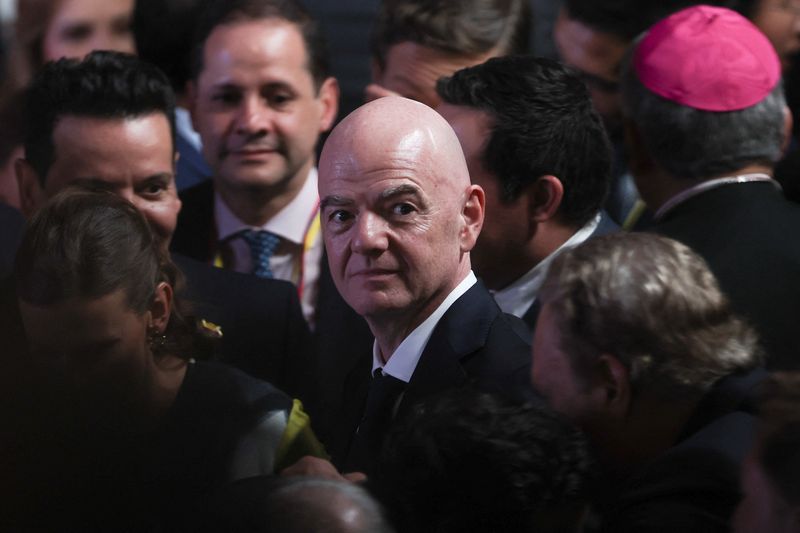
FIFA President Gianni Infantino faces his most serious political challenge in history as three major regional soccer confederations explore removing him through an unprecedented no-confidence motion, according to sources familiar with confidential discussions. The European confederation UEFA, Asia's AFC and CONCACAF, representing North and Central America plus the Caribbean, are actively considering the extraordinary step following Infantino's controversial proposal to sell private investors a stake in World Cup commercial operations. The move would mark the first attempted no-confidence vote against a sitting FIFA president in the organization's 122-year history, underscoring the depth of the governance crisis engulfing world soccer's governing body.
The push to oust Infantino stems directly from his failed initiative to establish a new FIFA commercial entity that would have granted private investors minority ownership stakes in World Cup rights. FIFA indicated it would have granted associations up to $20 million each in one-off capital for infrastructure, coaching, and grassroots development. However, the proposal collapsed amid accusations of secrecy, poor consultation and contempt for FIFA's member associations. UEFA, AFC and CONCACAF publicly condemned Infantino's handling of the initiative, describing it as a fundamental breach of trust that violated basic governance standards.
Insiders acknowledge significant tactical obstacles to mounting a successful challenge. An Extraordinary Congress can be convened if one-fifth of FIFA's 211 member associations formally request it, with proceedings required within three months. However, FIFA's statutes contain no specific provision addressing a presidential no-confidence vote, creating procedural uncertainty. More critically, strategists fear that launching a failed motion would paradoxically strengthen Infantino by demonstrating his continuing electoral support among FIFA members ahead of the scheduled March 2027 presidential election. This dilemma has made confederations cautious about committing to direct confrontation.
Infantino retains substantial political reserves despite the crisis. Africa's confederation CAF has maintained backing for his re-election, with CAF President Patrice Motsepe declaring last week that the continent continues supporting Infantino and that members should decide his future at the ballot. Six Arab football associations, including Qatar and Morocco, publicly endorsed him following FIFA's apology for governance failures. The FIFA Council also reaffirmed full support following a crisis meeting in Morocco earlier this month. Critically, no challenger has stepped forward publicly before the November 18 nomination deadline, leaving the field entirely to the incumbent.
The crisis intensified this week with the departure of FIFA Chief Operating Officer Kevin Lamour, who had criticized the investment proposal and told colleagues staff had been "deceived" regarding what he characterized as one person's pet project. FIFA provided no explanation for his exit. FIFA Vice President Sandor Csanyi then withdrew his support for Infantino, citing Lamour's dismissal as the "final straw." These departures exposed fractures within FIFA's leadership while simultaneously highlighting the seriousness of internal opposition to the president's governance style and decision-making processes.
For Southeast Asian readers and broader regional stakeholders, Infantino's predicament carries significant implications. The AFC represents 47 member nations including Malaysia, and any shift in FIFA leadership could affect the confederation's influence on World Cup hosting arrangements, tournament formats, and development funding. Malaysia's football development pipeline depends partly on FIFA grants and AFC coordination. Should a transition occur, a new FIFA president might prioritize different governance models or financial redistribution mechanisms that could either enhance or diminish resources flowing to smaller Asian federations. The current standoff therefore matters substantially beyond European and American soccer politics.
Opponents face a credibility challenge among FIFA's broader membership. Football Association of Malawi President Fleetwood Haiya highlighted this publicly, telling Reuters that challengers "should come out into the open" and "tell us what they are going to bring." Without articulate alternatives or visible candidates offering competing visions, the abstract case against Infantino struggles to mobilize smaller associations that benefited from his revenue-sharing initiatives and World Cup expansion policies. This explains why the three major confederations have hesitated to move decisively, preferring informal pressure to direct institutional confrontation.
The crisis extends beyond member associations into club-level soccer politics. The European Football Clubs organization, chaired by Paris St-Germain president Nasser Al-Khelaifi and representing over 800 clubs, has aligned with UEFA and others demanding FIFA governance reforms. Critically, EFC has warned that member clubs could boycott future men's and women's Club World Cup competitions unless FIFA addresses governance concerns and improves the clubs' institutional relationship with headquarters. While clubs possess no FIFA voting power, they wield enormous sporting and commercial leverage that could damage FIFA's flagship properties and sponsorship relationships.
Sponsor reactions have remained notably muted despite the organizational turmoil. No major FIFA sponsor has publicly criticized Infantino throughout the crisis, though observers report concerns behind closed doors. According to Michael Payne, former International Olympic Committee marketing chief, sponsors are troubled by FIFA's apparent self-sabotage. "How can you manage to have such a successful World Cup and then shoot yourself in the foot afterwards?" Payne remarked to Reuters. This disconnect between internal governance chaos and external stakeholder silence creates an unusual political dynamic where Infantino's institutional enemies lack leverage from commercial partners who remain publicly neutral.
The fundamental tension animating this conflict reflects competing visions of FIFA's institutional future. Infantino represents an aggressive commercialization and centralization model emphasizing large revenue generation and top-down strategic initiatives. The three major confederations advocate for distributed governance, stakeholder consultation and transparency as foundational principles. The failed investment proposal crystallized this ideological divide, transforming governance disputes into an existential question about FIFA's organizational character. Whether this manifests as a formal no-confidence vote, an electoral challenge at the March 2027 Congress, or informal pressure campaigns will substantially shape world soccer's governance trajectory for the next decade.
Source familiarity with no-confidence discussions reveals one unnamed insider's blunt assessment: "There is no way out. Either he goes the peaceful way and decides not to stand in March or he goes the hard way." This ultimatum characterizes Infantino's political position as fundamentally unsustainable despite his continuing formal support. Whether confederations can translate this conviction into institutional action before the nomination deadline remains unclear. The next weeks will likely determine whether FIFA's governance crisis proceeds toward traditional electoral resolution or unprecedented institutional confrontation.

