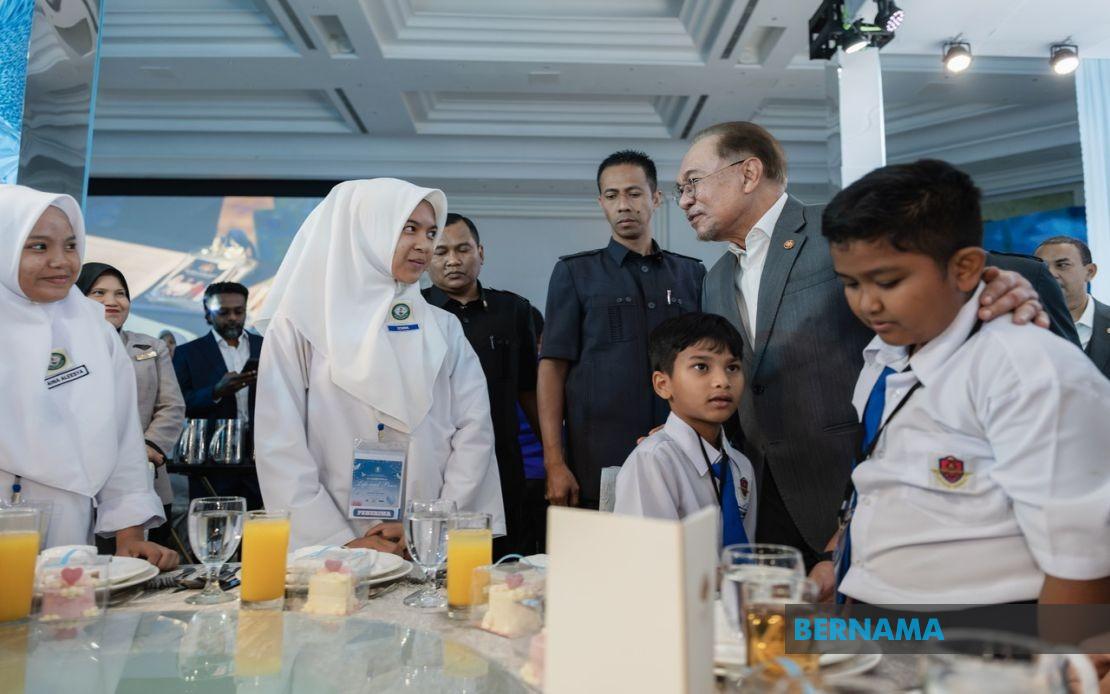
Prime Minister Datuk Seri Anwar Ibrahim delivered a pointed message to hundreds of schoolchildren this week: academic prowess without moral fiber offers no true path to meaningful success. Addressing 700 pupils from 47 schools across Kuala Lumpur and Putrajaya at the "Celebration of Life and Peace" event, Anwar reframed the purpose of education as a foundation for becoming virtuous citizens rather than merely knowledgeable individuals.
The Prime Minister's remarks zeroed in on a persistent challenge facing Malaysian schools: the prevalence of bullying and negative conduct among students. He articulated a vision in which educational institutions serve as crucibles for character formation, where young people learn not only academic subjects but also the values of respect, empathy, and social responsibility. His call reflected broader concerns within Malaysia's education system about the need to address behavioral issues that can derail a student's personal development and harm their peers.
Anwar specifically challenged the young attendees to commit to behavioral standards that prioritize respect for authority figures and familial bonds. He posed a rhetorical question to the gathered students, asking what purpose schools serve if not to nurture knowledge alongside goodness and moral understanding. The Prime Minister then appealed directly to the children, requesting they promise to study diligently, honor their teachers, and cherish their parents—framing such commitments as essential to becoming productive members of society.
The underlying message carries significance for Malaysian policymakers and educators grappling with questions about how schools balance exam-driven curricula with character education. International research consistently demonstrates that bullying and negative peer dynamics undermine academic performance and mental health outcomes. Anwar's intervention suggests that at the highest political level, there is recognition that Malaysia's education system must address these soft skills and emotional competencies alongside traditional subjects.
The event itself, organized by the ERM Foundation, served as more than a ceremonial gathering. Each attending child received RM500 in cash assistance, access to special entertainment, and meals, reflecting an attempt to celebrate young people's achievements and create moments of joy for those whose circumstances might otherwise preclude such celebrations. The foundation's founder, Xin'er, explained the initiative's ethos: ensuring that every child experiences birthdays filled with peace, love, and happiness, acknowledging that many youngsters face illness, poverty, or other hardships that diminish such occasions.
Xin'er's remarks underscored an important context for understanding the Prime Minister's educational message. When children lack basic security, nutrition, or emotional support, exhortations to excel academically ring hollow without accompanying material and psychological support. The event's provision of financial assistance alongside celebrations addresses this reality, treating character development and kindness as inherently connected to meeting children's fundamental needs and emotional wellbeing.
Anwar's wife, Datuk Seri Dr Wan Azizah Wan Ismail, and his political secretary, Datuk Azman Abidin, attended the occasion, signaling institutional backing for initiatives combining educational messaging with social support. This multi-stakeholder participation reflects how character-building efforts in Malaysia increasingly involve coordination between government, civil society, and private foundations.
The bullying issue Anwar highlighted represents a concrete challenge affecting Malaysian schools. Students who engage in bullying behavior face long-term consequences including academic underperformance, peer rejection, and increased risk of behavioral and mental health problems. Conversely, victims of bullying experience depression, anxiety, and diminished academic engagement. Schools across Malaysia have adopted anti-bullying policies and programs, yet the problem persists, suggesting that top-down policy alone proves insufficient without genuine cultural shifts in student attitudes and institutional commitment.
Anwar's framing of intelligence paired with cruelty as inherently wasteful carries moral weight in a Malaysian context shaped by multicultural values and Islamic principles emphasizing compassion and social harmony. His appeal to students to become "useful members of society" implicitly connects personal character to national wellbeing, suggesting that a society comprising intelligent but unkind individuals faces structural instability and moral degradation.
The Prime Minister's remarks also reflect contemporary debates within Malaysian education circles about the purpose and structure of schooling. While Malaysia has consistently ranked highly in international comparative assessments of student achievement in mathematics and science, concerns persist about critical thinking skills, creativity, and emotional intelligence. Educational reformers argue that the pressure-driven, examination-focused system can inadvertently encourage unhealthy competition and undermine the collaborative, empathetic skills increasingly demanded by modern workplaces and democratic citizenship.
For educators and administrators in Malaysian schools, Anwar's message provides political cover and encouragement for initiatives prioritizing student wellbeing, conflict resolution, and character education. Schools implementing comprehensive anti-bullying programs, peer mediation systems, and social-emotional learning curricula can point to the Prime Minister's public support when seeking resources or defending such initiatives against competing academic demands.
The event's scale and composition—700 children from 47 schools—suggests a deliberate effort to reach diverse student populations across both federal territories, potentially including children from economically disadvantaged backgrounds. This broad reach indicates that the message about balancing academic and character development was intended not as a niche initiative but as a public statement about educational priorities affecting Malaysian youth more broadly.

