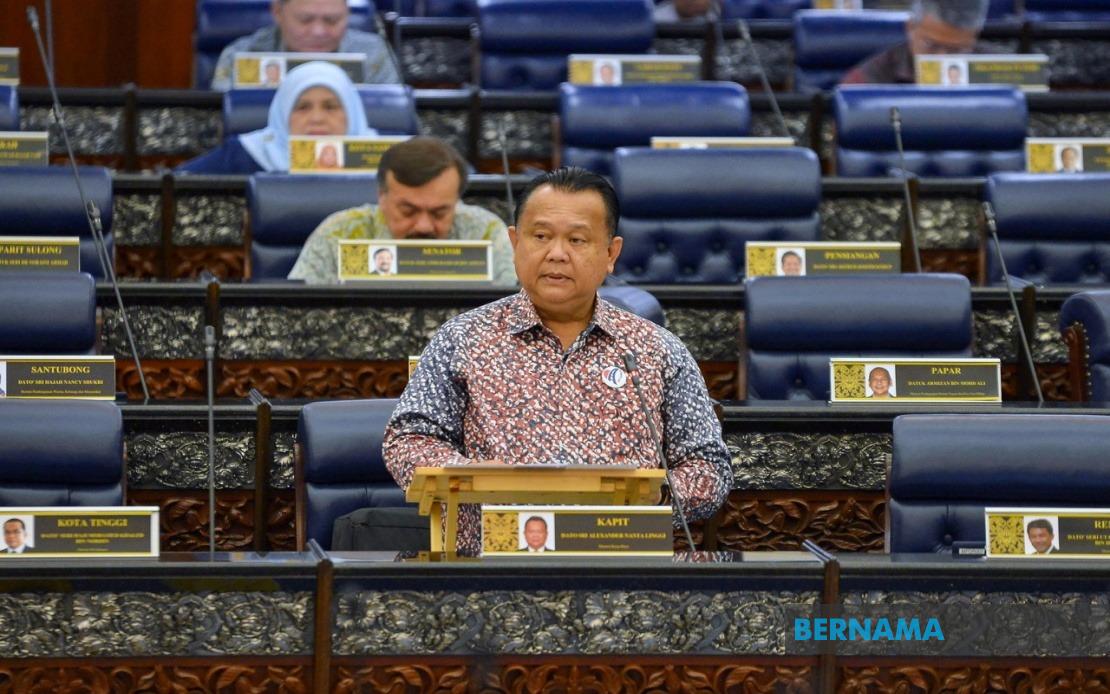
The Smart Lane system deployed across stretches of the North-South Expressway over the past two years has delivered measurable improvements in traffic flow, with Works Minister Datuk Seri Alexander Nanta Linggi confirming that congestion levels have dropped by between 30 and 50 per cent. The initiative, which allows motorcyclists to share certain lanes during congested periods, has proven particularly valuable during peak travel times and major festive seasons when the nation's highways come under enormous strain.
Alexander Nanta Linggi provided the assessment during parliamentary proceedings on July 2, responding to concerns raised by Zakri Hassan (PN-Kangar) about the safety implications of allowing motorcycles to use designated Smart Lanes alongside four-wheeled vehicles. The minister's remarks came after consistent monitoring by the Malaysian Highway Authority (LLM) spanning from 2023 to the present, establishing a comprehensive baseline for evaluating the scheme's effectiveness across multiple operational periods.
Safety data has emerged as a critical factor in validating the initiative's continuation. From January to May of this year alone, only 36 accident cases were recorded across 12 Smart Lane locations during weekdays—a notably low figure when measured against the overall traffic volume traversing those corridors. Crucially, the accident rate involving motorcyclists in Smart Lane zones remained significantly lower than what was observed on conventional routes, suggesting that riders exercise greater caution when sharing space with larger vehicles rather than operating in their traditional lanes.
The minister attributed this counterintuitive safety outcome to behavioural factors. Motorcyclists operating in Smart Lanes demonstrate heightened awareness and compliance with traffic protocols, as the shared-lane environment necessitates stricter adherence to safety guidelines. This phenomenon reveals an important insight into traffic safety management: the presence of mixed vehicle types and enforced regulations can paradoxically create conditions more conducive to cautious driving than lanes designated exclusively for motorcycles.
However, Alexander Nanta Linggi acknowledged that accidents occurring within Smart Lane zones stemmed primarily from driver and rider misconduct rather than from the lane design itself. Violations included improper use of emergency lanes before or after designated sections, erratic lane-switching manoeuvres, and the unauthorised stationing of vehicles within active traffic areas. These findings shift responsibility for safety outcomes toward individual road users rather than implicating the infrastructure or operational framework.
To sustain and strengthen safety assurances, the Malaysian Highway Authority has mandated that highway concessionaires engage independent road safety auditors to conduct comprehensive stage 5 road safety audits every five years. These rigorous assessments extend beyond motorcyclist concerns to encompass broader safety dimensions across Smart Lane implementations. The regulatory framework ensures that improvement measures derived from audit findings are systematically implemented to mitigate accident risks and address emerging safety challenges.
The expansion of surveillance technology represents another dimension of the ongoing refinement strategy. The LLM and KKR are progressively deploying closed-circuit television cameras integrated with artificial intelligence capabilities to monitor traffic density in real time. This technological augmentation enables more sophisticated coordination of traffic flow across Smart Lane zones, allowing highway management to respond dynamically to changing conditions and optimize lane utilization based on actual congestion patterns rather than predetermined schedules.
The Smart Lane initiative reflects Malaysia's broader efforts to enhance expressway efficiency as traffic volumes continue their upward trajectory across the nation's primary north-south corridor. The North-South Expressway remains one of Southeast Asia's most heavily utilised toll routes, connecting the industrial heartland of Klang Valley to Thailand's border and serving millions of commuters, commercial vehicles, and long-distance travellers annually. Congestion on this route carries significant economic implications, affecting supply chains, commute times, and road safety across multiple sectors.
For Malaysian motorcyclists—who constitute a substantial proportion of road users and face particular vulnerability in traffic environments—the Smart Lane system offers both opportunity and obligation. The data suggesting improved safety outcomes challenges conventional wisdom about motorcycle segregation and suggests that well-designed mixed-lane systems with appropriate oversight can provide safer passage than traditional arrangements. Nevertheless, the emphasis on user behaviour compliance underscores that technological and infrastructural improvements depend fundamentally on individual discipline and adherence to prescribed safety protocols.
The initiative also carries implications for regional traffic management approaches. Southeast Asian nations increasingly grapple with rapid urbanisation and rising vehicle ownership, creating similar congestion challenges across Thailand, Vietnam, and Indonesia. Malaysia's experience with Smart Lanes provides a testable model for addressing these pressures while maintaining safety standards, particularly given the prevalence of motorcycles throughout the region as primary transportation modes. Ongoing monitoring and transparent reporting of outcomes contribute valuable evidence for policymakers elsewhere considering comparable interventions.
Looking forward, the integration of artificial intelligence-enabled monitoring with five-yearly safety audits positions Malaysia's expressway network for continuous improvement. As traffic volumes fluctuate and driver behaviour evolves, the combination of technology and periodic human assessment enables adaptive management strategies that can respond to emerging challenges. The Smart Lane initiative thus represents not merely a static infrastructure solution but an evolving framework designed to address congestion while prioritising the safety of all road users through systematic evaluation and refinement.

