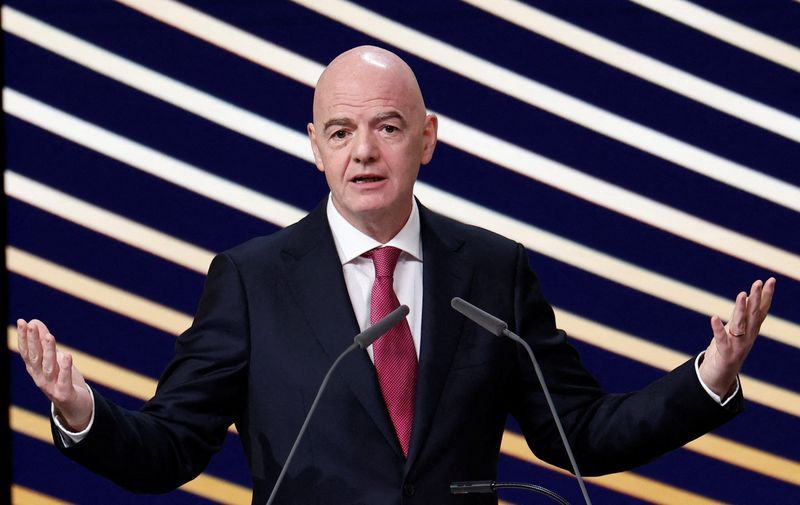
Gianni Infantino's path to retaining the FIFA presidency increasingly depends not on placating European and American soccer giants, but on maintaining the loyalty of smaller nations whose football programmes would struggle without the financial lifeline provided by the world governing body. The Swiss administrator faces mounting pressure from regional confederations UEFA and CONCACAF, which have expressed no confidence in his leadership following his controversial proposal to bring private equity investment into the World Cup tournament structure. Although Infantino confirmed his intention to seek a fourth consecutive term at next year's Congress in April, the political ground beneath him is shifting rapidly, with Wales becoming the first national federation to formally withdraw its support and UEFA threatening legal action.
The mechanics of removing an incumbent FIFA president remain daunting, yet not impossible. Under FIFA statutes, any 20 per cent of the membership—equivalent to 43 of FIFA's 211 affiliated nations—can trigger an Extraordinary Congress within three months to force a vote of no confidence. UEFA alone, representing 55 member associations, holds sufficient voting power to unilaterally initiate such proceedings, particularly given that all member associations voted to boycott FIFA tournaments if the private equity plan proceeded. However, simply triggering an extraordinary vote differs fundamentally from achieving the majority needed to actually unseat Infantino, a distinction that makes the small nations' allegiance strategically crucial.
The FIFA voting system itself creates an unusual political dynamic that favours incumbents with broad-based support across developing regions. Despite enormous disparities in wealth, football infrastructure, and global sporting influence, every single one of the 211 member associations carries identical voting power. A nation like France, with its established professional leagues, academy systems, and World Cup-winning infrastructure, commands the same solitary vote as Bhutan or Vanuatu, nations that have never qualified for a World Cup and depend almost entirely on FIFA resources to maintain competitive football programmes. This equality-in-voting has historically insulated FIFA executives from the influence of wealthy traditional powers and created dependency relationships that prove difficult to upend.
Infantino has cultivated these relationships through aggressive investment in developing football nations across Asia, Africa, the Caribbean, and the Pacific. During the current 2023-26 World Cup cycle, FIFA member associations have been able to access up to $3 million each for soccer development projects, representing a $1 million increase from the previous allocation period. For established footballing nations with professional infrastructure and substantial domestic revenue streams, such grants constitute minor supplements. For emerging nations with minimal domestic sports investment, however, these funds represent transformative resources capable of building stadiums, establishing training facilities, and professionalizing their national programmes.
Vanuatu exemplifies the tangible benefits smaller nations have received under Infantino's stewardship. The Pacific island nation, home to approximately 340,000 people and ranked 160th globally, received a FIFA development grant of $4.15 million that funded construction of a 6,500-seat stadium in Port Vila, completed in 2022. Beyond capital grants, Infantino elevated Vanuatu's football association head Lambert Maltock to FIFA's Executive Council as one of eight vice-presidents, providing the island nation with direct influence at the world body's highest decision-making table. For Brian Kaltak, Vanuatu's first professional player competing in Australia's Perth Glory, the impact has been transformative. Speaking to Reuters, Kaltak highlighted how Infantino's patronage opened opportunities not merely for Vanuatu but for developing nations broadly, creating pathways for players from smaller nations to access professional opportunities previously unavailable to them.
This pattern of strategic investment repeats across developing regions worldwide. FIFA-financed training pitches, gym facilities, and structured football development programmes now operate in countries where national football associations would otherwise lack resources to maintain competitive international participation. The financial support addresses genuine infrastructure gaps that constrain football development in economically limited nations. Yet the same funding architecture simultaneously creates a political constituency deeply invested in Infantino's continued leadership, as any successor might redirect resources or reduce the generous allocation levels established during his tenure.
Critics view this funding model as symptomatic of FIFA's broader governance challenges, arguing that it reinforces a transactional system in which political support is effectively purchased through financial allocations rather than earned through transparent, accountable administration. The arrangement creates structural incentives for smaller nations to defend the incumbent president regardless of his actions or leadership philosophy, effectively immunizing FIFA's executive from accountability pressures that would prove devastating in democratically governed organisations. This dynamic becomes particularly consequential given FIFA's checkered history with corruption, financial mismanagement, and regulatory failures that have periodically scandalized the organisation.
Building an effective coalition to remove Infantino therefore requires more than securing the support of traditional football powers like France, England, Spain, and Germany. A successful challenge must either convert substantial blocs of developing nations, an extraordinarily difficult political task given their financial dependence on FIFA resources, or mount a campaign that convinces these nations that institutional reform and new leadership would ultimately benefit their football development more substantially than maintaining the current arrangement. Neither proposition appears straightforward, particularly given that developing nations have tangible evidence of resource flows under Infantino's management.
The timing of this political crisis also matters considerably. Wales' withdrawal of support and UEFA's legal threats create immediate pressure, yet the scheduled April Congress provides a formal deadline that allows political tensions to crystallise. Any Extraordinary Congress triggered before then would compress the timeline available for rival candidates to emerge and campaign, potentially disadvantaging efforts to unseat the incumbent. Conversely, opponents must act before Infantino consolidates further support among wavering nations, a concern that may accelerate moves toward an extraordinary vote despite the compressed organisational challenges such proceedings entail.
For Malaysian football stakeholders and Southeast Asian observers more broadly, this internal FIFA drama carries practical implications. The region's emerging football nations benefit substantially from FIFA development allocations, and any leadership transition could reshape these funding priorities or alter the governance structures through which resources flow. Malaysia, as a Southeast Asian federation with established infrastructure yet developing professional systems, occupies a middle position between wealthy traditional powers and the least-developed nations, requiring careful navigation of these political crosscurrents. The outcome will determine not merely FIFA's leadership but the financial architecture governing international football development across the region for years ahead.

