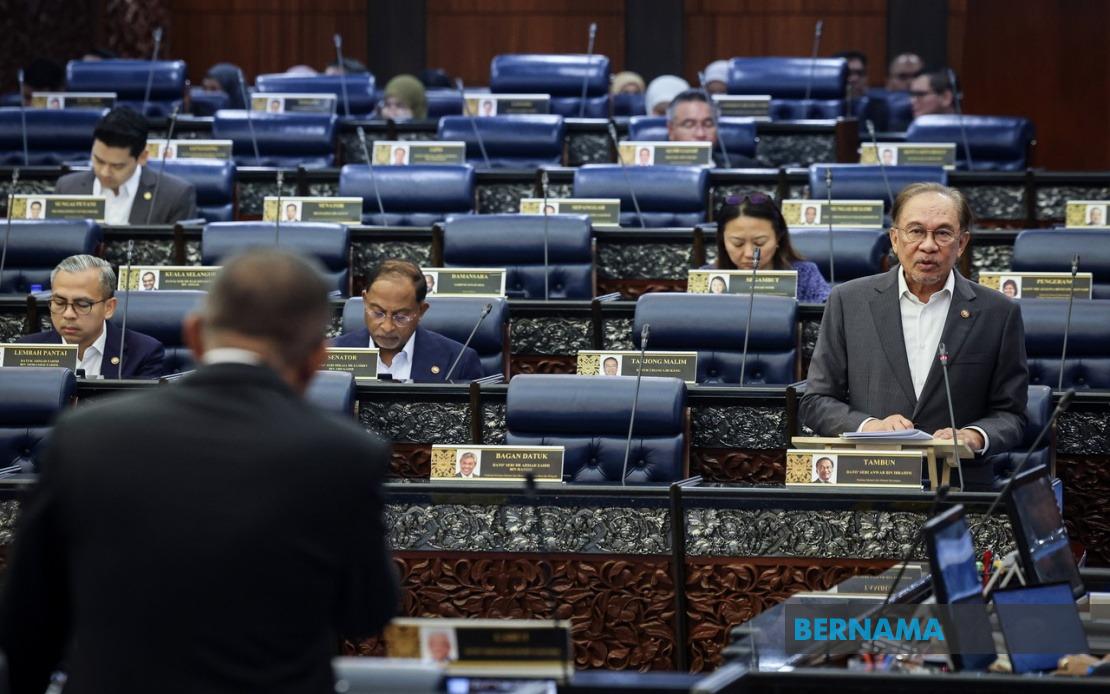
Prime Minister Datuk Seri Anwar Ibrahim revealed on July 7 that the Syarikat Jaminan Pembiayaan Perniagaan (SJPP), the government-owned financing guarantee corporation under the Ministry of Finance, has cleared RM4.9 billion in financing packages for over 6,000 micro, small and medium enterprises during the opening half of 2026. The announcement underscores the administration's ongoing push to strengthen financial accessibility for businesses operating at the grassroots level of Malaysia's economy.
The financing approvals represent a tangible policy response to the persistent difficulties encountered by MSME operators seeking capital. Anwar, speaking during parliamentary question time in response to an inquiry from Lee Chuan How, the MP for Ipoh Timor, framed the initiative as central to the government's broader agenda of reducing operational burdens and ensuring the continued viability of small enterprises throughout the nation. The SJPP, operating as a wholly owned subsidiary of the Finance Ministry, functions as a critical intermediary between conventional lending institutions and businesses that might otherwise struggle to secure adequate funding through traditional channels.
The scale of this particular tranche of approvals reflects the magnitude of the government's overall commitment to MSME financing. Beyond the RM4.9 billion announced for the first half of 2026, Anwar disclosed that the broader financing assistance framework has already extended more than RM15 billion in loans and guarantee packages across the economy. This cumulative allocation demonstrates sustained governmental engagement with a sector that remains vital to job creation and economic resilience in Malaysia.
Within the RM15 billion pool of support, RM5 billion has been specifically reserved for businesses classified as Bumiputera enterprises, reflecting a deliberate policy choice to ensure that financing assistance reaches entrepreneurs from communities identified under Malaysia's constitutional framework. This targeted allocation reveals the government's recognition that Bumiputera business operators may encounter distinctive barriers to capital access and require tailored interventions to achieve equitable participation in the commercial economy.
The timing of this announcement carries significance within Malaysia's broader economic context. MSMEs constitute the backbone of Southeast Asia's second-largest economy, collectively representing a substantial proportion of employment and contributing meaningfully to gross domestic product. However, these enterprises frequently confront structural challenges in accessing credit, particularly during periods of global economic uncertainty. The current international environment, characterised by volatile commodity prices, shifting trade patterns, and monetary policy adjustments, has intensified these long-standing constraints.
The SJPP's role as a guarantor rather than a direct lender introduces an important structural element to the financing landscape. By providing guarantees, the entity reduces the risk perceived by commercial banks and other financial institutions, thereby incentivising lending that might otherwise be deemed too risky under conventional credit assessment protocols. This mechanism proves especially valuable for younger enterprises, those operating in emerging sectors, or businesses led by entrepreneurs without extensive collateral or credit histories.
The parliamentary exchange through which Anwar articulated this policy response also highlights the government's attentiveness to concerns raised by elected representatives regarding economic pressures on the business community. The question posed by Lee Chuan How, explicitly referencing MSME sustainability challenges within the present global environment, appears to have prompted a detailed articulation of the administration's supporting measures. This engagement between parliament and the executive on economic matters demonstrates the continued relevance of legislative oversight in holding government accountable for its economic stewardship.
For Malaysian MSMEs, the availability of RM4.9 billion in newly approved financing during the first half of 2026 translates into tangible opportunities for working capital augmentation, equipment acquisition, expansion initiatives, or operational restructuring. The approval rate reflected in the figure—more than 6,000 enterprises receiving support—suggests that the SJPP maintained a reasonably accessible approval pathway during this period, though the average financing per approved enterprise indicates that most recipients received modest allocations aligned with typical MSME capital requirements.
The regional implications merit consideration as well. Throughout Southeast Asia, governments have increasingly recognised the necessity of targeted MSME support mechanisms. Malaysia's continued investment in guarantee-based financing models offers a template that other nations in the region might examine, particularly those seeking to deepen financial inclusion while managing fiscal constraints. The emphasis on Bumiputera participation also reflects Malaysia's distinctive constitutional and political economy, establishing parameters within which inclusive growth objectives are pursued.
Looking forward, sustaining momentum in MSME financing support faces ongoing challenges. Global interest rate trajectories, foreign exchange volatility, and sectoral shifts driven by technological change will continue influencing both the demand for and supply of business financing. The government's allocation of RM15 billion across the broader framework, with RM4.9 billion deployed in just the first half of 2026, indicates a substantial annual commitment, though assessments of whether this reaches adequate levels require sector-specific analysis.
The announcement also invites questions regarding deployment mechanisms and outcomes measurement. Beyond approval volumes and allocated amounts, examining how efficiently these funds translate into actual business expansion, employment generation, and productivity improvements remains essential for evaluating policy effectiveness. The SJPP's performance in reaching enterprises across different geographic regions, sectors, and demographic categories—including female entrepreneurs and younger business owners—will determine whether the financing programme achieves genuinely inclusive economic development outcomes.
Anwar's response in parliament positioned MSME financing support as integral to the government's broader MADANI development agenda. This framing suggests that policymakers view strengthening entrepreneurial access to capital not merely as an economic mechanism but as fundamental to their envisioned model of inclusive, sustainable national progress. Whether this policy commitment sustains through varying economic cycles and maintains political priority across successive budget cycles will significantly influence Malaysia's trajectory toward creating a more resilient and equitable MSME ecosystem.

