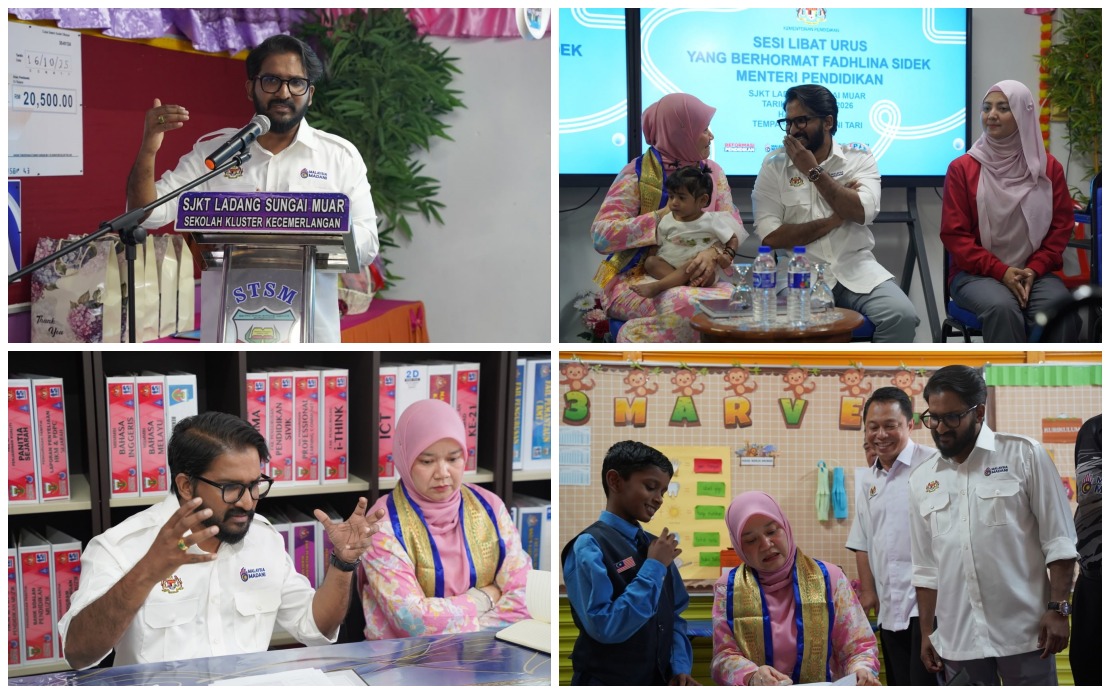
The relocation initiative for SJKT Ladang Sungai Muar in Segamat has moved into a critical phase focused on securing suitable land for the school's new campus. Segamat Member of Parliament R. Yuneswaran announced the development following a stakeholder engagement session attended by Education Minister Fadhlina Sidek, signalling substantive governmental backing for a project that has lingered in various planning stages for several years.
The involvement of Segamat's Land and Mines Office indicates the administrative machinery is now actively engaged in identifying and processing property transfers necessary for the relocation. This represents tangible progress beyond preliminary consultations, though the timeline for completing land acquisition and commencing construction remains undisclosed. For the Tamil-language educational community in Johor, particularly families in the Segamat district, this advancement addresses longstanding concerns about the current facility's operational environment.
Yuneswaran, who has represented Segamat since 2022, has consistently positioned the school relocation as a priority within his electoral mandate. His repeated advocacy reflects broader political awareness that educational infrastructure deficiencies resonate deeply with constituent concerns. The timing of the Education Minister's visit underscores that this is no longer merely a local representative's individual campaign but has achieved recognition at the federal ministry level, suggesting resource allocation may follow.
The specific issues prompting relocation plans encompass safety hazards, geographic isolation from the surrounding community, and inadequate supporting infrastructure. Tamil-medium schools across Malaysia have historically faced resource constraints and maintenance backlogs compared to other vernacular institutions, making infrastructural improvements politically sensitive. For Segamat's Indian-origin residents, this project symbolises inclusion within national education development priorities rather than peripheral status.
The MADANI Government's stated commitment to educational advancement provides the rhetorical foundation for pursuing infrastructure improvements across diverse school types and communities. However, translating commitment into executed construction projects requires sustained budget allocation, land availability negotiations with current owners or occupants, and coordination across multiple government agencies. The Segamat case, being relatively high-profile through parliamentary attention, may benefit from accelerated processing compared to less-publicised relocation initiatives elsewhere.
Geographic context matters substantially. Segamat, a district town in the interior of Johor, lacks the urbanisation momentum and real-estate development pressure of larger centres. Finding appropriately located land that serves the educational community effectively may prove more complex than in areas where development patterns favour school site availability. The current location's distance from the community likely reflects historical land-use patterns rather than deliberate isolation, complicating efforts to identify alternatives that satisfy both accessibility and cost parameters.
Education Minister Fadhlina Sidek's attendance carried multiple symbolic dimensions. It validated community concerns without suggesting immediate resolution, provided political cover for ongoing administrative processes, and reinforced federal-level awareness of the initiative. Such ministerial visibility, while not guaranteeing resource prioritisation, establishes a baseline expectation that progress should continue. For schools facing infrastructure challenges nationally, securing such high-level acknowledgement remains essential for advancing beyond perpetual planning stages.
The involvement of Segamat's Land and Mines Office, the statutory body responsible for property administration and transactions, suggests the project has cleared preliminary feasibility assessments. This office typically manages land transfers, ownership documentation, and survey work necessary for any major relocation. Their active engagement indicates that conceptual planning has yielded to substantive administrative procedures, though bureaucratic processes in Malaysia frequently experience delays attributable to documentation requirements, procurement procedures, or interagency coordination gaps.
For the broader Tamil-language educational ecosystem in Malaysia, developments in individual schools carry wider implications. Tamil education has contracted significantly over recent decades as demographic patterns and social mobility trends have shifted family language preferences. Each relocation or infrastructure improvement to remaining SJKT institutions signals whether the government genuinely prioritises maintaining this educational strand or permits gradual institutional erosion. Segamat's case, being prominently championed by its parliamentary representative, may influence how other Tamil school communities perceive government responsiveness to their specific needs.
Financial considerations remain largely unexplored in public statements thus far. Relocation projects entail substantial expenditure for land acquisition, architectural design, construction, and temporary accommodation arrangements during the transition period. Budget availability at federal and state levels, particularly amidst broader fiscal constraints affecting public infrastructure spending, could determine whether groundbreaking commences within months or stretches across multiple fiscal years. Transparency regarding projected costs and funding sources would provide realistic expectations for the school community and broader public.
The path forward requires sustained attention from multiple stakeholders. Yuneswaran's commitment to continued monitoring reflects responsibility inherent in parliamentary representation, yet execution depends substantially on Ministry of Education administrative capacity and political prioritisation. Community engagement, as demonstrated through the formal session Fadhlina attended, maintains stakeholder confidence that their concerns are being operationalised rather than merely acknowledged rhetorically.
Successful relocation would represent a meaningful infrastructure investment in a district town's educational provision. It would demonstrate that schools in interior locations, serving minority linguistic communities, can access government resources for substantive improvements. The project's ultimate completion and timeline will offer important insights into the MADANI Government's capacity to convert educational policy commitments into tangible outcomes affecting students' daily learning environments across diverse Malaysian communities.

